_d14c9c1b-9850-49e8-adfb-d520564df20c.png)
KNOWLEDGE
Knowledge
Technology and Services
Why Is Pad Printing Instability Occurring? Understanding the Impacts of Airflow, Humidity, and Solvent Evaporation
2026-09-25
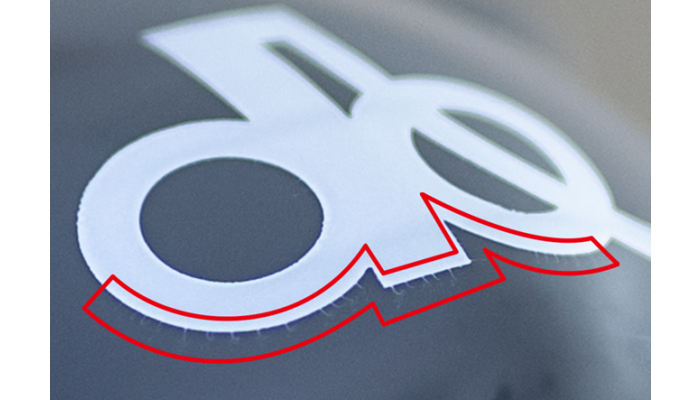
Even when using the same pad printing machine, the same ink formulation, and identical production settings every day, print quality can vary due to frequently overlooked environmental factors, such as airflow direction from air conditioners, humidity levels in the production area, and solvent evaporation rates.
Particularly in the pad printing process, controlling the balance between ink viscosity, solvent evaporation, and ink transfer from the silicone pad to the substrate is essential. Even minor changes in the environment can affect the quality of the printed pattern.
For example, if airflow from an air conditioner blows directly across the printing area, solvent may evaporate prematurely. This alters ink viscosity, causes incomplete ink transfer, and leads to various defects, including:
- Pinholes
- Fiber (stringing)
- Lack of ink (coverage defects)
- Poor ink adhesion
Therefore, quality control in pad printing cannot rely on machinery or materials alone but environmental factors must also be evaluated comprehensively.
This article explains the impacts of airflow, humidity, and solvent evaporation on pad printing, along with management guidelines to stabilize production processes and reduce defect rates.
Table of Contents
- How Airflow Direction and Humidity Affect Pad Printing Quality
- Why Printing Problems Occur When Solvent Evaporates Too Quickly
- Managing Ink Viscosity by Adjusting Solvent Ratios and Environmental Factors
- Selecting Steel Plates to Enhance Printing Consistency
- How TOKUABE Can Help Resolve Pad Printing Issues
- FAQ
- Key terms for understanding this article
■ How Airflow Direction and Humidity Affect Pad Printing Quality
In the pad printing process, the surrounding environment directly affects ink transfer. This is particularly true in areas where direct airflow from air conditioning blows across the printing area, as airflow accelerates solvent evaporation
This causes ink viscosity to rise faster than normal, leading to inconsistent ink pickup and transfer from the silicone pad to the substrate. Consequently, defects such as incomplete coverage, broken patterns, or poor ink adhesion can occur.
In addition, low relative humidity increases static electricity buildup on plastic surfaces, which serves as a major driver for fiber (stringing) around printed patterns.
Even when equipment and materials remain constant, environmental shifts can directly impact print quality.
■ Why Printing Problems Occur When Solvent Evaporates Too Quickly
In pad printing, solvent evaporation is a critical factor governing ink properties before and after transfer. When solvent evaporates at an optimal rate, the ink maintains appropriate tackiness and viscosity, allowing complete ink pickup from the cliché plate and seamless transfer to the substrate.
However, if air conditioning airflow hits the printing area directly, or if ambient humidity is too low, solvent evaporates unnaturally fast. As a result, ink begins drying before transfer, causing
issues such as:
- Incomplete print patterns or lack of ink
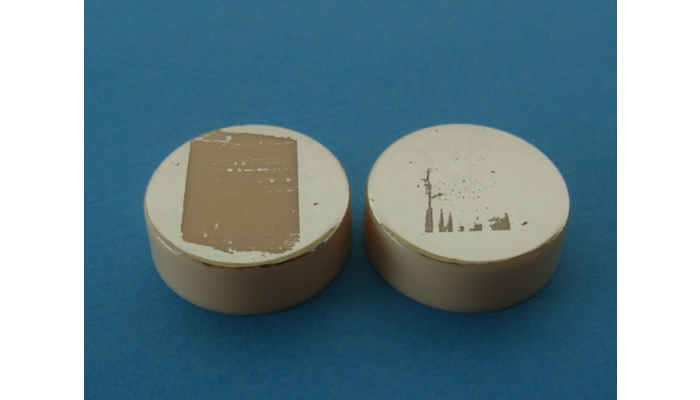
- Formation of micro-pinholes
- Uneven ink film thickness
- Reduced ink adhesion, causing peeling during scratch or tape tests
Controlling solvent evaporation rates according to environmental conditions is therefore an essential condition for maintaining stable pad printing quality.
■ Managing Ink Viscosity by Adjusting Solvent Ratios and Environmental Factors
To preserve consistent printing quality, manufacturers must manage the balance between ink viscosity, solvent evaporation rates, and production floor environments.
Applicable control measures include:
- Optimizing fast-drying and slow-drying solvent ratios to match ambient shop-floor temperature and humidity
- Adjusting airflow direction in the production zone to prevent direct wind force on the printing area
- Selecting appropriate silicone pads tailored to part geometry and specific defect types
For issues caused by static electricity, such as fiber (stringing), Type N silicone pads help mitigate static charge accumulation.
To improve ink transfer efficiency and reduce stringing, Type AT silicone pads can be evaluated for cleaner, more complete ink transfer.
Selecting appropriate materials requires a combined evaluation of ink formula, environmental factors, substrate characteristics, and artwork pattern geometry.
■ Selecting Steel Plates to Enhance Printing Consistency
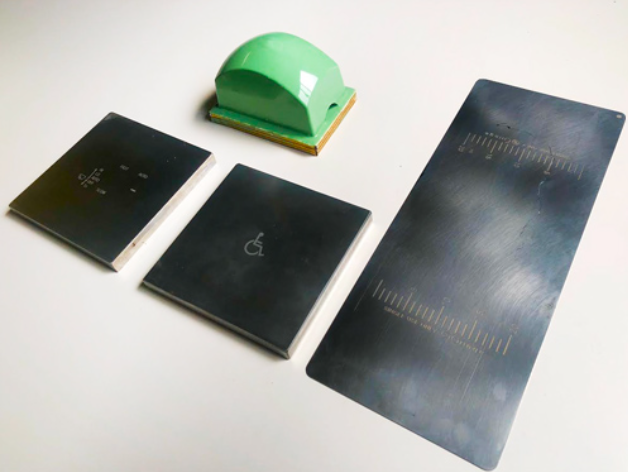
In addition to silicone pads and inks, steel clichés (steel plates) represent another crucial factor influencing ink volume and pattern consistency.
Dimensional tolerances in plate depth directly dictate the ink volume delivered to the substrate. Inconsistent etching depth can cause variation in ink film thickness, leading to uneven color or broken print patterns.
TOKUABE supplies multiple grades of steel plates to meet diverse application requirements.
■ Comparison Table of High-Precision Steel Plate Characteristics
| Key Features | Depth Tolerance | Suitable Environments and Applications |
Grade S (Type A) | Premium grade quality equivalent to Japanese standards. Offers high rust resistance, is reusable, and provides excellent sharpness and definition around character edges. | ±2 microns | High-precision printing applications, extremely small text printing (microtext), and applications with strict dimensional requirements. |
Grade B (Type B) | Focuses on cost-effectiveness while maintaining the high quality standards required for the Asian market. | ±4 microns | General production lines requiring effective cost control and standard pattern or design printing. |
Furthermore, to prevent uneven pressure distribution caused by plastic sink marks, custom holding jigs that securely lock the component maintain a flat pressing plane and eliminate part movement. This applies uniform pressure across all points, sustainably preventing lack-of-ink defects.
■ How TOKUABE Can Help Resolve Pad Printing Issues
TOKUABE (Thailand) Co., Ltd. delivers comprehensive pad printing solutions, ranging from material selection and shop-floor troubleshooting to trial printing for establishing optimal production parameters.
We support customers with a complete lineup of pad printing supplies, including:
- High-precision steel plates with strictly controlled etching depths
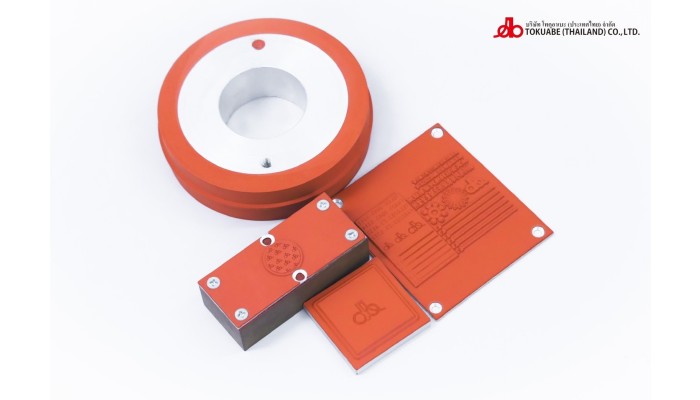
- Multiple silicone pad grades for various printing applications
- Ink and solvent selection guidance tailored to substrate materials
Additionally, TOKUABE offers a Pad Printing Trial Service to evaluate ink adhesion, print quality, and material compatibility prior to full-scale production. This service helps reduce trial setup time, minimize waste, and enhance confidence in the manufacturing process.
※For more details, please download the PDF attached to this article or contact us via the form at the bottom of the page.
■ FAQ
Q1: How do variations in plate etching depth affect printing performance?
A1: Plate depth directly determines the volume of ink transferred to the substrate. High-precision plates, such as Grade S (±2 microns), allow consistent ink volume control, reducing color variations and coverage defects.
Q2: How should silicone pads be selected when encountering fiber (stringing) or pinhole issues?
A2: Selection should be based on root causes and application requirements. Type N silicone pads are suited for mitigating static electricity effects, while Type AT pads enhance ink transfer efficiency and reduce stringing.
Q3: Is it possible to test printing before starting actual production?
A3: Yes, TOKUABE provides a Pad Printing Trial Service on actual substrate parts to evaluate ink adhesion, pad compatibility, and printing parameters prior to full production runs.
■ Key terms for understanding this article
- Fiber (stringing) : A phenomenon where ink stretches into fine strands around the printed pattern, often caused by static electricity or improper ink tackiness.
- Ink stringing : A printing defect occurring when ink flow and viscosity properties are improperly balanced, resulting in fine fiber formation along pattern edges.
- Pad Printing Trial Service : A testing service conducted on actual substrate parts to evaluate ink formulas, silicone pad selection, and optimal processing parameters before mass production.
※For more details, please download the PDF attached to this article or contact us via the form at the bottom of the page.
Company Information
Pad printing services / Printing materials / Printing consultation services
Tokuabe (Thailand) Co., Ltd. was established in December 2014 as part of Tokushu Abe Seihanjo Co.Ltd., Japan, a company with over 60 years of expertise. We bring proven Japanese knowledge and techniqu ...

PICKUP
Technology & Services
CONTACT
Contact