_d14c9c1b-9850-49e8-adfb-d520564df20c.png)
KNOWLEDGE
Knowledge
Technology and Services
3 Factors That Determine Hot Stamp Quality: Pressure, Heat, and Time | The Core Process Variables That Must Be Kept in Balance
2026-08-25
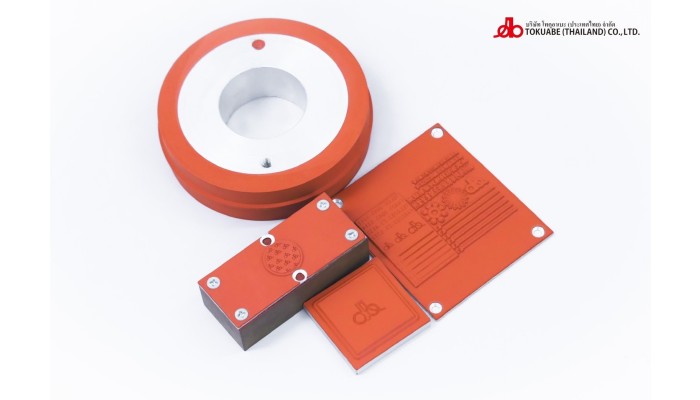
Even when the same Hot Stamp settings are used, the color, sharpness, or foil adhesion may change during production. The cause may not be limited to any single setting. Pressure, heat, and stamping time must all remain suitable for the workpiece throughout the process. Checking these three factors according to the symptoms can therefore help identify and resolve problems more precisely.
Table of Contents
- Pressure determines the contact area between the die and the workpiece
- Heat affects foil adhesion
- Pressing time must correspond with transfer and production speed
- Checking operating settings together with materials and equipment
- Tokuabe (Thailand) and Hot Stamp applications
- FAQ
- Key terms for understanding this article
■ Pressure determines the contact area between the die and the workpiece
Pressure helps the die and foil make contact with the surface of the workpiece. If the pressure is too low, the foil may not adhere across the entire area, resulting in missing color or incomplete coverage in some locations. If the pressure is too high, the foil may crack or the workpiece may become deformed, particularly with curved workpieces or materials that have low resistance to pressure. When checking this factor, compare the locations where NG occurs with the surface flatness, workpiece holding, and the pressure distribution of the rubber roller instead of immediately increasing the pressure across the entire area.
■ Heat affects foil adhesion
Heat activates the adhesive layer on the foil and allows it to bond to the surface of the workpiece. However, if the temperature is too low, the foil may not adhere across the entire area or may peel off after stamping. If the temperature is too high, the foil color may change, the foil may become damaged, or marks may appear on the surface of the workpiece. Because materials such as ABS, PC, and PP have different levels of heat resistance, the workpiece material, foil type, and symptoms should all be checked together before adjusting the temperature so that the problem can be addressed accurately.
■ Pressing time must correspond with transfer and production speed
Pressing time is the period during which pressure and heat work together to transfer the foil onto the workpiece. If the pressing time is too short, the foil may not adhere completely or may peel off after stamping. If the pressing time is too long, heat may accumulate and affect the surface of the workpiece, while the production cycle may also become slower. Therefore, when adjusting the pressing time, it should be considered together with the temperature, material type, and the symptoms of the problem. The pressing time should not be increased to compensate for a low temperature before checking the condition of the workpiece surface.
■ Checking operating settings together with materials and equipment
Even when the pressure, heat, and time settings remain unchanged, the work quality may vary if the die, foil, rubber roller, or work-holding jig is not suitable for the workpiece. Begin by checking the material type and shape of the workpiece. Then check whether the workpiece makes complete contact with the die and is held securely before checking the pressure, temperature, and time settings. For curved workpieces, check whether the workpiece is properly supported and whether the pressure is distributed evenly. When foil peeling occurs, check the heat, time, and suitability of the foil for the workpiece material together.
■ Tokuabe (Thailand) and Hot Stamp applications
Tokuabe (Thailand) offers various types of rubber dies for Hot Stamp applications, as well as metal dies made from brass or hardened steel, foil, and Hot Stamp machines for workpieces with complex shapes. The conditions we consider include the workpiece shape, material type, and the characteristics of the problem. If the information you have is still incomplete, please contact us for further information.
※For more details, please download the attached materials or contact us via the form below.
■ FAQ
Q1:Why does the work quality still fluctuate even when the same pressure, heat, and time settings are used?
A1:Using the same settings does not guarantee that the contact area and the materials within the system will remain in the same condition every time. The die, foil, rubber roller, jig, and workpiece shape should therefore be checked together with the pressure, heat, and time settings.
Q2:Should pressure, heat, or time be adjusted first?
A2:Begin by identifying the symptoms and material type. Then check the contact area and workpiece holding before comparing the pressure, heat, and time. Adjusting one factor at a time makes it easier to identify which setting is related to the symptoms.
Q3:What additional points should be checked for curved workpieces?
A3:For curved workpieces, check the pressure distribution, contact positions, and supporting equipment. If the pressure is concentrated in certain areas, the foil may crack or fail to adhere completely, even when the temperature and time settings remain unchanged.
■ Key terms for understanding this article
- Pressure : The force that brings the die and foil into contact with the surface of the workpiece
- Temperature : The heat that prepares the adhesive layer on the foil to bond with the workpiece
- Time : The period during which pressure and heat act on the foil in one stamping cycle
※For more details, please download the attached materials or contact us via the form below.
Company Information
Pad printing services / Printing materials / Printing consultation services
Tokuabe (Thailand) Co., Ltd. was established in December 2014 as part of Tokushu Abe Seihanjo Co.Ltd., Japan, a company with over 60 years of expertise. We bring proven Japanese knowledge and techniqu ...

PICKUP
Technology & Services
CONTACT
Contact