
KNOWLEDGE
Knowledge
Producer goods
【Plastic Molding Degassing】Review Before Continuing with Liquid Ring Vacuum Pumps: Degassing Performance Drop due to Water Temperature and Water Treatment Costs
2026-06-23
_thumb_fad9af5a-2b5f-4af4-89c4-36b110a4db0c.png)
Gas venting and degassing in the plastic molding process are critical steps that directly impact product quality. However, when using liquid ring vacuum pumps for this process, a reduction in degassing performance due to rising water temperatures and the running costs of water treatment can become key issues on the factory floor. This article examines the structural challenges of liquid ring vacuum pumps and explains solutions achieved by transitioning to water-free dry systems, backed by concrete figures.
Table of Contents
- Causes of Degassing Defects in Plastic Molding and Relationship with Water Temperature
- Hidden Water Treatment Costs in Maintaining Liquid Ring Vacuum Pumps
- Stabilization of Degassing Performance and Energy Savings via Water-Free Dry Systems
- Key Selection Points for Vacuum Pumps Suitable for Plastic Molding Degassing
- What Anlet Can Do
- FAQ
- Key terms for understanding this article
■ Causes of Degassing Defects in Plastic Molding and Relationship with Water Temperature
When manufacturing products with complex shapes, such as automotive dashboards, bumpers, or food trays like egg cartons, reliable venting and degassing are essential during the plastic molding process. Properly removing air, volatile gases, and moisture generated during compounding in the extruder, and ensuring tight adhesion to the mold during the vacuum forming stage are prerequisites for improving quality and yield.
Liquid ring vacuum pumps are widely used in this degassing process. The liquid ring type features a structure that creates a vacuum by forming a water film inside the pump using an impeller and sealant liquid. However, due to this design, the temperature of the water used directly impacts the pump's performance.
Rising water temperature is a particularly significant issue. As the water temperature increases in a liquid ring vacuum pump, water inside the pump evaporates more easily, leading to a drop in vacuum level. Under conditions where the water temperature is 15°C, the pumping speed drops to zero (ultimate pressure) at a pressure of approximately 2 kPaA, and the ultimate pressure degrades further as the water temperature rises.
Because the pumping performance of liquid ring vacuum pumps fluctuates based on water temperature, continuous temperature management is required to maintain stable degassing. This creates an operational burden on the factory floor and can cause venting defects and quality variations.
■ Hidden Water Treatment Costs in Maintaining Liquid Ring Vacuum Pumps
When operating a liquid ring vacuum pump, maintenance costs must be considered in addition to performance-related temperature management. Operating the pump requires a continuous supply of a large volume of water as seal water, which directly generates water utility bills.
Furthermore, the used water cannot simply be discharged; it requires appropriate wastewater treatment. Consequently, the expenses and management effort involved in wastewater treatment systems accumulate as running costs.
Even when water is recycled and circulated, it must be cooled to maintain pump performance. This cooling process introduces additional motor power demands to operate auxiliary equipment such as cooling towers.
In short, operating a liquid ring vacuum pump involves hidden energy costs for water treatment and cooling equipment, in addition to the power consumption of the pump itself. When combined, these factors increase the overall system power consumption and can hinder energy-saving initiatives.
■ Stabilization of Degassing Performance and Energy Savings via Water-Free Dry Systems
To address performance drops caused by water temperature and water treatment costs, switching to water-free dry vacuum pumps is an effective solution. A major advantage of dry vacuum pumps is that they do not use seal water, making them highly resistant to fluctuations in water temperature.
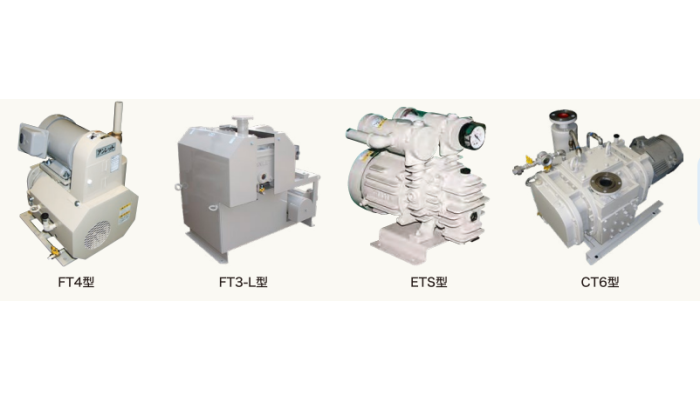
Additionally, eliminating cooling water and seal water reduces the power consumption for water treatment, water utility costs, and wastewater treatment expenses associated with liquid ring operations. For example, a simulation of replacing existing liquid ring vacuum pumps (five 30 kW motors) with air-cooled dry vacuum pumps (seven FT3-1000L units) showed a potential reduction of approximately 2.59 million yen per year in electricity costs and around 35.5 tons per year in CO2 emissions.
Evaluating the entire system—including water treatment and cooling equipment rather than just the pump unit itself—makes it easier to achieve both stable degassing performance and lower running costs.
■ Key Selection Points for Vacuum Pumps Suitable for Plastic Molding Degassing
When selecting a vacuum pump for gas venting in plastic molding, it is important to evaluate the overall stability and total costs of the operation rather than focusing solely on individual specifications.
The first point is whether performance varies due to environmental factors. It is essential to verify if stable degassing can be maintained while the extruder or vacuum forming machine is running, particularly looking for a design that prevents a drop in pumping speed due to external factors like water temperature.
The second point is running costs and the necessity of auxiliary equipment. Comparing total costs—including power consumed by cooling towers, wastewater treatment systems, and maintenance fees alongside the pump's power consumption—is critical. Reducing water-related infrastructure also eases long-term maintenance burdens.
The third point is controllability in response to operating conditions. If the required vacuum level or displacement varies by process stage, the ability to adjust performance via inverter control to prevent wasted power while delivering the necessary capacity is a major criterion for advancing energy savings.
■ What Anlet Can Do
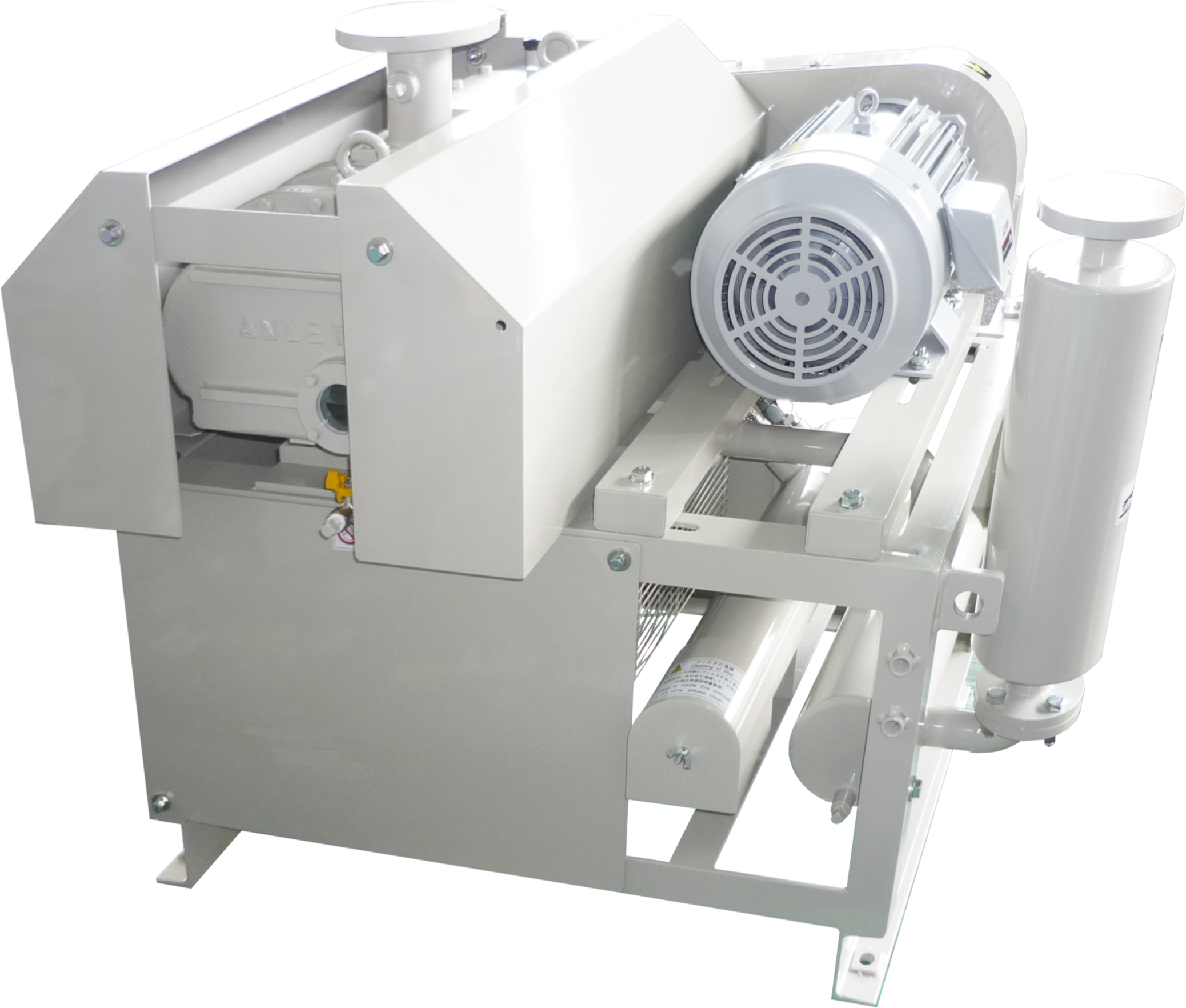
Anlet offers dry roots vacuum pumps that deliver both energy savings and stable operation for gas venting and degassing in plastic molding processes. We support the stable degassing performance required at diverse molding sites, from automotive parts to food tray manufacturing.
By replacing liquid ring vacuum pumps with Anlet's dry vacuum pumps, you can secure a stable ultimate vacuum level unaffected by water temperature, contributing to a lower risk of molding defects. Furthermore, eliminating cooling water and seal water reduces water treatment power, water utility bills, and wastewater treatment costs.
※For more details, please download the PDF attached to this article or contact us via the form at the bottom of the page.
■ FAQ
Q1: What is the difference in pumping performance when changing from a liquid ring vacuum pump to a dry type?
A1: Dry vacuum pumps are less susceptible to water temperature than liquid ring types, offering more stable pumping performance. While some liquid ring pump models have zero air volume (ultimate pressure) at a water temperature of 15°C and approximately 2 kPaA, Anlet's dry type FT3-L maintains almost no drop in air volume from atmospheric pressure down to around 1.33 kPaA, achieving an ultimate pressure of approximately 0.266 kPaA without cavitation concerns.
Q2: Specifically, what costs can be reduced by introducing a dry vacuum pump?
A2: Since seal water and cooling water are not used, reductions in water utility and wastewater treatment bills can be expected. Additionally, eliminating the motor power required to run cooling towers and water treatment facilities—which were necessary for the liquid ring type—helps lower the electricity bills of the entire system. Specifically, a simulation of replacing existing liquid ring pumps (five 30 kW motors) with air-cooled units (seven FT3-1000L units) demonstrated savings of approximately 2.59 million yen per year in electricity costs and a reduction of about 35.5 tons per year in CO2 emissions.
Q3: What are the main application ranges for dry vacuum pumps in the plastic molding process?
A3: They are applied in manufacturing processes for automotive dashboards, bumpers, food trays, and other molded products. Specifically, they are widely used for degassing air and gases generated during compounding in extruders, as well as for ensuring tight adhesion to molds in vacuum forming processes.
■ Key terms for understanding this article
- Plastic Molding : A processing technology where resin is heated, melted, and pressed against a mold to create a specific shape.
- Liquid Ring Vacuum Pump : A type of pump that creates a water film (seal water) inside and uses this water to draw in and exhaust gases.
- Dry Roots Vacuum Pump : A vacuum pump that operates without using lubricants like water or oil inside, transporting gases via rotating rotors.
- Ultimate Vacuum Level : The limit of pressure below which a vacuum pump cannot reduce the pressure further when it continues to exhaust gas.
- Inverter Control : A control system that electrically adjusts the rotation speed of a motor to deliver only the required capacity based on operating conditions.
※For more details, please download the PDF attached to this article or contact us via the form at the bottom of the page.
Company Information

ANLET is a manufacturer and distributor of Roots blowers, vacuum pumps, and dust collectors, with a strong focus on energy saving and environmental sustainability. Its key differentiator is its patent ...
CATALOG
Related Catalogs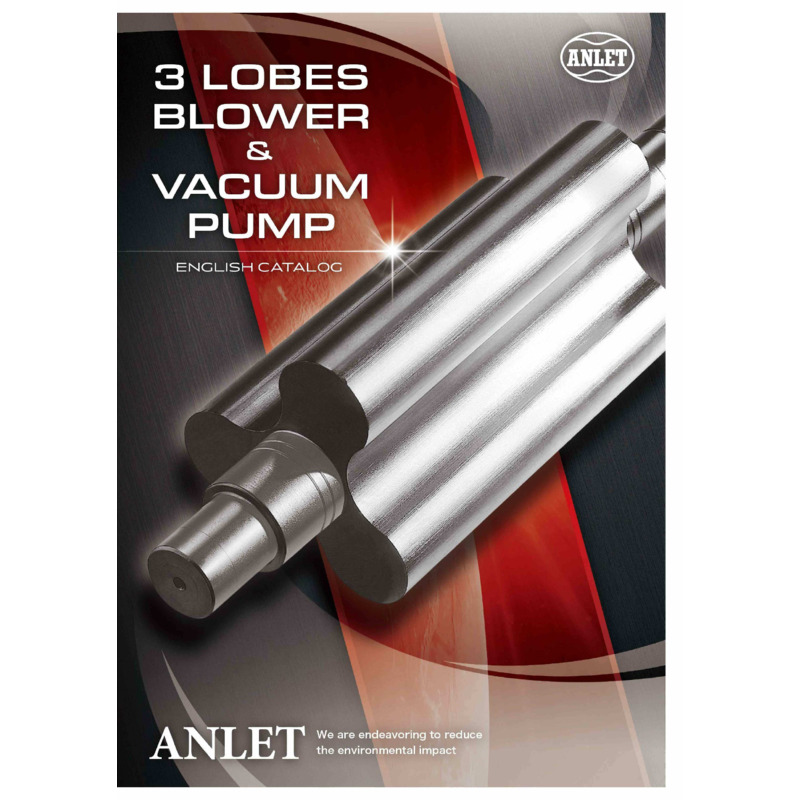

PICKUP
Technology & Services

CONTACT
Contact