
KNOWLEDGE
Knowledge
Producer goods
[Dry Vacuum Pump (Lineup of Over 100 Models)] Optimizing Equipment Installation Costs by Selecting the Optimal Number of Stages According to the Application
2026-05-20
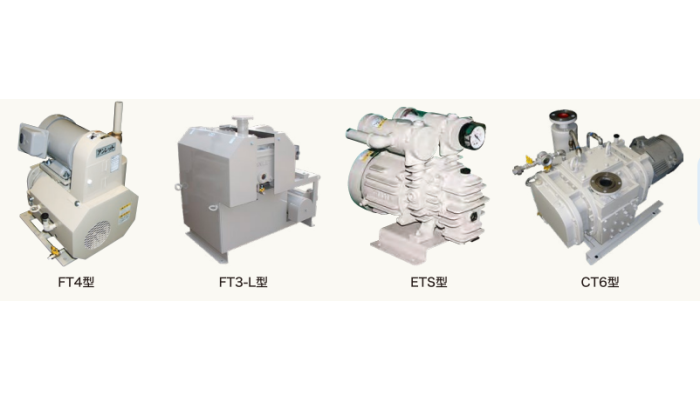
At manufacturing sites in Thailand, vacuum pumps are in operation across many processes, such as vacuum drying after washing and the defoaming process in resin molding. On the other hand, factors like the usage of large amounts of water, water and oil contamination, and increased power consumption due to selecting pumps with specifications that are excessive for the application often lead to hidden cost increases. Carefully assessing the vacuum level and pumping speed required for your own processes and selecting appropriate specifications will lead to long-term operational stability and profit improvement.
Table of Contents
- Increased Equipment Costs Caused by Setting Vacuum Levels and Pumping Speeds Higher Than Necessary
- Different Maintenance Risks and Operational Burdens Between Oil, Water, and Dry Types
- Energy Saving Effects and Power Reduction Brought by Multi-stage Configurations
- ANLET's Multi-stage Dry Vacuum Pumps and Supported Areas
- Frequently Asked Questions (FAQ)
- Key Terms for Understanding This Article
■ Increased Equipment Costs Caused by Setting Vacuum Levels and Pumping Speeds Higher Than Necessary
What determines the installation cost of a vacuum pump is the design of the "ultimate vacuum" and "pumping speed." The higher the vacuum level and the greater the pumping speed, the higher the energy load on the vacuum pump. Many sites tend to overestimate the safety margin and select a pump with higher performance than necessary. However, in products with a multi-stage configuration, such as roots vacuum pumps, while the compression efficiency increases as the number of stages increases, the initial investment also rises due to the complexity of the structure. By matching the number of stages and pumping speed to the appropriate performance level required by the process, it is possible to curb excessive equipment investment and optimize power consumption during operation.
■ Different Maintenance Risks and Operational Burdens Between Oil, Water, and Dry Types
The main types of vacuum pumps include oil-rotary vacuum pumps, which exhaust air while sealing the inside using oil (lubricating oil); water-ring vacuum pumps, which use water (or liquid) to form a "liquid ring" inside and compress and exhaust gas with that force; and dry vacuum pumps, which are highly clean and exhaust gas without using sealing mediums like oil or water.
Oil-rotary vacuum pumps have a structure where the gap between the vanes rotating inside the cylinder and the wall surface is sealed with oil. This oil plays a crucial role in lubrication and cooling; if the intake gas contains moisture or dirt, it accumulates inside, causing performance degradation and failure. Furthermore, since oil mist mixes with the exhaust, an oil smoke recovery device is required, and maintenance work such as replacing deteriorated oil and filters constantly occurs. The accumulation of these factors becomes a cost burden in long-term operation.
On the other hand, water-ring vacuum pumps perform exhaust using a water ring (water seal) formed by centrifugal force from the seal water inside the casing. While this method is suitable for handling water vapor, the ultimate vacuum and pumping speed are greatly influenced by the temperature and supply amount of the seal water. Therefore, managing water temperature and flow rate is essential for stable operation. Especially in hot and humid environments, the cooling capacity tends to decrease, and it may be necessary to add an auxiliary pump or select a larger vacuum pump to maintain the target vacuum level. An increase in utility load, including wastewater treatment, is also an unavoidable structure.
Compared to these methods, the dry method, which does not use liquids in the gas-contacting parts, is designed to be less susceptible to performance fluctuations caused by fluid temperature. As a result, this leads to a reduction in the burden of maintenance and inspection.
■ Comparison table of performance, cost, and risk across the three main approaches
| Comparison items | Oil rotary vacuum pump | Water ring vacuum pump | Anlet dry vacuum pump |
| Exhaust quality | Oil mist is generated, with a risk of oil backflow contaminating the product. | Uses a large amount of seal water, resulting in wet exhaust containing moisture and vapor. | Oil-free, clean exhaust. |
| Operational stability | Performance deteriorates when moisture enters. Oil management is essential. | As water temperature rises, vacuum level and exhaust performance decline. Water quality management is required. | The non-contact structure eliminates wear, enabling long-term continuous operation. |
| Operating cost | Costs for replacing sealing and lubricating oil and filters, as well as waste oil disposal. If moisture contamination occurs, frequent oil changes are required. | Water utility charges and wastewater treatment costs. For seal-water recirculation systems, periodic maintenance of the heat exchanger is also required. | Costs for gear and bearing oil replacement, bearing greasing, and belt replacement. |
| Environmental impact | Oil fumes worsen the working environment, and a large amount of waste oil must be disposed of. | Wastewater treatment facilities require maintenance and management, and CO2 emissions are high. | Reduces CO2 emissions, with examples showing reductions of up to 50%. |
■ Energy Saving Effects and Power Reduction Brought by Multi-stage Configurations
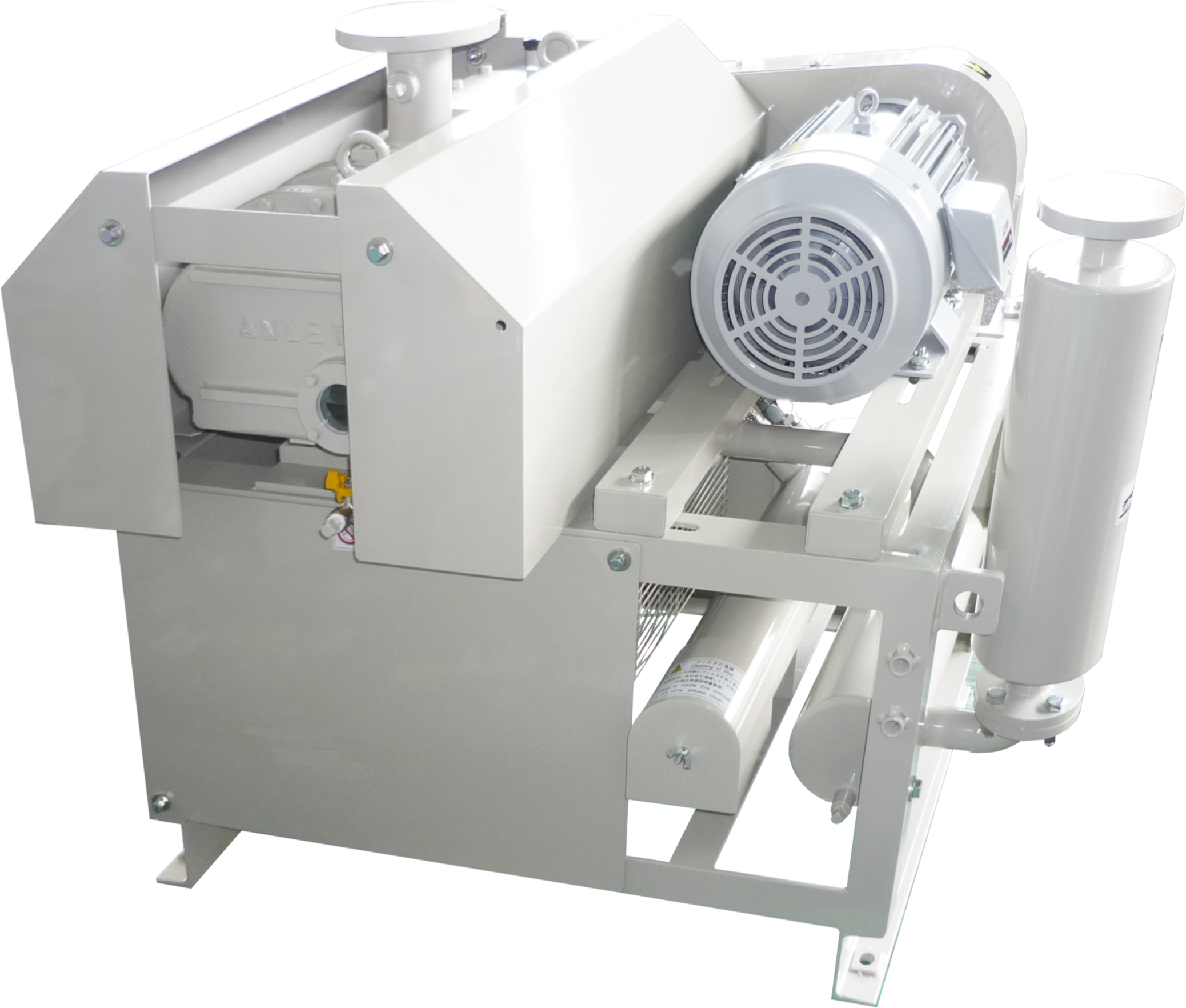
The air-cooled roots dry vacuum pumps (FT2 type, FT3-L type, FT4-LE type, etc.) provided by ANLET use multi-stage rotors and have a structure that optimizes the compression ratio for each stage. This enables efficient exhaust from near atmospheric pressure to high vacuum ranges. Compared to water-ring pumps, effects in reducing CO2 emissions and power consumption have been confirmed, with some cases showing a maximum reduction of 50%. By selecting the number of stages according to the pumping speed and required vacuum level from a lineup of over 100 models, it is possible to design a system that suppresses excessive energy consumption. In cases where water-ring types were updated to multi-stage dry types, reductions in water bills and wastewater treatment costs, in addition to electricity bills, have been confirmed. The improvement in energy-saving performance is an effective choice in manufacturing sites where carbon neutral compliance is required.
■ ANLET's Multi-stage Dry Vacuum Pumps and Supported Areas
ANLET is developing multi-stage dry vacuum pumps backed by its processing technology for three-lobe roots blowers. The integral rotor and shaft structure is designed to reduce the risk of the shaft bending or breaking under high loads. Applications have expanded to clean and high-load environments, such as suction conveying, filling machines, vacuum forming, and battery manufacturing processes (degassing). Within Thailand as well, in collaboration with local partners, a prompt technical support system by staff who have received repair training is established. By selecting specifications that match the process conditions from the extensive lineup of models, an equipment configuration without excess or deficiency is possible. As a result, an operational design that is reasonable in terms of both initial investment and maintenance costs is realized.
■ Frequently Asked Questions (FAQ)
Q1: Can air-cooled dry vacuum pumps be used stably even in high-temperature environments like Thailand?
A1: They adopt an internal cooling system that takes in ambient air and a cooling fan design, allowing them to support continuous operation in all pressure ranges provided there is appropriate ventilation.
Q2: Will the exhaust performance drop when changing from a water-ring type to a dry type?
A2: While the exhaust performance of a water-ring type decreases as the water temperature rises, the dry roots type is less susceptible to environmental temperatures, providing stable exhaust performance without concerns about cavitation. You can select a model (65 to 3000 m³/h) with an equivalent or higher design pumping speed according to the application.
Q3: What are the benefits of an oil-free product?
A3: Since no lubricating oil is used inside the pump, there is no risk of oil backflow to the intake side or product contamination. The exhaust also contains no oil mist, allowing the work environment to be kept clean.
■ Key Terms for Understanding This Article
- Dry Vacuum Pump: A vacuum pump with a structure that does not use liquids like water or oil in the exhaust path.
- Three-Lobe Roots Type: A structure in which rotors with three lobes rotate without contacting each other to transfer and compress gas.
- Carbon Neutral: Initiatives to balance greenhouse gas emissions and absorption to achieve net zero.
Company Information

ANLET is a manufacturer and distributor of Roots blowers, vacuum pumps, and dust collectors, with a strong focus on energy saving and environmental sustainability. Its key differentiator is its patent ...

_thumb_fad9af5a-2b5f-4af4-89c4-36b110a4db0c.png)
PICKUP
Technology & Services

CONTACT
Contact