
KNOWLEDGE
Knowledge
Producer goods
【Vacuum Drying of Automotive Parts】The Often-Overlooked Burden of Oil Changes and Waste Oil Treatment When Using Oil Rotary Pumps After Air Blowing
2026-06-23

In the washing process of automotive-related parts, reliable drying of moisture and solvents is essential. However, air blowing alone is often insufficient to fully remove moisture, leading to defects, water stains, and rust due to residual water. This article examines the challenges of oil changes and waste oil treatment that frequently occur when using oil rotary vacuum pumps for vacuum drying as a countermeasure against residual water, and details solutions achieved by transitioning to dry vacuum pumps with concrete facts.
Table of Contents
- Challenges of Residual Water and Oil Rotary Pumps in Automotive Parts Washing Processes
- Burden of Maintenance and Operations Caused by High-Frequency Oil Changes and Waste Oil Treatment
- Reducing Maintenance Burden with Oil-Free Dry Vacuum Pumps
- Key Selection Points for Vacuum Pumps in Vacuum Drying Applications
- What Anlet Can Do
- FAQ
- Key terms for understanding this article
■ Challenges of Residual Water and Oil Rotary Pumps in Automotive Parts Washing Processes
In washing processes for automotive parts with tapped holes or blind spots, such as small components, screws, and engine parts, reliable drying after washing is a prerequisite for maintaining quality. However, standard air blowing alone makes it difficult to completely remove moisture trapped deep inside complex shapes, which can result in defects, water stains, and rust due to residual water.
To supplement the limitations of air blowing, vacuum drying is sometimes adopted in steps accompanying part washing machines. This system lowers the boiling point of water by creating a vacuum state, enabling efficient drying.
An oil rotary vacuum pump is sometimes used as the exhaust source for this vacuum drying process. Oil rotary vacuum pumps feature a structure that uses oil to maintain internal lubrication and airtightness. Consequently, if the pump draws in a large volume of water vapor generated during the vacuum drying process, the moisture mixes with the oil inside the pump. This can cause malfunctions due to lubrication failure and make it difficult to maintain the original exhaust performance due to the re-evaporation of moisture.
■ Burden of Maintenance and Operations Caused by High-Frequency Oil Changes and Waste Oil Treatment
When moisture mixes inside an oil rotary vacuum pump, a direct burden is placed on the maintenance and operations of the equipment. To maintain exhaust performance, the oil that has deteriorated due to water contamination must be replaced regularly. Depending on the operating environment, some factory floors require oil changes at high frequencies, such as once a month or even once every two weeks.
Frequent oil changes not only increase work hours but also lead to higher running costs. Oil costs are incurred with every replacement, and expenses are required to properly treat waste oil that contains water.
Additionally, the impact on the surrounding environment must be considered when operating oil rotary vacuum pumps. Oil mist is easily generated during operation, which can lead to dirt inside the factory and increase the cleaning burden.
■ Reducing Maintenance Burden with Oil-Free Dry Vacuum Pumps
As a method to reduce the burden of oil changes and waste oil treatment associated with operating oil rotary vacuum pumps, switching to dry vacuum pumps that do not use oil in the gas contact parts is an effective option.
Since the gas contact parts of dry vacuum pumps are oil-free, reductions in the labor, oil costs, and waste oil treatment expenses required for frequent oil changes in oil rotary pumps can be expected. Another benefit is that oil mist, which makes the factory dirty, is easily suppressed.
Although dry vacuum pumps still use a small amount of oil to lubricate gears and bearings, no oil is used in the gas contact parts. This minimizes the risk of oil deterioration caused by the water vapor drawn in during the vacuum drying process, leading to a reduced management burden for maintenance personnel.
■ Key Selection Points for Vacuum Pumps in Vacuum Drying Applications
When selecting a vacuum pump for vacuum drying in washing processes, it is important to evaluate the overall handling of suction gases and long-term operating costs rather than focusing solely on individual exhaust specifications.
The first point is the capability to handle vapors containing high amounts of moisture and solvents. Whether the pump features a design that prevents performance degradation due to oil deterioration is a critical criterion for maintaining stable drying quality.
The second point is daily maintenance and maintenance costs. Verifying the frequency of oil changes, the expenses for waste oil treatment, and the labor required for oil mist countermeasures in advance is necessary to compare total costs rather than just the price of the pump unit.
The third point is the ease of cleaning during troubles or regular inspections. For example, a pump that adopts a split casing design allows for easy internal inspection and cleaning, leading to improved maintainability in long-term operations.
■ What Anlet Can Do
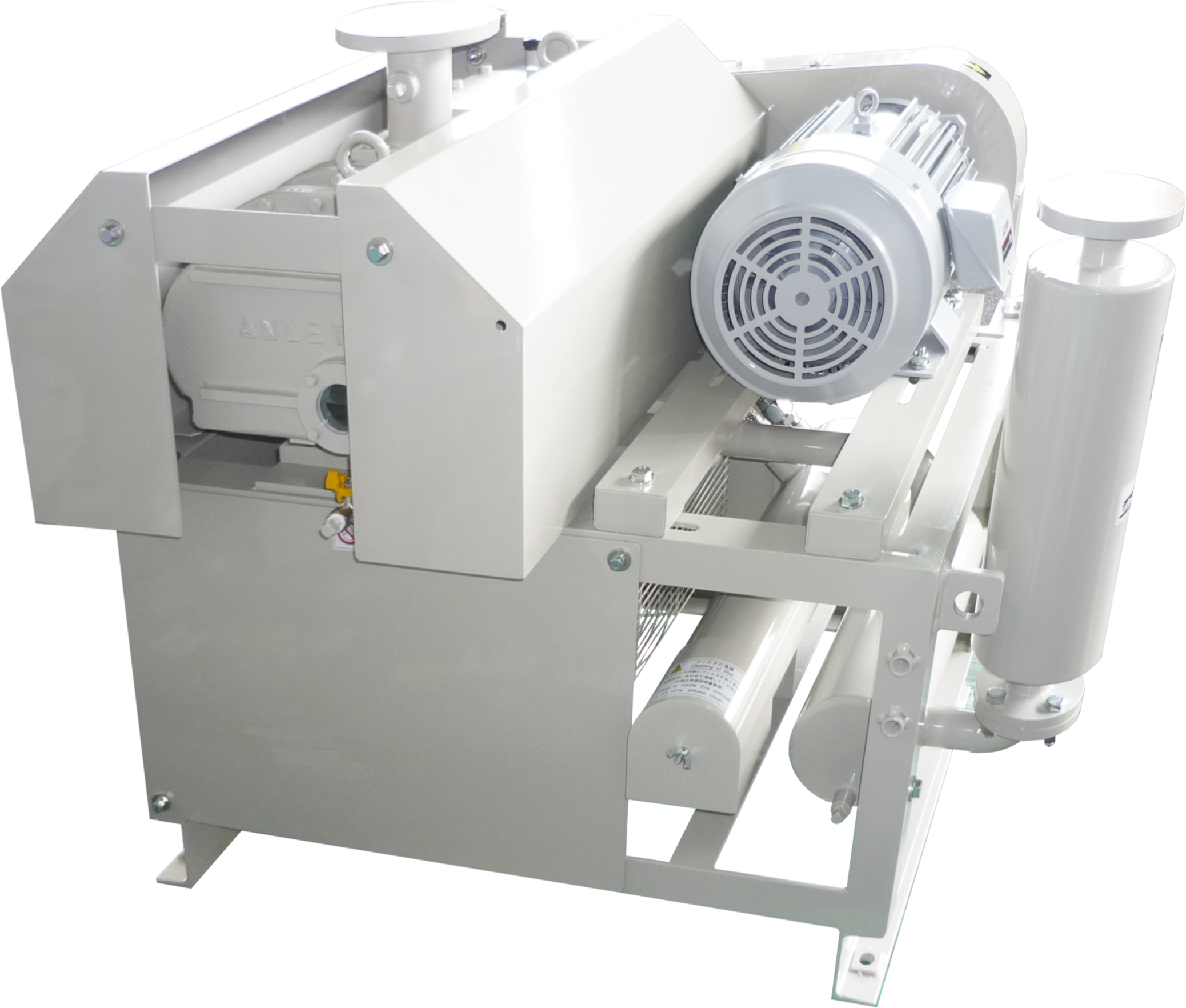
Anlet offers dry roots vacuum pumps for vacuum drying applications attached to washing machines for automotive parts, screws, and engine components. We help reduce the labor and expenses of frequent oil changes and the burden of waste oil treatment, supporting stable operations over a long period.
Additionally, Anlet's dry roots vacuum pumps emphasize domestic integrated production in Japan, with rotors and shafts manufactured as a single integrated piece from raw materials. This allows for a thicker shaft design and larger bearing sizes. As a result, high durability during long-term operation is easily secured. Even in the event of troubles like foreign object intrusion, shaft distortion is unlikely to occur, helping minimize machine downtime.
※For detailed specifications and installation examples, please contact Anlet.
■ FAQ
Q1: Why does performing vacuum drying with an oil rotary vacuum pump require frequent oil changes?
A1: When water vapor generated during the vacuum drying process is drawn into an oil rotary vacuum pump, the water mixes with the oil inside the pump. This increases the risk of malfunction due to lubrication failure and lowers the vacuum level and exhaust speed because of the re-evaporation of water. To maintain exhaust performance, the deteriorated oil must be replaced regularly, which may require high-frequency changes of once a month or once every two weeks depending on the operating environment.
Q2: How much can oil consumption be reduced by switching to a dry vacuum pump?
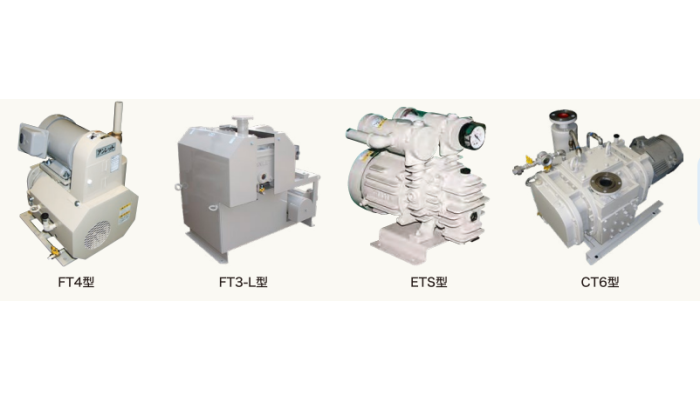
A2: Since dry vacuum pumps do not use oil in the gas contact parts, frequent oil changes to maintain internal lubrication and sealing are unnecessary. In the case of Anlet's dry vacuum pumps, they operate using only a small amount of oil for lubricating gears and bearings. For example, the FT4-65LE has a lubricating oil capacity of just 0.34 L, which is expected to significantly reduce oil consumption compared to oil rotary vacuum pumps.
Q3: Please tell me about the maintainability of dry vacuum pumps.
A3: Anlet's products adopt a split casing structure that can be disassembled, making internal inspection and cleaning easy. Combined with managing only a small amount of lubricating oil, this reduces long-term maintenance burdens. Additionally, the integrated machined rotor and shaft structure ensures high durability, making the shaft highly resistant to distortion even if foreign matter enters. This accelerates onsite recovery after troubles and reduces the long-term maintenance burden.
■ Key terms for understanding this article
- Vacuum Drying : A technology that dries objects at temperatures close to room temperature by reducing pressure in a sealed space to lower the boiling point of water.
- Oil Rotary Vacuum Pump : A vacuum pump that creates a vacuum state by utilizing the rotation of rotors and the sealing performance of oil.
- Dry Vacuum Pump : A vacuum pump structured to exhaust gases without using water or oil in the internal gas-contact parts.
- Oil Mist : Fine oil particles generated during the operation of equipment, which can cause dirt and cleaning burdens inside a factory.
- Split Casing : A structure where the pump casing can be split, making internal inspection and cleaning easier.
※For detailed specifications and installation examples, please contact Anlet.
Company Information

ANLET is a manufacturer and distributor of Roots blowers, vacuum pumps, and dust collectors, with a strong focus on energy saving and environmental sustainability. Its key differentiator is its patent ...
CATALOG
Related Catalogs
_thumb_fad9af5a-2b5f-4af4-89c4-36b110a4db0c.png)
PICKUP
Technology & Services

CONTACT
Contact