_d14c9c1b-9850-49e8-adfb-d520564df20c.png)
KNOWLEDGE
Knowledge
Technology and Services
Reducing Defect Scrap Rates in Molded Part Printing: Increasing Yield in the Pad Printing Process Through Proper Material Selection Techniques
2026-10-26

TOKUABE (THAILAND) CO., LTD. provides comprehensive pad printing services and technical solutions for high precision molded plastic components, such as automotive parts, medical devices, and industrial components.
In actual production processes, printing defects that affect yield such as pinholes, fiber, or pattern inconsistencies can stem from multiple variables, including ink properties, silicone pad material choices, ambient shop-floor conditions, and machine parameter settings.
TOKUABE prioritizes root-cause diagnosis and proper printing material selection to help minimize scrap rates, enhance process stability, and support customers across all production scales, from low-volume trials to full mass production.
Table of Contents
- Key Principles of Selecting Silicone Pads and Printing Supplies to Resolve Pinholes and Fiber
- Contract Printing Services Ranging from Low Minimum Order Quantities (MOQ) to In House Machine Installation
- Detailed Technical Specifications for Pad Printing Materials and Equipment
- 3 Stage Quality Control Protocol and Operator Training for Sustainable Manufacturing
- Frequently Asked Questions (FAQ) Regarding Troubleshooting and Pad Printing Services
■ Key Principles of Selecting Silicone Pads and Printing Supplies to Resolve Pinholes and Fiber
During pad printing on plastic substrates, defect quality issues occurring during production—such as pinholes and fiber can be triggered by environmental fluctuations or
processing variables, such as:
- Airflow direction from air conditioning affecting solvent evaporation rates
- Ambient humidity fluctuations
- Static charge buildup on parts or equipment
A core quality control requirement involves managing ink viscosity and selecting silicone pad specifications tailored to specific application parameters.
TOKUABE offers over 200 pad geometry shapes and 5 specialized material grades to address diverse operational demands, including:
- Grade N: Features anti-static and chemical-resistant properties, ideal for applications requiring high process stability.
- Grade AT: Engineered to mitigate fiber defects, ensuring clean and consistent ink transfer.
Regarding pinholes or air entrapment, one primary root cause is pad geometries with excessively wide or flat contact surfaces, which trap air pockets between the pad face and the cliché plate etching.
Selecting a silicone pad with a sharp or pointed tip profile ensures initial contact occurs at the center of the pattern and evacuates air outward during compression, eliminating air bubbles and enhancing artwork edge definition.
■ Contract Printing Services Ranging from Low Minimum Order Quantities (MOQ) to In House Machine Installation
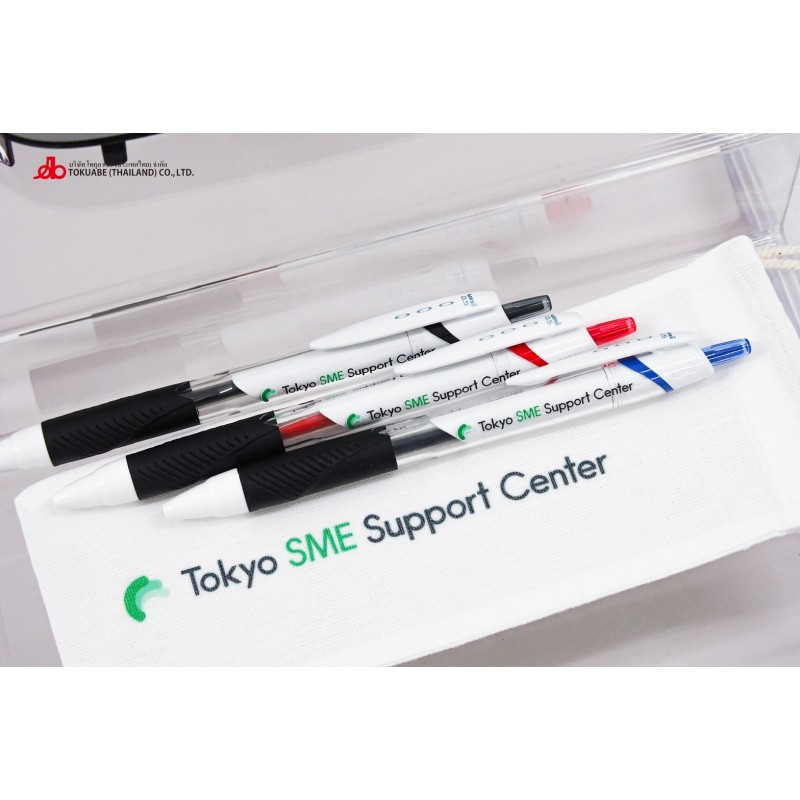
For manufacturers seeking to launch printed plastic components without existing machinery, specialized staff, or pad printing process expertise, TOKUABE offers Contract Printing Services supporting product development, market trials, and continuous mass production runs.
We accommodate flexible order quantities. To optimize setup costs and process efficiency, we recommend an initial batch volume of approximately 1,000 pieces per artwork pattern to maintain rigorous quality control and cost-effectiveness.
Prior to full scale production, TOKUABE conducts trial printings and comprehensive quality assessments, such as:
- Ink adhesion testing
- Solvent wipe/rub testing
- Pantone color matching
- Sample part quality inspections
These trial services enable manufacturers to verify process feasibility before committing capital investments to full production infrastructure.
When production volumes expand to justify establishing internal capacity, TOKUABE facilitates seamless technology transfer into customer facilities, assisting with equipment selection, setting printing parameters, and sourcing matching consumables.
We support complete pad printing machine installations for factories starting up or scaling capacity, delivering equipment tailored to component geometries and target throughput.
Furthermore, we supply a fully integrated ecosystem of matching consumables, including:
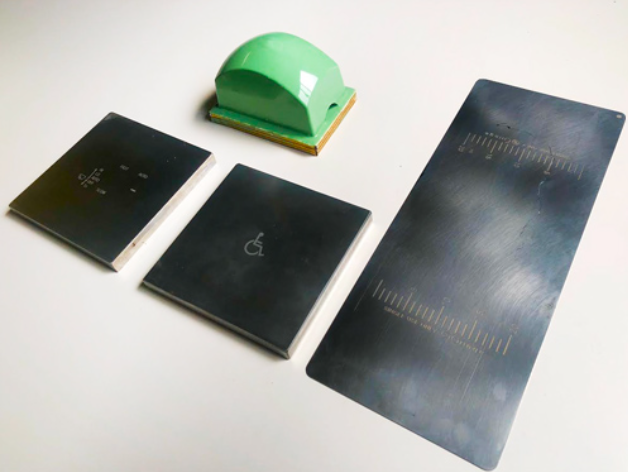
- Steel cliché plates
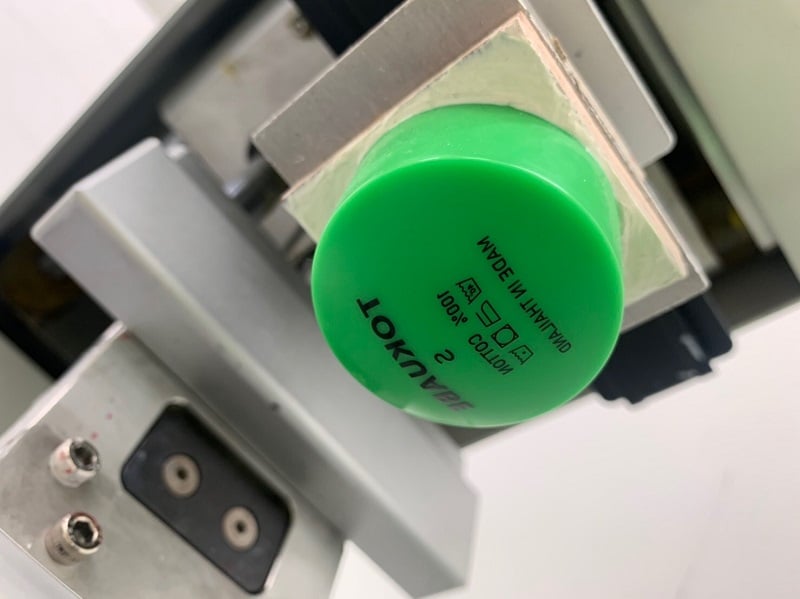
- Silicone pads
- Doctor blades
- Printing inks
Sourcing all consumables from a single unified provider ensures component compatibility, minimizes setup troubleshooting, and optimizes overall printing system reliability.
※For more details, please download the PDF attached to this article or contact us via the form at the bottom of the page.
■ Detailed Technical Specifications for Pad Printing Materials and Equipment
The table below outlines key technical specifications for pad printing supplies and equipment supported by TOKUABE.
Master Specifications Table for Pad Printing Materials and Machinery
| Item / Grade | Specifications and Key Application Features |
Silicone Pad | Grade N | Hardness levels: 38 / 31 / 21 / 17 • Contains highly effective antistatic agents, helping to significantly reduce problems caused by static electricity. |
Silicone Pad | Grade AT / LH | Selected according to the application, such as reducing scattered fiber marks, minimizing ink buildup on the pad surface, or improving abrasion resistance. |
Steel Plate | Type S / Type B | Plate-engraving depth tolerance controlled to ±2 or ±4 microns. Manufactured to Japanese standards for strength, durability, and reliable performance. |
Doctor Blade | Thickness: 0.3t / 0.45t / 0.9t | Available in Parallel and Double Triangle profiles. • Provides consistent ink wiping and helps reduce damage to the steel plate surface. |
Pad Printer | Pad Printing Machine | Ready-to-use machine suitable for starting a production system or conducting process trials. |
■ 3-Stage Quality Control Protocol and Operator Training for Sustainable Manufacturing
To establish stable pad printing processes and maintain repeatable quality standards on plastic molded components, TOKUABE implements a 3-stage quality inspection system covering pre-print, in-process, and post-print operations.
Pre Print Inspection: Before starting production runs, critical parameters impacting ink adhesion and visual quality are verified.
- This includes surface cleaning of substrate components to remove oil, dust, and release agent residues
- verifying ink viscosity and solvent blending ratios
- inspecting doctor blades and silicone pad surface conditions to prevent defect generation at the source.
In Process QC: Throughout active production runs, continuous quality checks are conducted for print registration, artwork alignment, and ink adhesion stability to maintain consistent quality output.
Post Print QC: Post-production validation includes final unit counts against purchase orders and protective packaging to mitigate surface abrasion or scratching risks during transport and handling.
■ Operator Training for Sustainable Troubleshooting
A common operational challenge in manufacturing facilities is workforce turnover, which risks disrupting technical knowledge transfer and process continuity.
TOKUABE bridges this knowledge gap through a dedicated Thai engineering team trained in specialized printing technologies by our headquarters in Japan, leveraging over 60 years of technical expertise.
Through hands-on, on-site guidance, we empower customer operators to understand machine parameter setup, correct material selection, and fundamental troubleshooting procedures.
■ Frequently Asked Questions (FAQ) Regarding Troubleshooting and Pad Printing Services
Q1: How can ink adhesion issues be resolved on difficult-to-print materials such as PP or PE?
A1: PP and PE are polyolefin plastics with low surface energy, making standard ink adhesion difficult and prone to peeling. Solutions include utilizing specialized ink formulations designed for direct polyolefin adhesion or applying pre-treatment processes to raise surface tension. TOKUABE offers pre-production sample trials on actual customer parts to evaluate adhesion performance.
Q2: Is trial printing available before committing to mass production?
A2: Yes, TOKUABE offers a Pad Printing Trial Service to evaluate print quality and color fidelity prior to full production. Customers provide sample substrates, color targets, and artwork files, allowing our team to determine optimal ink, pad selection, and process parameters while producing sample parts for customer approval.
Q3: What causes static electricity issues in pad printing, and how can they be mitigated?
A3: Static charge accumulation typically occurs in low-humidity environments, such as air-conditioned rooms or dry seasons, causing pattern distortion or ink scattering. Mitigation steps include controlling ink viscosity, optimizing solvent blends, and selecting anti-static silicone pads.
Q4: How can the service life of silicone pads be extended?
A4: Silicone pad longevity depends on applied compression force and chemical exposure on the pad face. Recommended practices include setting optimal stroke pressure to avoid excessive compression and using gentle cleaning solvents and non-abrasive wipes.
■ Key Terms for Understanding This Article
- Pinholes : Microscopic air pockets or uncoated voids appearing on the printed ink surface.
- Fiber : A defect where fine ink strands extend beyond artwork edges due to static electricity or improper ink tackiness.
- Contract Printing Service : An outsourced manufacturing service providing trial to full mass-production printing for companies without in-house printing equipment.
- Pad Printing Trial Service : A testing service conducted on customer substrate parts to evaluate ink formulas, silicone pad selection, and process parameters prior to mass production.
※For more details, please download the PDF attached to this article or contact us via the form at the bottom of the page.
Company Information
Pad printing services / Printing materials / Printing consultation services
Tokuabe (Thailand) Co., Ltd. was established in December 2014 as part of Tokushu Abe Seihanjo Co.Ltd., Japan, a company with over 60 years of expertise. We bring proven Japanese knowledge and techniqu ...


PICKUP
Technology & Services
CONTACT
Contact