_e20dbbbb-8b52-47ad-85d5-bc3eb067102e.png)
SERVICES
Technology & Services
Automatic Soldering and Terminal Processing of High-Frequency Litz Wire Coils|Multi-Directional Dipping Technology to Prevent Coating Residue
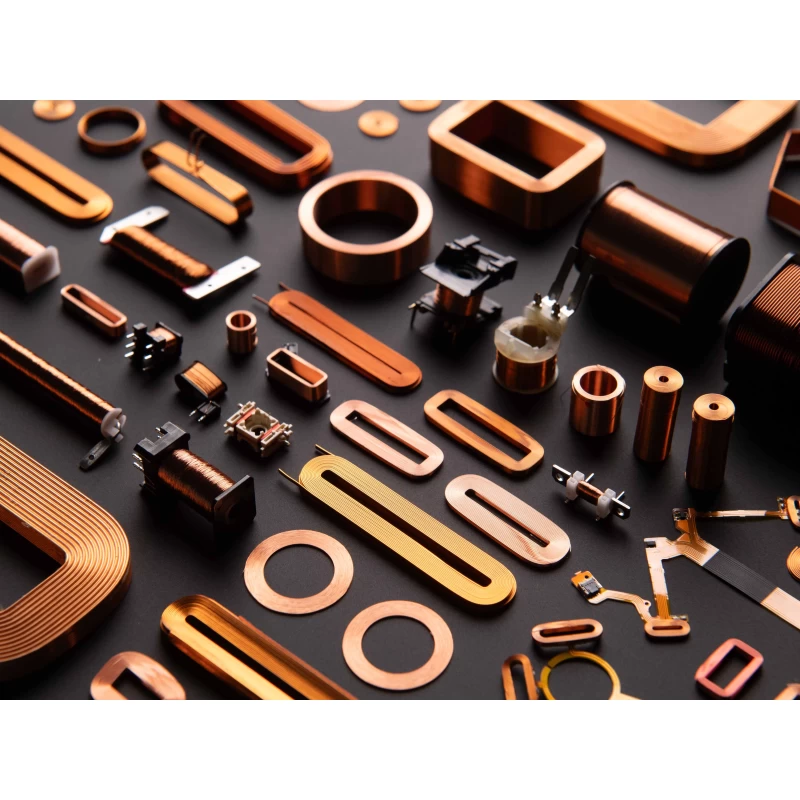
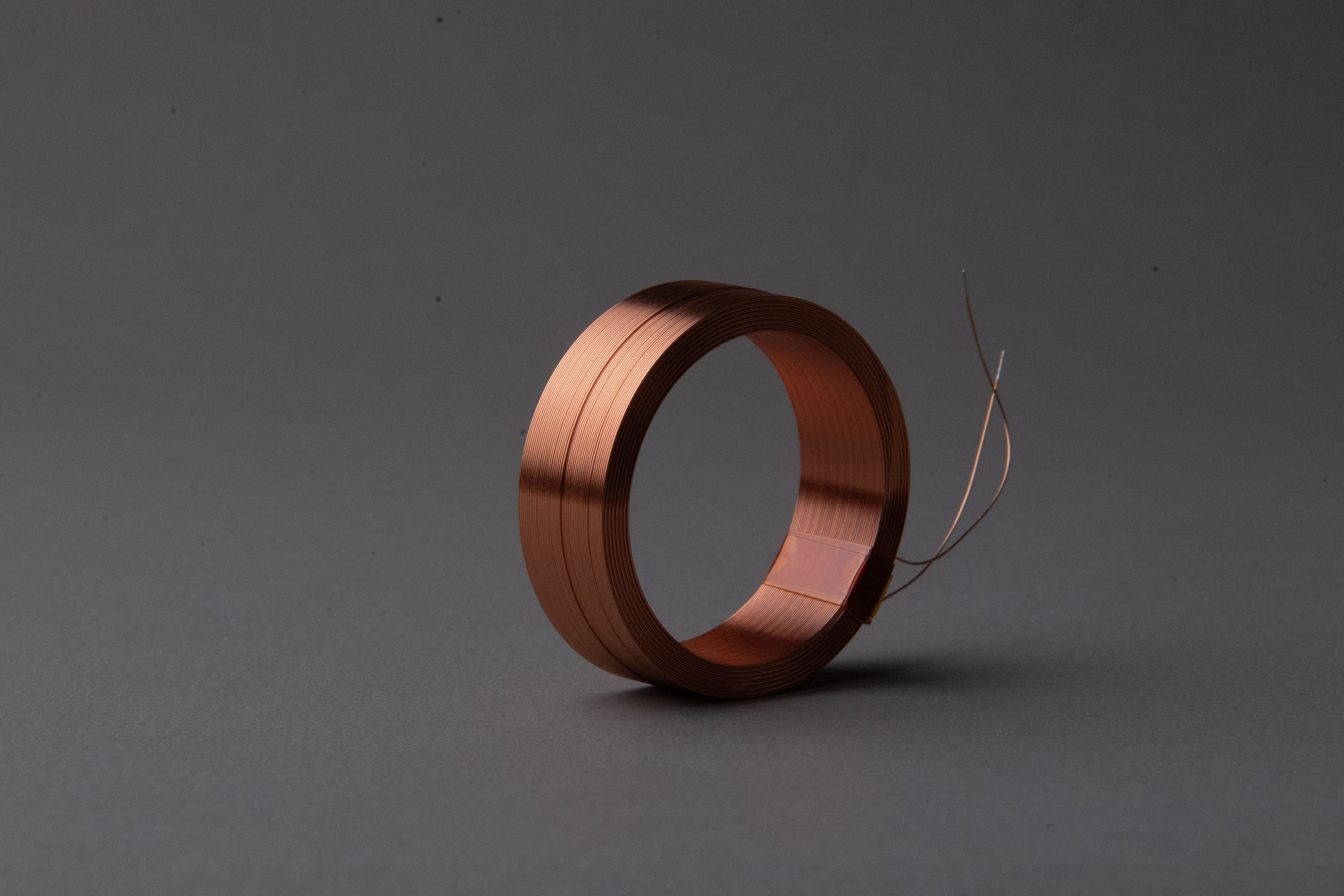
Pronec Co., Ltd. provides contract automatic soldering and terminal processing services for high-frequency Litz wire coils in Thailand, supporting both Tetron-covered Litz wire and microfine wire — from prototype analysis through to automated mass production at a scale of 200,000 units per month or more.
Table of Contents
- Multi-Directional Dipping and Two-Stage Soldering to Break Down Tetron Coating and Prevent Solder Balls
- Automatic Wire-End Cutting with Dedicated Fixtures to Prevent Crushing and Maintain Dimensional Tolerance
- Integrated Quality Inspection and Production Structure in Thailand
- Engineering Consultation and Support from Design Through to Actual Production
- Frequently Asked Questions (FAQ)
Multi-Directional Dipping and Two-Stage Soldering to Break Down Tetron Coating and Prevent Solder Balls
Producing Litz wire coils with excellent high-frequency performance requires stripping the polyester fiber coating — known as Tetron — using heat, at the same time as soldering the conductor. This step often carries the risk that the coating doesn't strip completely, leaving "coating residue" on the wire end, or that solder balls splash and stick unintentionally to other surfaces.
To prevent this, Pronec has introduced multi-directional dipping technology into its production line. Rather than simply dipping the wire end up and down in a traditional vertical motion, the automated system moves the wire in multiple directions within the solder bath, combined with a clearly defined two-stage soldering process.
- Stage one uses heat to fully melt and remove the Tetron coating residue from the conductor surface.
- Stage two then solders the now-clean conductor surface.
This precise, multi-angle heat induction and soldering across two stages excellently eliminates the problem of melted coating residue, allowing the solder and conductor metal to bond densely and securely. Our automatic soldering machines are also fitted with splash-guard covers to prevent solder balls from scattering and sticking elsewhere.
These techniques reduce the risk of short circuits or signal faults after assembly onto a circuit board. Moving to a fully automated system also reduces quality variation that once depended on operator skill level, resulting in coils with consistent durability and electrical properties that meet the standards required for high-frequency systems.
Automatic Wire-End Cutting with Dedicated Fixtures to Prevent Crushing and Maintain Dimensional Tolerance
Litz wire, formed by twisting multiple fine conductor strands together, often runs into problems during end-cutting after winding. When cutting is done manually with pliers, the clamping force flattens the cut end into an oval shape, which commonly causes the outer diameter to exceed the tolerance specified in the design — a serious obstacle when fitting into the tight spaces of high-precision electronic devices.
Pronec addresses this limitation with automated wire-end cutting equipment, which includes a dedicated fixture to hold the coil's wire end at a set position and length, working together with an air nipper. Once an operator places the workpiece on the fixture and starts the system, the air nipper moves to the specified position and cuts the wire end precisely according to the programmed conditions.
Because the base of the wire is firmly locked in place by the dedicated fixture during cutting, the twisted structure of the Litz wire is not subjected to excessive mechanical tension. This keeps the cut end in its original round, cylindrical shape without any excess burr.
This mechanized cutting process completely eliminates the variation in wire-end length that typically results from differences in operator skill, prevents dimensional errors, and ensures the workpiece is ready for precise, smooth assembly onto a circuit board or fitting into a housing.
Integrated Quality Inspection and Production Structure in Thailand
Splitting winding, soldering, terminal processing, and quality inspection across multiple suppliers often places a heavy burden on procurement and production managers, due to the high risk of damage during transport, buildup of semi-finished inventory, and fluctuating quality. Furthermore, if a defect is found at the final stage, tracing the cause and making corrections tends to take a long time due to limited communication between multiple factories.
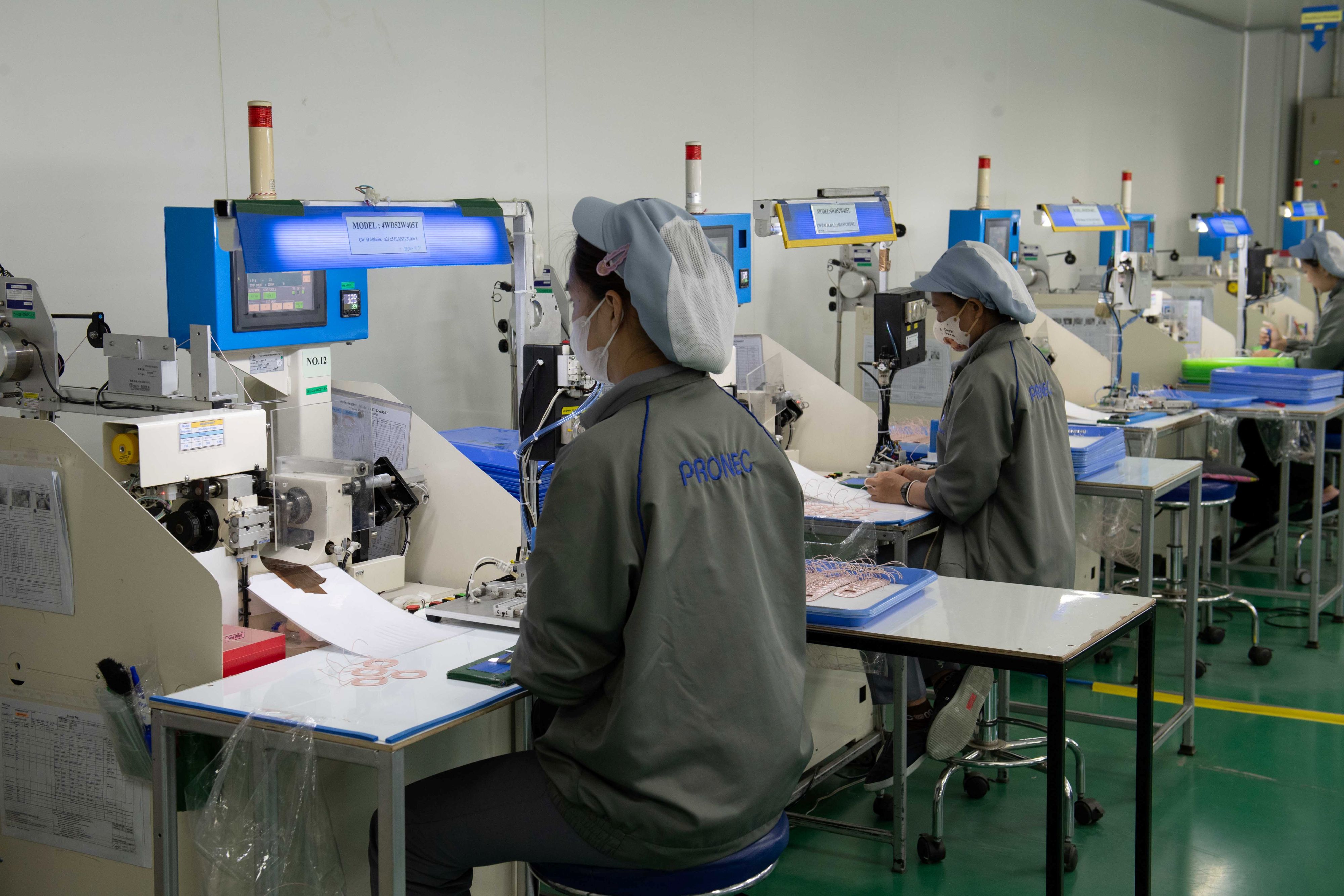
Pronec offers integrated production within our own factory in Thailand, bringing every step together on a single production line — from bobbin molding, precision coil winding using in-house-designed winding machines, multi-directional automatic soldering, through to automatic wire-end cutting.
In addition, every workpiece goes through a comprehensive electrical quality inspection, including:
- Resistance Test
- Withstanding Voltage Test
- Insulation Resistance Test
- Impulse Test
We use QC Pro quality control software to record and evaluate measurement results in real time, completely eliminating the risk of errors from manual data entry.
Manufacturing and quality control under a single unified standard significantly reduces the risk of damage from transport and stock buildup along the way. And if a defect is found, our team can immediately pull up the production history of that batch to review the conditions of each process step, making root-cause analysis and correction transparent, fast, and accurate — giving you confidence in receiving reliable, high-quality Litz wire coils.
Engineering Consultation and Support from Design Through to Actual Production
Developing a new Litz wire coil, or relocating production from overseas to Thailand, requires a detailed advance assessment of manufacturing engineering conditions and compatibility with automated machinery. Trial production of a prototype without considering the actual production environment and its limitations often leads to problems once real production begins — such as needing to redesign parts or build new molds — delaying project launch and driving up costs.
To avoid these obstacles, Pronec has a Japanese engineer stationed on-site at our Thailand factory, dedicated to listening to and reviewing customer drawings, technical requirements, and design models directly. Our engineering support isn't limited to producing prototypes for testing — our team is involved from the earliest stages of development in planning systems for large-scale production of 200,000 units per month or more.
This upfront readiness assessment and system planning covers:
- Calculating and designing fixtures for the automatic soldering system
- Assessing wire thickness and length for automatic cutting
- Planning mold structure
- Proposing options to improve production smoothness, such as twist processing at the terminal end to increase resistance to mechanical load and heat
Laying this production foundation with a focus on maintaining yield and eliminating friction in the workflow — starting from the design stage — significantly reduces the need for later structural revisions. This allows large-scale production lines to launch on schedule, while keeping the initial cost of fixtures and tooling transparent and cost-effective.
※For more details, please download the attached document or fill out the form below to make an inquiry.
Frequently Asked Questions (FAQ)
Q1: Can we get in touch by sending only a drawing or a technical specification document?
A1: Absolutely. Our team is happy to evaluate your drawings to assess feasibility for coil winding, automatic soldering, wire-end cutting, and assembly as a whole, and to offer consultation and suggestions for adjusting part structures for easier, more cost-effective manufacturing (Design for Manufacturing).
Q2: What production volume makes it most cost-effective to use automated soldering and terminal-processing systems?
A2: Automated equipment and machinery deliver the greatest benefit — both in quality stability and cost per unit — once average production volume reaches 200,000 units per month or more. Below that threshold, the cost of dedicated fixtures and initial setup may not be justified from an engineering standpoint. Our team is glad to review your planned production volume and product specifications together to propose the most cost-effective production approach for your needs.
Q3: Does Pronec support material consignment (where you supply the raw material) or full material sourcing?
A3: We support both models flexibly, based on customer needs. You may supply your own wire — such as Tetron-covered Litz wire or microfine wire — for us to process, or you may have Pronec handle sourcing high-quality materials as part of a fully integrated production service. We work with leading wire suppliers both domestically and internationally to source materials that meet your technical standards.
※For more details, please download the attached document or fill out the form below to make an inquiry.
Company Information
Medical equipment / Electrical component for transportation equipment / Electronic parts
Air core coil, Bobbin coil, Coil Assembly, Solenoid coil, Wireless power transfer coil, WPC, RFID, Winding machine, OEM / Plastic molded products, overmolded products
PRONEC is a specialized manufacturer in Thailand with over 30 years of experience in air-core coils, precision coils, and electronic component assemblies. With integrated in-house capabilities from pr ...
CATALOG
Related Catalogs
PICKUP
Technology & Services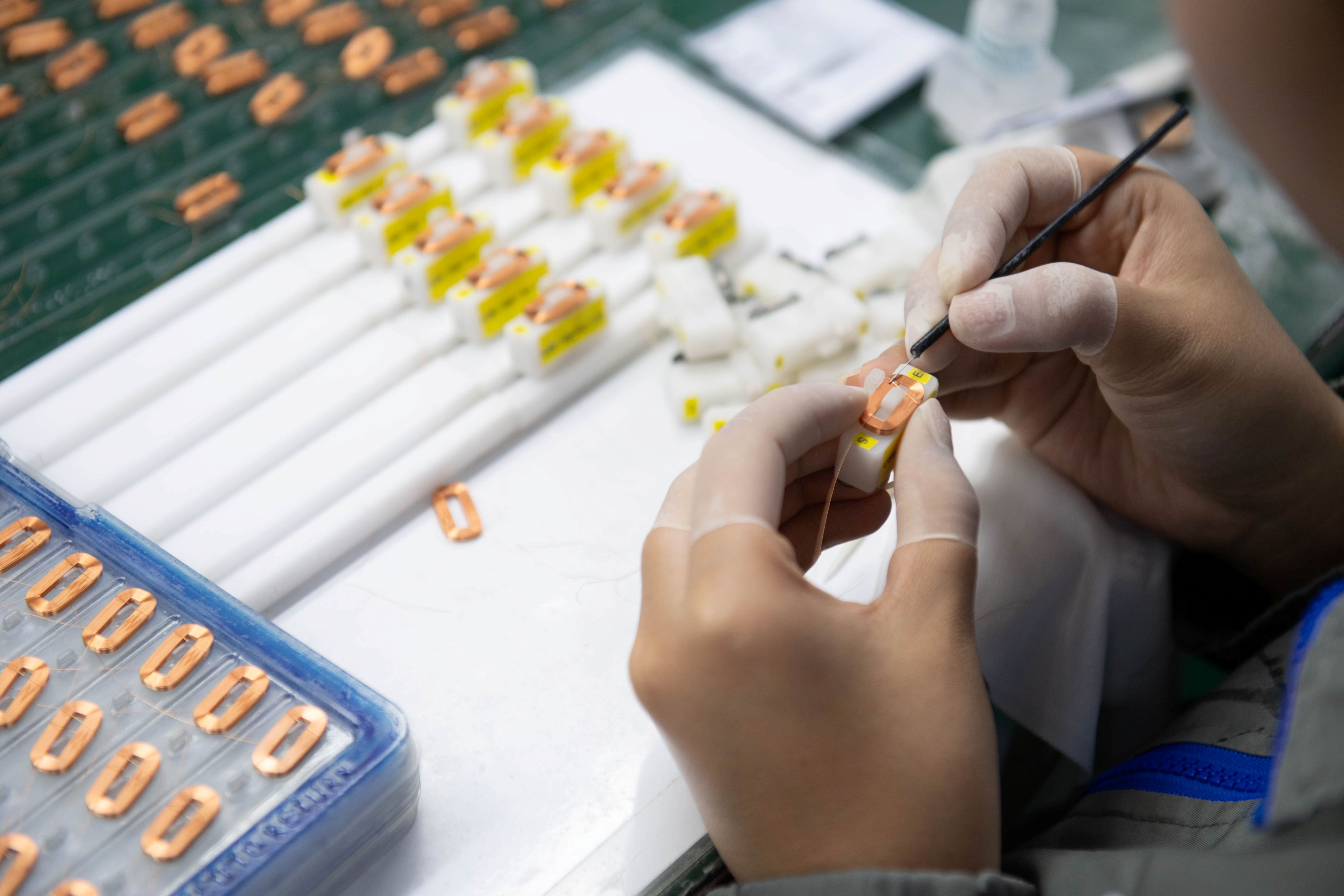
CONTACT
Contact