


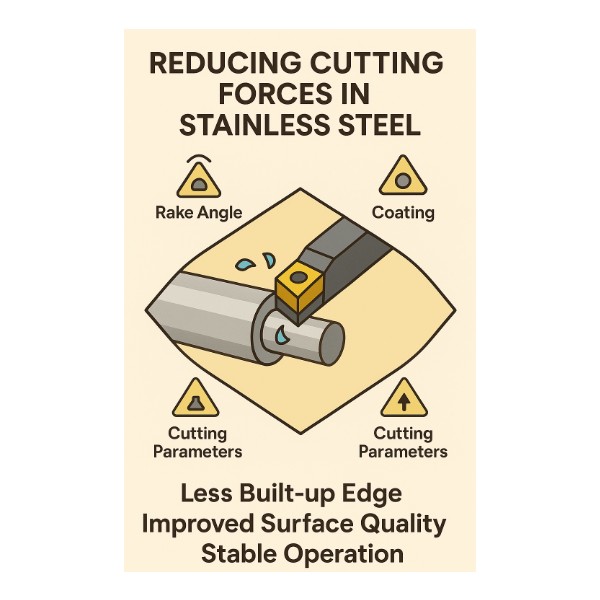
Optimizing Stainless Turning | How Proper Parameters Reduce Cutting Force and BUE
🌟 Key Takeaways• Stainless steel generates high cutting forces and forms BUE easily, so fc, ft, and fr must be controlled
• High positive rake + fine chip breakers reduce cutting load
• Smooth coatings reduce friction and BUE
• Proper parameters improve stability and tool life
• FSF/FSF-P inserts effectively reduce cutting force and control chips in SUS304
ーーーーーーーーーーーーーーーーーーーーーーーーーーーーーーー
Stainless steel produces high cutting forces, work hardens quickly, and forms BUE easily. Stainless turning therefore requires parameters that minimize cutting load. Without control, long chips, burrs, vibration, and short tool life occur.
This article outlines cutting-force mechanisms and a structured method to reduce BUE.
ーーーーーーーーーーーーーーーーーーーーーーーーーーーーーーー
Stainless grades like SUS304 are tough and harden during cutting, rapidly increasing shear forces even at low feed. Issues include:
• BUE and poor finish
• Vibration and dimensional errors
• Rapid wear and machine stoppages
• Long chips that destabilize machining
Reducing cutting force is essential for stable stainless turning.
ーーーーーーーーーーーーーーーーーーーーーーーーーーーーーーー
Cutting force consists of:
• fc: shear force
• ft: thrust force
• fr: radial force
In stainless machining, ft and fr rise because chips are tough and irregular, increasing rake-face friction and promoting BUE, which dulls the edge and worsens finish.
ーーーーーーーーーーーーーーーーーーーーーーーーーーーーーーー
Methods to reduce cutting force:
• High positive rake (20–25°)
Lowers shear force and heat. FSF geometry reaches 25°. [1]
• Low-feed chip breakers
Multi-step breakers form short chips and reduce ft.
Feed: 0.03–0.08 mm/rev
• Smooth coatings
FSF-P coatings reduce friction, prevent chip adhesion, and improve finish. [1]
• Recommended SUS304 parameters [1][2]
Cutting speed: 120–180 m/min
Feed: 0.03–0.08 mm/rev
Depth of cut: 0.10–0.40 mm
• Extra-sharp edges
Keeping parameters in this window reduces fc, ft, and fr.
ーーーーーーーーーーーーーーーーーーーーーーーーーーーーーーー
With reduced cutting force, high-positive-rake inserts and stainless chip breakers create short chips, prevent impact, reduce BUE, run cooler, and extend tool life.
FSF/FSF-P SUS304 results:
• Tool life: 150 → 750 pieces
• No BUE even at low feed [1]
ーーーーーーーーーーーーーーーーーーーーーーーーーーーーーーー
Medical-part users report that switching to high-positive-rake, low-feed chip-breaker inserts reduces BUE, stabilizes Ra values, and decreases downtime from insert changes.
If cutting force is not controlled:
• BUE causes edge chipping
• Rough surfaces and burrs require deburring
• Micro-chatter harms roundness/straightness
• Short tool life raises cost per part
• Low-feed machining becomes unstable
Thus, controlling cutting force is fundamental in precision stainless turning.
ーーーーーーーーーーーーーーーーーーーーーーーーーーーーーーー
📘 Summary
Effective stainless machining requires proper rake angle, chip breaker, coating, and parameter window. When combined correctly, BUE decreases, stability improves, surface quality increases, and tool life extends.
📥 CTA (General)
You can learn more from the related topics below.
ーーーーーーーーーーーーーーーーーーーーーーーーーーーーーーー
❓ FAQ
Q: Why is stainless steel prone to BUE?
A: High friction and work hardening cause chips to stick easily.
Q: How much does a chip breaker affect cutting force?
A: It controls chip length and direction, reduces rake-face pressure, and lowers cutting force.
Q: If cutting force is high, where should optimization start?
A: Increase positive rake and use a low-feed chip breaker first.
ーーーーーーーーーーーーーーーーーーーーーーーーーーーーーーー
📚 Glossary (Key Terms)
• Cutting Force (fc): Main shear force
• Thrust Force (ft): Force into the rake face
• Radial Force (fr): Side force causing vibration
• BUE: Built-Up Edge
• Positive Rake: Angle reducing shear force
• Chip Breaker: Groove controlling chip flow
• Parameter Window: Stable cutting-condition range
ーーーーーーーーーーーーーーーーーーーーーーーーーーーーーーー
📖 Reference
Cutting Force & Chip Control Test Report – MMC Hardmetal (Thailand) Technical Center (N/A)
ISO 3685: Tool-Life Testing with Single-Point Turning Tools – ISO (N/A)
ーーーーーーーーーーーーーーーーーーーーーーーーーーーーーーー
🔗 Cluster Internal Link
• Core Content: https://prime.nc-net.com/92663/en/product_others/detail_goods/26292
• Basic Knowledge: https://prime.nc-net.com/92663/en/product_others/detail_goods/27651
ーーーーーーーーーーーーーーーーーーーーーーーーーーーーーーー
🔒 Trust
This content has been reviewed by MMC Hardmetal (Thailand) Co., Ltd. to ensure consistency with engineering principles and cutting-tool behavior in stainless applications.
ーーーーーーーーーーーーーーーーーーーーーーーーーーーーーーー
#CuttingForce #StainlessTurning #BUE #ChipControl #FSF #MachiningParameter
#SUS304 #Metalcutting #CNCTurning #ManufacturingKnowledge
📆 Updated: 2025-12-08
CONTACT
Contact FormCompany Information
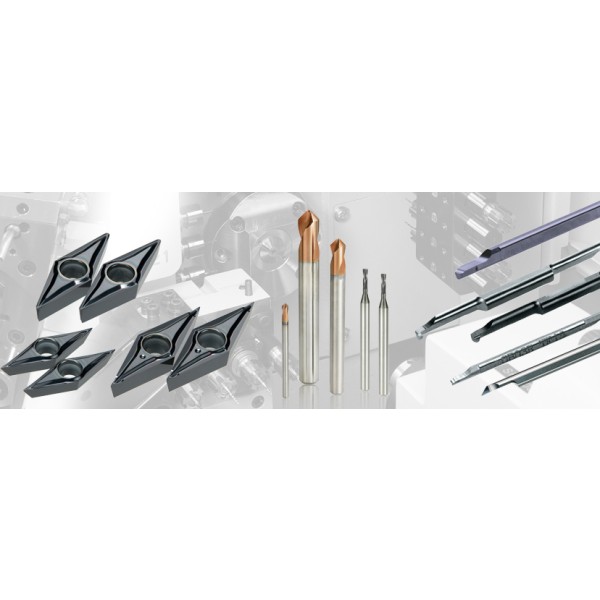
Jigs and tools
Turning Tools / Rotary Tools / Drilling Tools
Mitsubishi Materials carbide tools provide innovative cutting tools and solutions to customers worldwide.