_d14c9c1b-9850-49e8-adfb-d520564df20c.png)
KNOWLEDGE
Knowledge
Technology and Services
Unsharp Lines and Blurred Images in Hot Stamp Work|Is the Cause the Die or the Process?
2026-09-25
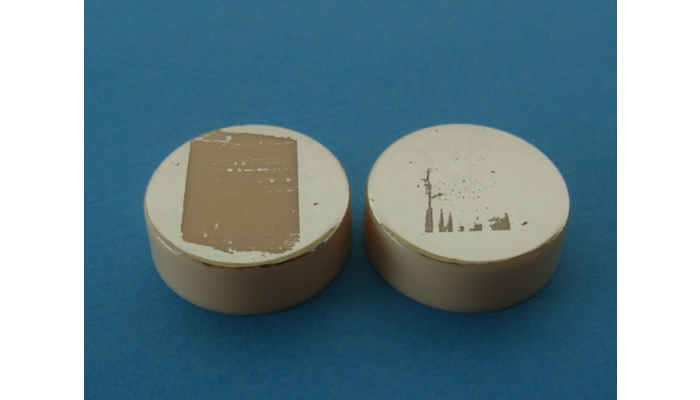
When the edges of letters or lines in Hot Stamp work are not sharp, the first thing many people suspect is that there may be a problem with the die. In reality, however, blurred images may be related to several factors, including the condition of the die, the workpiece position, the work-holding jig, and pressure distribution. Checking each point one by one therefore helps determine whether the root cause lies in the die itself or occurs during the stamping process.
Table of Contents
- Blurred images do not always mean that the die is damaged
- The location of the symptom helps identify the points to inspect
- The die shape must correspond with the workpiece surface
- Checking the jig, pressure, heat, and time
- What Tokuabe (Thailand) can do about this problem
- FAQ
- Key terms for understanding this article
■ Blurred images may not always mean that the die is damaged
Unsharp lines or blurred image edges may result from the condition of the die, uneven pressure distribution, or the workpiece moving away from its specified position during stamping. Therefore, finding only one NG workpiece is not sufficient to conclude that the die is the cause.
If blurred edges repeatedly occur in the same position, the die surface, die shape, and the area that contacts the workpiece should be inspected first. However, if the symptom appears in different positions during each cycle, the jig, workpiece placement, and consistency of pressure should be checked together.
■ The location of the symptom helps identify the points to inspect
Before adjusting settings or replacing equipment, several NG workpieces should be compared to determine whether the blurred area occurs in the same position on every piece.
If the edge of the pattern is repeatedly blurred at the same point, the symptom may be related to the die contact area or the shape of the workpiece. If the symptom shifts between different positions, check whether the workpiece is placed and held in the same position every time. A jig that does not hold the workpiece securely may allow its position to shift during stamping, causing the pattern edges to appear differently in each cycle.
■ The die shape must correspond with the workpiece surface
A die that does not contact the entire workpiece or does not distribute pressure in accordance with the pattern area may cause some edges to lose sharpness, particularly in fine-line applications and workpieces with curved surfaces.
Inspection of the die should therefore not focus only on the sharpness of the pattern on the die face. It should also confirm whether the die shape fits evenly against the workpiece surface. If some areas make contact first or receive more pressure than others, the foil may spread beyond the pattern edge or may not transfer evenly across the entire area.
■ Checking the jig, pressure, heat, and time
After comparing the locations of the symptoms, check whether the jig can hold the workpiece securely and place it repeatedly in the same position. Then inspect the die contact area and the pressure distribution across the entire pattern.
If pressure is uneven, some parts of the pattern may receive excessive pressure, while other parts may not make full contact with the foil. For workpieces with curved surfaces, both the workpiece support points and the direction in which the die makes contact should be checked, because differences in only certain positions may cause uneven pattern edges.
Once it has been confirmed that the workpiece does not move and that the die makes full contact, compare the heat and pressing time one setting at a time. Adjusting several settings simultaneously may make it difficult to determine which change is related to the blurred image.
If the symptom remains in the same form after replacing the die, the jig, workpiece shape, and pressure distribution should be inspected again. However, if the symptom changes according to the workpiece placement position, the relationship between the die and the contact area should be checked once more.
■ What Tokuabe (Thailand) can do about this problem
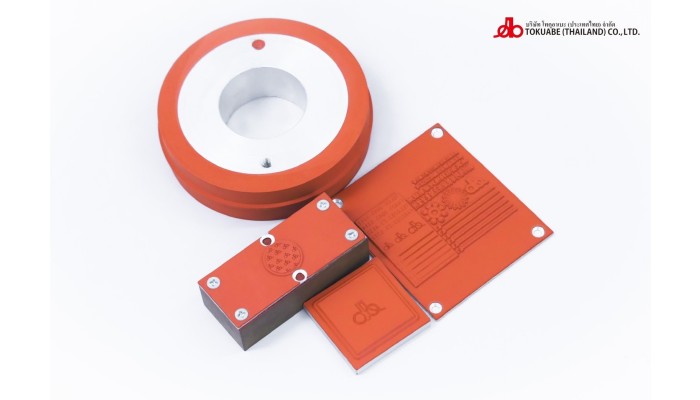
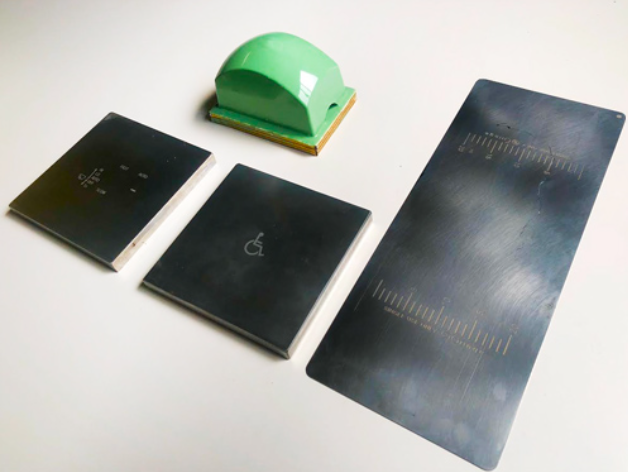
Tokuabe (Thailand) offers several types of rubber dies for Hot Stamp work, including flat types, R types for curved surfaces, and roller types, to suit different workpiece characteristics. Metal dies made from brass or hardened steel are also available. These provide high sharpness and durability for continuous use and are suitable for fine-line applications or high-volume production.
When analyzing problems involving unsharp pattern lines, prepare NG workpiece samples, images showing the locations where the symptoms occur, the workpiece shape, the die type, the holding method, and the settings used during stamping. This information helps the team clearly distinguish whether the root cause lies in the die itself, the workpiece holding method, or the settings used in the stamping process, rather than replacing equipment before identifying the actual cause, which may result in unnecessary time and cost.
※For more details, please download the attached materials or contact us via the form below.
■ FAQ
Q1:Does a blurred image always mean that there is a problem with the die?
A1:Not always, because the same symptom may result from workpiece placement, the work-holding jig, or uneven pressure distribution. Several workpieces should be compared, and the locations of the symptoms should be inspected before replacing the die.
Q2:Should the inspection begin with the die or the machine settings?
A2:Begin by checking the location of the symptom and the workpiece holding condition. If the blurred image repeatedly occurs at the same point, inspect the die surface and shape, then compare the pressure, heat, and pressing time one setting at a time.
Q3:What information should be prepared for problem analysis?
A3:Prepare images of several NG workpieces, the locations where blurring occurs, the shape and material of the workpiece, the die type, the holding method, and the pressure, heat, and time settings used in each cycle.
■ Key terms for understanding this article
- Blurred Edge : A condition in which the edges of letters or pattern lines are not sharp after foil transfer
- Hot Stamp Die : A die used to press the foil and transfer the pattern onto the workpiece surface
- Jig : A device used to hold and position the workpiece during stamping
- Contact Area : The area where the die, foil, and workpiece surface make contact while pressure is applied
※For more details, please download the attached materials or contact us via the form below.
Company Information
Pad printing services / Printing materials / Printing consultation services
Tokuabe (Thailand) Co., Ltd. was established in December 2014 as part of Tokushu Abe Seihanjo Co.Ltd., Japan, a company with over 60 years of expertise. We bring proven Japanese knowledge and techniqu ...


PICKUP
Technology & Services
CONTACT
Contact