
KNOWLEDGE
Knowledge
Producer goods
How Can You Stop Coolant Deterioration and Unpleasant Odors? A Method for Removing Fine Sludge That Filters Cannot Fully Capture
2026-08-14
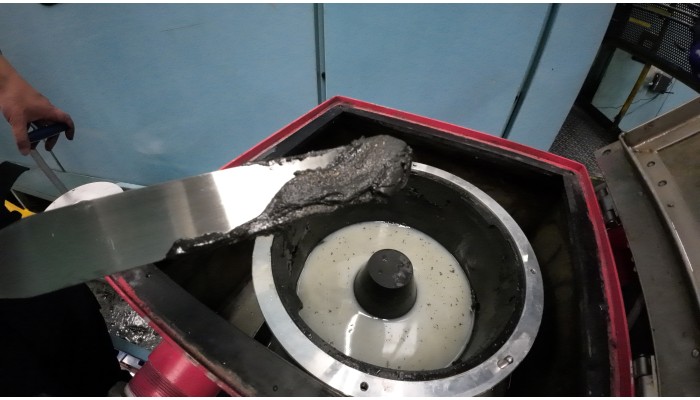
In industrial factories with metal cutting, machining, or painting processes, unpleasant odors and fluid deterioration are recurring problems. How can coolant deterioration and bad odors be prevented?
The accumulation of fine sludge that conventional filtration systems cannot fully capture can become a source of nutrients and a breeding environment for anaerobic bacteria. This article presents an approach that combines physical separation of fine sludge with odor management to help improve the working environment.
Table of Contents
- Why Fine Sludge Causes Coolant Deterioration
- Why Cloth and Paper Filters Cannot Fully Capture Fine Particles
- Combining Mechanical Sludge Separation with Air Odor Treatment
- Particle Size and Odor Concentration Factors to Check Before Installation
- What Touto Separator Asia Can Provide
- Frequently Asked Questions
Why Fine Sludge Causes Coolant Deterioration
Contamination from fine sludge particles and floating oil in coolant tanks is one of the main factors that causes progressive fluid deterioration.
In general, chemicals may be added to tanks to help paint sludge float to the surface. However, these chemicals may not react completely with all of the sludge. Some fine sludge that does not agglomerate sinks to the bottom of the tank, where it accumulates and becomes a source of bacterial decomposition.
At the same time, some paint sludge and oil float to the surface and form a layer that blocks the liquid surface.
When these two conditions occur together, they restrict oxygen from dissolving into the liquid inside the tank. This creates an oxygen-deficient environment that supports the growth of anaerobic bacteria and allows continuous decomposition of organic matter.
As a result, hydrogen sulfide gas—commonly associated with a rotten egg smell—can be released into the working area.
Fluid deterioration not only creates unpleasant odors for employees but also shortens the service life of circulating fluids and can affect the cooling performance of machinery.
Why Cloth and Paper Filters Cannot Fully Capture Fine Particles
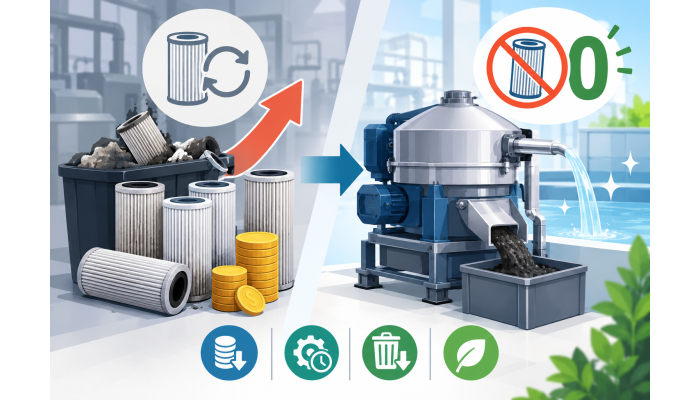
Conventional filtration systems that depend on consumable materials such as filter cloth or filter paper have structural limitations when it comes to capturing very fine particles.
As fluid passes through the filter, the pores in the filter material can capture particles larger than the gaps between the fibers. Fine metal dust or paint sludge particles smaller than 10 microns may therefore pass through the filter and continuously circulate back into the coolant tank.
In addition, as fine sludge continues to accumulate, the pores of the filter material become clogged. This increases pressure within the system and reduces the fluid flow rate.
Because of these structural limitations, conventional filtration systems may not be able to completely break the cycle of fine sludge accumulation that contributes to bacterial growth.
Combining Mechanical Sludge Separation with Air Odor Treatment
Solving unpleasant odor and fluid deterioration problems systematically requires both physical treatment of the liquid and treatment of the surrounding air.
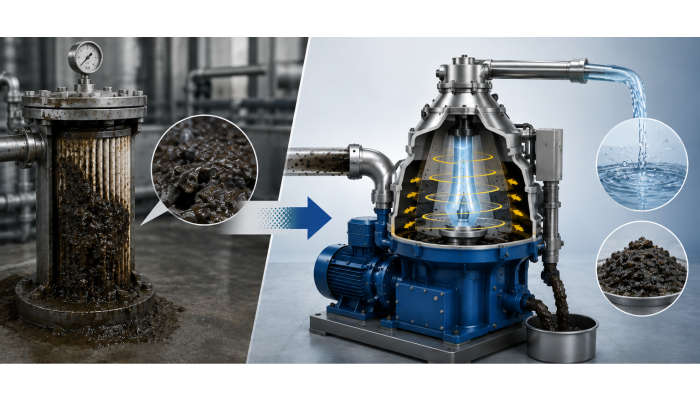
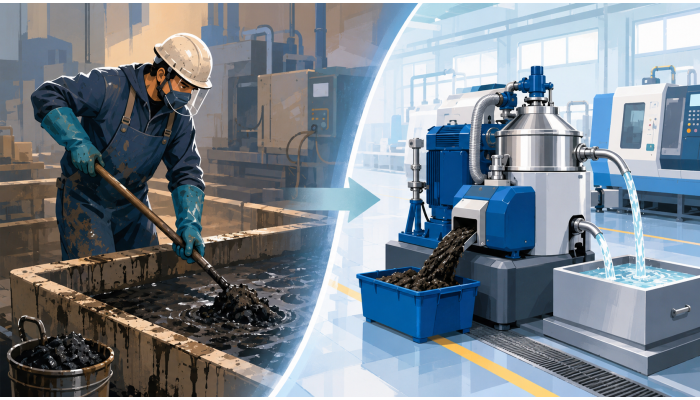
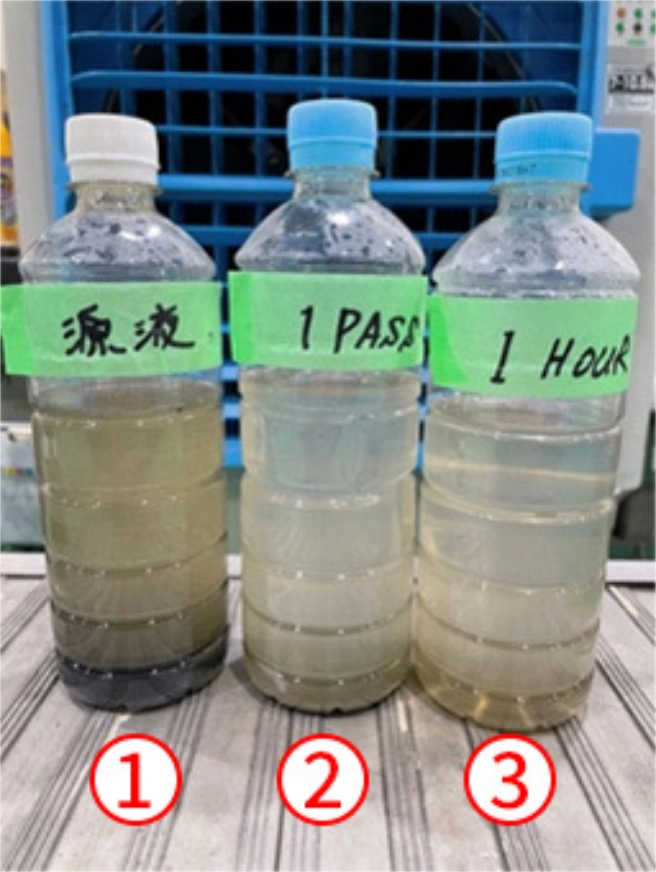
On the liquid side, centrifugal force can be used to separate fine sludge from coolant and circulating water in paint booths without requiring filters.
Continuous separation helps reduce the accumulation of sludge at the bottom of the tank, removing one of the areas where bacteria can develop.
At the same time, odors that evaporate into the surrounding air can be treated with an odor removal system that uses adsorption or reactions within the airflow. This helps capture volatile substances and unpleasant odors before they spread into the working area.
Combining these two treatment methods can therefore help maintain fluid cleanliness while also improving air quality within the factory.
Particle Size and Odor Concentration Factors to Check Before Installation
To design and select treatment equipment that matches actual site conditions, clear process parameters must be identified.
The first factor is the particle size and specific gravity of the fine sludge in the fluid. This information is used to determine the centrifugal force required to separate small particles.
The second factor is the flow rate of the circulating fluid and the amount of floating oil that must be separated. These values are used to determine the required processing capacity and inlet size of the centrifugal separator.
The third factor is the air volume and odor concentration around the tank or paint booth. This information is used to calculate the required airflow capacity and appropriate size of the odor treatment system.
The main conditions required for system selection are therefore:
- Sludge particle size
- Fluid flow rate
- Air volume of the target area
If these conditions are not yet available, please contact our team for further consultation and technical evaluation.
What Touto Separator Asia Can Provide
Touto Separator Asia provides design and installation services that combine industrial sludge management with odor treatment systems for factory environments.
Our automatic centrifugal separators can remove fine sludge from coolant and paint booth circulating water without using filters, helping reduce the accumulation that contributes to fluid deterioration.
We also provide exhaust air odor treatment systems designed according to actual site requirements to help control the release and spread of unpleasant odors into the surrounding environment.
By combining these systems, factories can maintain the performance of lubricants and coolant, reduce fluid replacement costs, and achieve tangible improvements in workplace hygiene.
※ For more information, please download the PDF file attached to this article or complete the form below to make an inquiry.
Frequently Asked Questions
Q1: Why does frequently replacing filters still fail to solve unpleasant coolant odors?
A1: Replacing filters alone may not solve the odor problem because cloth and paper filters have structural limitations when capturing very fine sludge particles.
Fine particles that pass through the filter can accumulate at the bottom of the tank. When floating oil restricts oxygen from reaching the liquid, anaerobic bacteria can develop and decompose organic matter, resulting in unpleasant odors.
Q2: How can a centrifugal sludge separation system be used with circulating water in a paint booth?
A2: A centrifugal separation system treats paint booth water by transferring paint-sludge-contaminated water into a high-speed rotating chamber.
Particles with a different specific gravity from the liquid are physically separated by centrifugal force. This can help reduce pump clogging and decrease unpleasant odors in the circulating water system.
Q3: How does an air odor treatment system work together with a centrifugal separator?
A3: The centrifugal separator removes sludge and contaminants from the liquid, helping reduce the source of odor within the fluid system.
Meanwhile, the odor treatment system handles gases and volatile substances released from liquid tanks and other sources.
Using both systems together helps reduce the source of odors in the liquid while also treating odor contaminants present in the exhaust air.
※ For more information, please download the PDF file attached to this article or complete the form below to make an inquiry.
Company Information
Industrial Centrifugal Separator
Touto Separator Asia Ltd. was established in 2025 as the Thai subsidiary of Touto Separator Industry Co., Ltd., a leading centrifuge manufacturer from Tochigi, Japan, with over 58 years of expertise ( ...
PICKUP
Technology & Services
CONTACT
Contact