PRODUCT
Production Goods
Production Goods
16 items
Filter by category
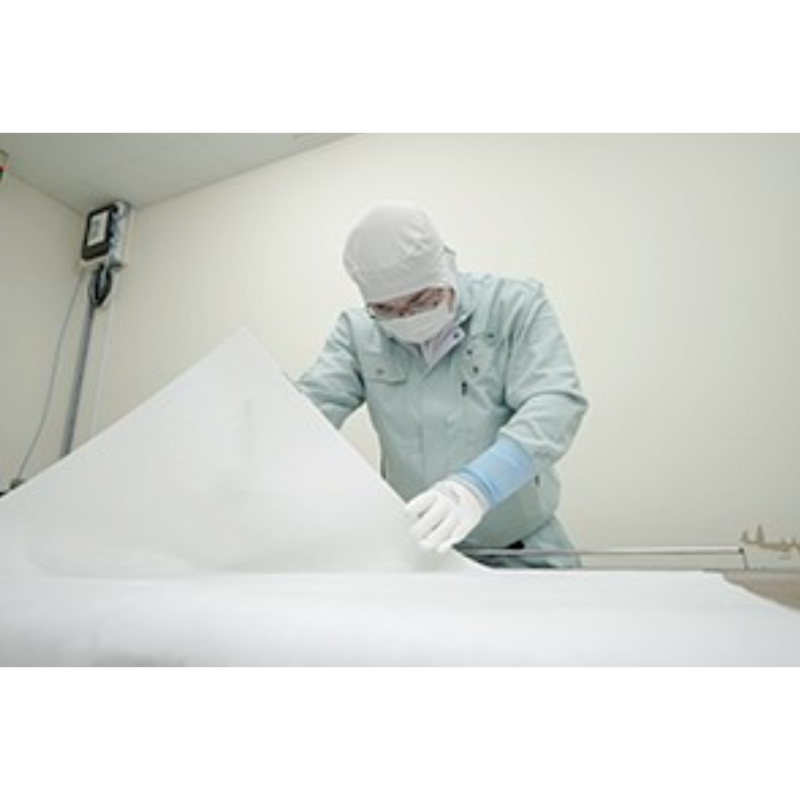
What is Meltblown Nonwoven Fabric?|Key Features and Industrial Applications
What is Meltblown Fabric?Meltblown fabric is a type of nonwoven textile manufactured by extruding molten thermoplastic (typically polypropylene) through nozzles while blowing it with high-speed hot air. The resulting fibers, ranging from microns to nanometers in diameter, form a self-bonded, porous ...
Production, Properties, and Applications of Meltblown Nonwoven Fabric
What is Meltblown Nonwoven Fabric?Meltblown fabric is created by blowing molten polypropylene (PP) or similar polymers through ultra-fine nozzles using high-speed hot air. This forms fibers with diameters in the micro- to nano-scale, which are laid into a nonwoven web with exceptional breathability ...
What’s the Difference Between Nonwoven and Woven Fabrics? A Usage-Based Comparison
Why Fabric Type MattersMaterial choice directly influences a product’s performance, cost, and market success. Although nonwoven and woven fabrics may appear similar, their construction methods lead to different physical properties, making it essential to choose based on end-use requirements.Nonwoven ...
Ensuring Quality Consistency in Melt-Blown Nonwoven Fabric|Challenges & Solutions
What Is Melt-Blown Nonwoven Fabric?Melt-blown fabric is produced by melting thermoplastic resin (commonly polypropylene) and extruding it through fine nozzles with high-speed hot air. The process creates ultra-fine fibers (1–5 µm in diameter) that form a dense, breathable fabric with excellent filtr ...
What Is the Melt Blown Process?|Ultrafine Fiber Tech for High‑Performance Filters
What Is the Melt‑Blown Process?This method extrudes molten polymer (e.g., PP, PET, TPU) through micro‑nozzles, then uses high‑speed, hot air to stretch them into ultrafine fibers. The result is a nonwoven web with unmatched filtration capability, especially compared to traditional spunbond methods.K ...
The Difference Between Meltblown and Spunbond Nonwoven Fabrics
What Is Nonwoven Fabric?Nonwoven fabric is made by bonding fibers together without weaving. Fiber bonding occurs through thermal, mechanical, or adhesive methods. Key industrial processes include spunbond and meltblown, each producing fabrics with distinct characteristics.Spunbond Nonwoven: Strength ...
Fine Fiber Formation by Meltblown Process|Technology and Industrial Applications
What is the Meltblown Process?The meltblown process involves melting thermoplastic resins such as polypropylene (PP) and extruding them through fine nozzles, where high-speed hot air stretches the molten polymer into ultrafine fibers. These fibers are then deposited onto a conveyor belt to form nonw ...
Physical Property Evaluation Methods for Nonwoven Fabrics
Why Evaluate Nonwoven Properties?Nonwoven fabrics are widely used in filtration, medical, industrial, and hygiene products. Evaluating their properties ensures they meet safety and performance standards. Key physical properties tensile strength, air permeability, and chemical resistance must be obje ...
Melt Blown Nonwoven Fabric|Micron-Level Filtration for Medical and Industrial Applications
Melt blown nonwoven fabric features fibers 50 times thinner than human hair, yet captures particles smaller than bacteria. Created by extruding molten polymer through tiny nozzles while high-velocity hot air blows the material into ultrafine fibers (0.1-10 micrometers), it forms a dense, maze-like s ...
Melt Blown Filter Media|3 Filtration Mechanisms & How They Capture Ultra-Fine Particles
Melt blown nonwoven materials are essential in high-performance filtration, offering superior capability due to the synergy of multiple capture mechanisms:Inertial Impaction (>1 micron):Particles with higher mass cannot follow airflow around the fibers and collide directly due to inertia. Efficiency ...
What Are BFE and PFE Tests for Medical Masks?|Standards, Methods & Equipment Differences Explained
What Are BFE and PFE? Key Mask Filtration MetricsBFE (Bacterial Filtration Efficiency) measures a mask’s ability to filter out bacteria. The test typically uses -Staphylococcus aureus-, around 3.0 μm in size.PFE (Particle Filtration Efficiency) assesses how well the mask captures much smaller partic ...
Advantages and Limitations of Meltblown Nonwoven Fabric for Filtration Applications
What is Meltblown Nonwoven Fabric?Meltblown nonwoven fabric is produced by heating and melting thermoplastic resins such as polypropylene (PP), then extruding them through fine nozzles with high-pressure hot air to form fibers about 1–5 micrometers in diameter. These fibers are randomly deposited an ...
Meltblown Nonwoven Fabric|Why It’s Called the “Heart” of a Mask
What is Meltblown Nonwoven Fabric?Unlike woven or knitted textiles, meltblown fabric is produced by extruding molten polypropylene through fine nozzles while blasting it with high-velocity hot air. This creates a dense mat of ultra-fine fibers, only 1–5 microns in diameter.This microscopic fiber str ...
What BFE/PFE Value Should a Good Filter Have?|Understand Key Indicators Before Buying
What Are BFE and PFE?- BFE (Bacterial Filtration Efficiency) : This measures the filter’s ability to block airborne bacteria. A BFE ≥ 95% means it can block at least 95% of bacteria in the air. This is especially crucial in healthcare settings.- PFE (Particle Filtration Efficiency) : This measures t ...
Meltblown Nonwoven Fabric | Fine Fiber Filtration with High Breathability for Multiple Industries
Key Takeaways• Melt-blown nonwoven fabric is a nonwoven material with ultra-fine fibers ranging from below 1 to 30 microns.• A dense and uniform fiber structure delivers high filtration efficiency for fine particles.• The material is self-bonding without chemical binders, making it suitable for high ...
Meltblown Nonwoven Fabric | From Filtration Challenges to Metrics and Spec Selection
Key Takeaways• Melt-blown nonwoven performance must be evaluated using PFE/BFE together with Pressure Drop, not thickness or GSM alone.• Fiber diameters below 1–30 µm directly influence the capture of 0.3 µm NaCl test particles.• Binderless structures with uniform fiber dispersion provide stable fil ...
CONTACT
Contact