_e20dbbbb-8b52-47ad-85d5-bc3eb067102e.png)
SERVICES
Technology & Services
Causes of Wire Breakage During Soldering of Microfine Wire|Improving Yield Through Twist Processing
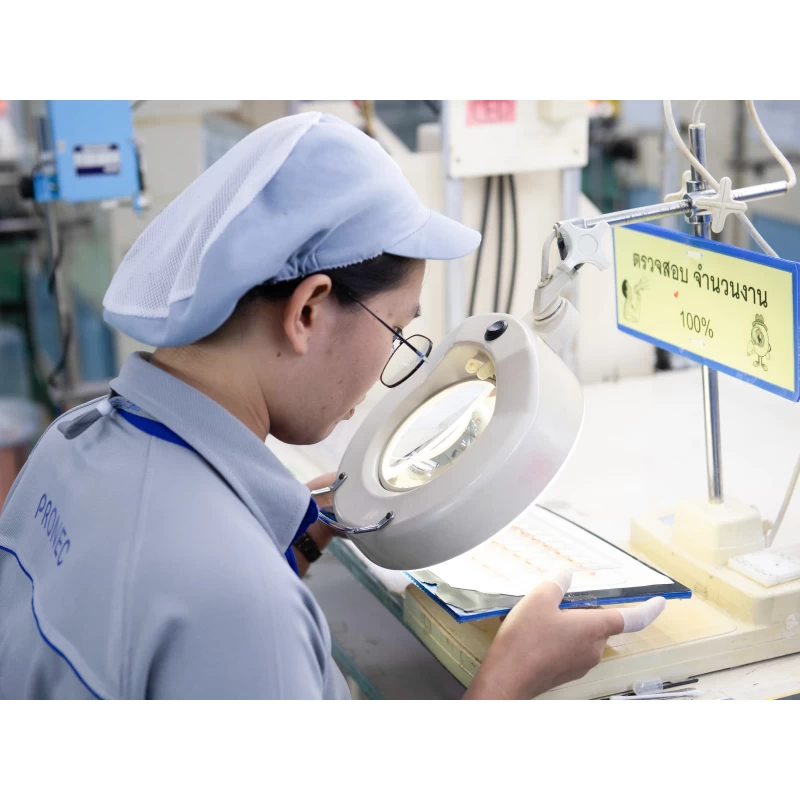
Pronec Co., Ltd. specializes in contract coil manufacturing and soldering of microfine wire in Thailand. We support conductors with diameters of 0.040 mm or smaller, offering full coverage from prototype analysis and development through to mass production in an industrial system.
Table of Contents
- In-Depth Causes of Wire Breakage from Stress During Soldering
- Bobbin Coil Structures That Easily Weaken Terminal Strength
- How Twist Processing Effectively Prevents Wire Breakage
- Key Factors to Check Before Selecting a Soldering Process
- What Pronec Can Support You With
- Frequently Asked Questions
- Key Terms for Understanding This Article
In-Depth Causes of Wire Breakage from Stress During Soldering
Coil soldering is a process that demands delicate control. During soldering, the conductor is subjected to mechanical impact from contact with the terminal, along with rapidly rising temperature — both of which accumulate as load around the wrapping point at the terminal.
Microfine wire, with a conductor diameter of 0.040 mm or smaller, already has very low tensile strength. As a result, even a small amount of applied force carries a high risk of breakage. When wire breaks, it doesn't just interrupt production efficiency — it also adds hidden cost from rework and scrapped parts.
For this reason, understanding how stress behaves in the wire during soldering, and choosing a terminal structure that reduces load concentration, is the essential first step toward improving the production process.
Bobbin Coil Structures That Easily Weaken Terminal Strength
A bobbin coil is built by winding wire around a bobbin core that serves as the base structure. After winding is complete, the drawn-out wire end is wrapped around the terminal before moving into the soldering process.
If a single strand of microfine wire is wrapped directly onto the terminal, stress tends to concentrate heavily at the contact point and at any bend. Once this fragile structure is exposed to additional thermal load or vibration, the wire can no longer withstand it and eventually breaks — driving up the defect rate.
This is why evaluating the wrapping method and designing a terminal structure suited to the wire's physical properties is key to maintaining product quality.
How Twist Processing Effectively Prevents Wire Breakage
One highly effective way to strengthen the terminal area is twist processing — a technique in which multiple conductor strands are twisted together before being wrapped around the terminal.
Combining conductors through twisting increases the cross-sectional area and tensile strength at the terminal. This allows mechanical load and stress that would otherwise concentrate at a single point to be distributed more evenly, significantly reducing the risk of breakage from heat buildup or physical impact during soldering. It also improves the durability of the terminal joint throughout assembly and actual product use.
Applying twist processing under appropriately defined conditions is therefore a key factor in reducing defect rates and driving steady improvement in yield.
Key Factors to Check Before Selecting a Soldering Process
Before deciding on a soldering technique, product conditions and wire properties should be thoroughly reviewed. Key items to check include:
- Conductor diameter of the wire being used
- Wire material and tensile strength
- Terminal shape
- Wrapping method and number of wraps
- Twist processing parameters and configuration
- Soldering temperature and heating time
- Cumulative tension and vibration acting on the terminal
For wire with a conductor diameter of 0.040 mm or smaller, we recommend evaluating the need for twist processing early, before production begins. Additionally, producing prototypes in both single-strand and twisted forms to compare tensile strength and breakage rates helps ensure the most suitable production technology is selected accurately.
What Pronec Can Support You With
Pronec is a contract coil manufacturer experienced in meeting a wide range of customer requirements. To solve the problem of microfine wire breaking during soldering, we design and carry out twist processing tailored to conductor diameter, terminal shape, and the specific requirements of each product.
For conductors of 0.040 mm or smaller in particular, we are committed to reducing wire breakage risk and improving yield through carefully selected methods that effectively relieve load at the terminal joint.
Pronec is also equipped with automatic soldering machines capable of precisely controlling and managing soldering conditions, ensuring consistent, reliable product quality. If you have questions or are facing issues with microfine wire breakage, coil terminal design, or soldering condition settings, please contact the Pronec team for engineering consultation.
※For more details, please download the attached document or fill out the form below to make an inquiry.
Frequently Asked Questions
Q1: At which stage does breakage of microfine wire with a conductor diameter under 0.040 mm occur most often?
A1: Breakage most often occurs during terminal wrapping (after winding) and during soldering itself, since these points must withstand bending, mechanical tension at the terminal, and both accumulated heat and mechanical stress applied directly to the wire during the soldering process.
Q2: Why does twist processing play such an important role in reducing wire breakage rates?
A2: Twisting the conductor strands together clearly increases structural strength and tensile strength at the terminal, allowing mechanical stress, physical vibration, and heat generated during soldering to be distributed rather than concentrated. This makes the fragile terminal joint more secure and significantly reduces breakage.
Q3: Besides twisting, are there other ways to help stabilize soldering quality?
A3: Using an automatic soldering machine allows the soldering head position, temperature, and contact time to be set and controlled consistently and precisely, preventing the variability that comes with manual labor and helping to prevent excess solder or solder debris from scattering. Adjusting the soldering system's environment and parameters to match the wire diameter and terminal type is another important step.
Key Terms for Understanding This Article
- Bobbin Coil A coil formed by winding wire around a bobbin core that serves as the main support structure. When microfine wire is used, the wrapping point and solder joint carry a higher-than-normal risk of breakage.
- Twist Processing An engineering technique in which two or more conductor strands are twisted together to increase mechanical durability at the connection point. It helps distribute stress and reduces the risk of localized force concentration that can easily cause wire breakage.
- Yield The percentage of defect-free products relative to the total number of units that pass through the production process in one cycle. Preventing wire breakage and maintaining precise soldering control directly contributes to improving this figure.
※For more details, please download the attached document or fill out the form below to make an inquiry.
Company Information

Medical equipment / Electrical component for transportation equipment / Electronic parts
Air core coil, Bobbin coil, Coil Assembly, Solenoid coil, Wireless power transfer coil, WPC, RFID, Winding machine, OEM / Plastic molded products, overmolded products
PRONEC is a specialized manufacturer in Thailand with over 30 years of experience in air-core coils, precision coils, and electronic component assemblies. With integrated in-house capabilities from pr ...
CATALOG
Related Catalogs
PICKUP
Technology & Services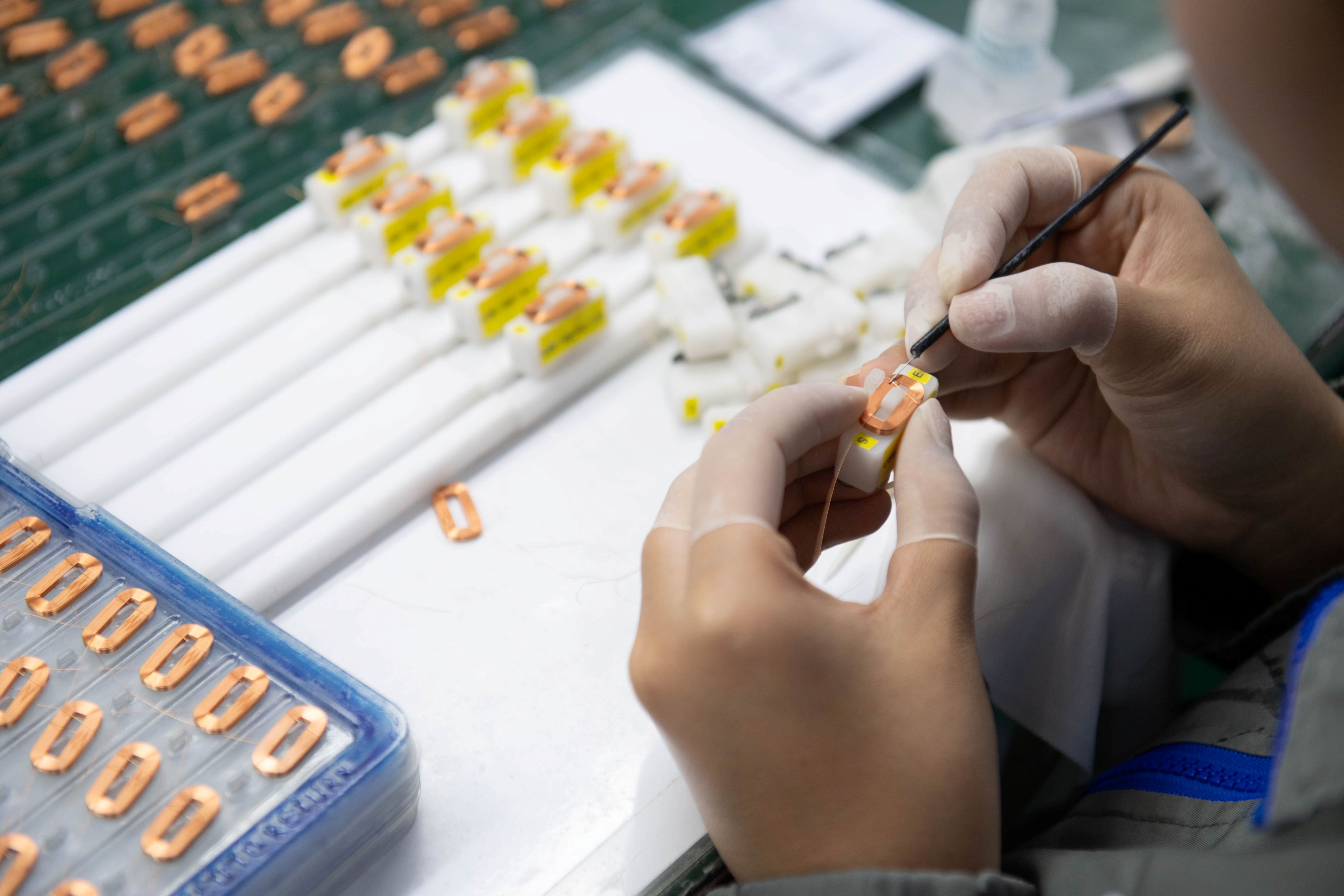
CONTACT
Contact