


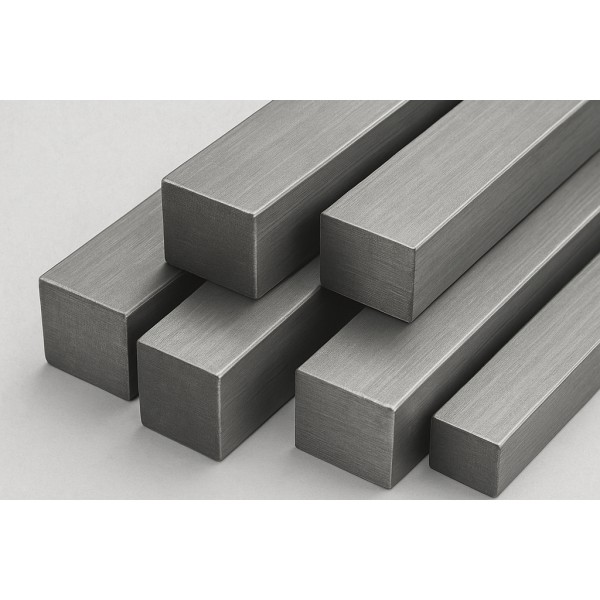
Cold Work Tool Steel | The Specialized Material Behind Strong and Durable Tools
Key Takeaways
- Cold work tool steel is suitable for applications at room temperature or below 200°C, where high hardness and wear resistance are required.
- Its key elements include high carbon (0.6–2.5%) combined with chromium, vanadium, and molybdenum, and it is categorized by AISI into groups D, A, O, and W.
- Its three core strengths are: high hardness, excellent wear resistance, and dimensional stability after heat treatment.
- Selecting proper grades such as D2/D3, A2, or O1 improves tool performance and prolongs service life.
- Cold work tool steels must be properly hardened and tempered to achieve the desired hardness of 58–65 HRC.
Cold Work Tool Steel is a high-grade alloy steel designed for use at room temperature or below 200°C. Its primary characteristics include high hardness, outstanding wear resistance, and superior dimensional stability. In manufacturing industries, this steel is widely used for cutting tools, stamping dies, and components exposed to continuous impact and abrasion. Understanding its composition, properties, and proper selection methods can significantly enhance productivity, reduce tool change frequency, and lower long-term operating costs.
Special Characteristics and Composition
Cold work tool steels contain a high carbon content (approximately 0.6–2.5%) alloyed with chromium, vanadium, and molybdenum. These alloying elements form hard carbides within the steel matrix, enabling tools to maintain sharpness and shape longer than general-purpose steels.
Classification by AISI Standard
According to the American Iron and Steel Institute, cold work tool steels are categorized into four main groups:
- D-Series (High Carbon, High Chromium): Grades such as D2 and D3 contain high levels of carbon and chromium, offering the highest wear resistance.
- A-Series (Air Hardening): Grades like A2 and A4 harden in air, providing excellent dimensional stability and reduced distortion after heat treatment.
- O-Series (Oil Hardening): Grades such as O1 and O2 harden in oil, offering a balanced combination of hardness and toughness; widely used for general tooling.
- W-Series (Water Hardening): Grade W1 hardens in water, low-cost and suitable for light-duty applications.
How to Choose the Right Cold Work Tool Steel
- High-wear applications such as thick steel stamping or continuously loaded cutting → Choose D2 or D3
- Applications requiring dimensional accuracy, gauges, and precision dies → Choose A2
- General-purpose tools requiring good toughness at a reasonable cost → Choose O1
Common Misconceptions
- Cold work steel can be used in high-temperature applications → It degrades above 200–300°C. For elevated temperatures, Hot Work Tool Steel should be used.
- Higher hardness is always better → Excessive hardness increases brittleness. The right balance between hardness and toughness must match the actual working conditions.
- Cold work tool steel doesn't need heat treatment → Unhardened steel has only 15–25 HRC far below required tool performance levels. Proper hardening and tempering are essential.
Cold work tool steel is the core material behind high-precision tools and dies used at temperatures below 200°C. Its strengths include high hardness, wear resistance, and dimensional stability. Choosing grades such as D2 for heavy-duty, O1 for general-purpose, and A2 for precision applications, combined with proper heat treatment, helps extend tool life, improve performance, and reduce production costs.
ーーーーーーーーーーーーーーーーーーーーーーーーーーーーーーーーーーーーーーーーーーー
❓ FAQ
Q: How is cold work tool steel different from ordinary steel?
A: It contains higher carbon and alloying elements, allowing it to reach 58–65 HRC after heat treatment, whereas typical steels only reach about 30–40 HRC.
Q: Should I choose D2 or O1 for my application?
A: D2 offers superior wear resistance but is more brittle and expensive. O1 provides better toughness and cost efficiency, suitable for everyday tooling.
Q: How should cold work tool steel be stored?
A: Store in a dry area, apply rust-preventive oil, avoid moisture, and for long-term storage use VCI paper or a controlled-humidity cabinet.
📚 Glossary
- D-Series / High Carbon High Chromium Steel: Very high wear resistance.
- A-Series / Air Hardening Steel: Air-hardened with minimal distortion.
- O-Series / Oil Hardening Steel: Balanced performance and cost.
- W-Series / Water Hardening Steel: Economical option for light-duty applications.
#ColdWorkToolSteel #ToolSteel #D2 #O1 #A2Steel #HeatTreatment #MetalStampingDie #WearResistance #EngineeringMaterials
CONTACT
Contact FormCompany Information
Special steel / Machinery steel / Laser machine
Founded in 2016, Storemate Co., Ltd. specializes in the import and distribution of premium-quality steel, machinery, and industrial tools. With our headquarters located in Bangkok and two production f ...