


Solar Power Generation System Overview|Key Components and Selection Points for Factories
What Is a Solar Power Generation System?
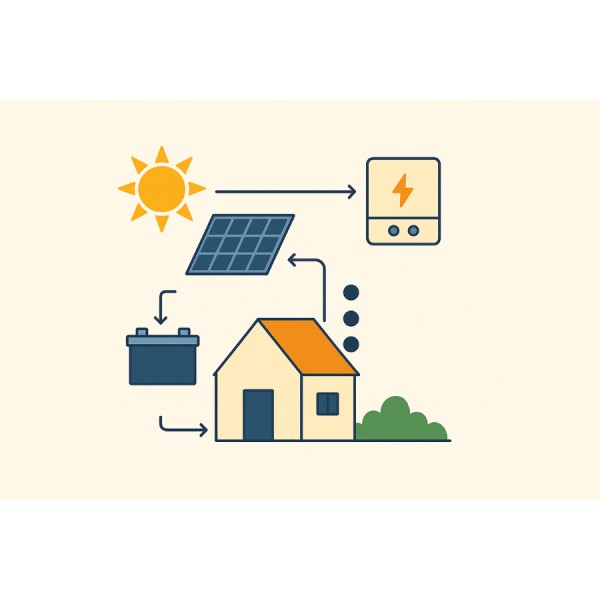
A solar power generation system converts solar energy into usable electricity and is composed of four main components:
- Solar Modules (Panels)
Convert sunlight into direct current (DC) electricity. Key metrics: conversion efficiency (≥20%), durability (weather resistance), and temperature coefficient (lower is better for hot climates).
- Power Conditioner (PCS)
Converts DC into alternating current (AC) for use in facilities or grid connection. Important specs include conversion efficiency (typically >95%) and maximum output.
- Junction Box / Distribution Board
Gathers DC electricity from multiple panels and routes it to the PCS. Ensure it includes overcurrent and surge protection.
- Mounting Structures & Fixtures
Secure solar panels to rooftops or the ground. Should meet industrial wind resistance standards (e.g., >40m/s) and be corrosion-resistant (e.g., galvanized steel).
Together, these elements enable solar systems to supply clean energy efficiently to factories and industrial sites.
Grid-Connected vs. Stand-Alone (Off-Grid) Systems
- Grid-Connected Systems
Connect to the utility grid. Power is used on-site, and surplus is sold to the grid. Ideal for factories seeking cost savings and energy stability.
- Stand-Alone Systems
Operate independently from the grid. Require large-capacity batteries. Best suited for remote areas or emergency applications.
Tip: Determine usage purpose (self-consumption vs. emergency backup) and estimate daily energy demand before choosing a system.
How to Estimate Power Output & Evaluate Installation Conditions
Solar system performance depends on several factors:
Annual Output (kWh) = System Capacity (kW) × Annual Solar Radiation (kWh/m²) × System Efficiency
- System Efficiency includes conversion loss, cable loss, and thermal loss—typically 70–80%.
- Consider:
- Sunlight: Location-specific solar radiation (Thailand averages 1,500–1,800 kWh/m²/year)
- Orientation & Tilt: South-facing with a 15–30° angle is optimal
- Obstructions: Nearby buildings or trees reduce output
- Factory Roof Conditions: Structural strength (steel frames), waterproofing, and load capacity
Checklist: Avoiding Common Product Selection Failures
Selecting reliable components is critical for long-term performance and safety. Verify the following:
1. Solar Module Warranty & Performance
- Look for at least 25-year linear power output warranty
- Review actual degradation data and case studies
2. PCS Compatibility & Efficiency
- Industrial users often require 3-phase 200V PCS
- Check energy conversion efficiency and certification (e.g., IEC compliance)
3. Installer Qualifications & Support
- Ensure certified electrical engineers are on staff
- Evaluate past project experience and local service coverage
4. Maintenance Contracts & Remote Monitoring
- Ensure real-time monitoring (visualization platforms)
- Early detection helps minimize production loss from system faults
CONTACT
Contact FormCompany Information
Solar power generation / Energy-saving related business / Renewable energy business
ITC ENEX (THAILAND) CO., LTD. is a Thailand-based company providing sustainable solutions in the energy sector. Leveraging the extensive technology and experience of its parent company, Japan's ENEX G ...