


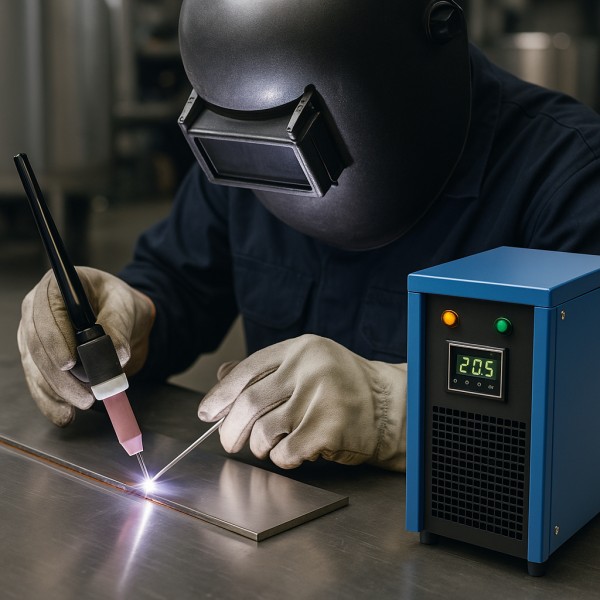
Fundamentals of Stainless Steel Welding: Essential Thermal Factors to Know Before You Start
This article covers the key fundamentals of stainless steel welding, including material types, thermal factors, and prevention of common issues. It also highlights the importance of temperature control and introduces reliable cooling solutions from THERMAL MECHANICS CO., LTD.
==========================
🏭 Introduction
Stainless steel is widely used in industries like food processing, pharmaceuticals, machinery, and medical equipment due to its excellent corrosion resistance, durability, and clean finish.
However, welding stainless steel poses significant challenges such as cracking, residual stress, distortion, and post-weld corrosion — all largely influenced by improper thermal control.
A solid understanding of material structures and thermal management is crucial for achieving high-quality, durable, and visually appealing welds. Proper techniques help reduce rework, minimize defects, and extend service life.
==========================
🔧 1. Types of Stainless Steel Commonly Used for Welding
• Austenitic (e.g., 304, 316)
Most commonly used due to their excellent toughness and weldability. Suitable for TIG and MIG welding processes.
• Ferritic (e.g., 430)
More brittle and susceptible to cracking; requires careful control of heat input and residual stress.
• Martensitic (e.g., 410)
Offers high hardness for wear-resistant applications but is challenging to weld, demanding strict temperature control.
• Duplex
Combines austenitic and ferritic phases, delivering high strength and superior corrosion resistance. Precise thermal management is critical to maintain microstructural balance.
💡 Tip: Always match your welding method and filler metal with the material microstructure and intended use to avoid post-weld problems.
==========================
🌡 2. Thermal Factors Affecting the Weld
- Heat Input:
Excessive heat leads to a wide bead and increases risks of cracking and distortion.
- Cooling Rate:
Rapid cooling can create high residual stress, leading to potential long-term cracking.
- Workpiece Thickness:
Thicker pieces may require preheating or multi-pass welding to ensure even thermal distribution.
- Shielding Gas:
Argon or argon-helium blends are recommended for TIG welding to prevent oxidation at the weld seam.
==========================
⚡ 3. Common Welding Problems and Prevention
✅ Preventing Cracks
- Use filler metals with a Ferrite Number (FN) around 4–10.
- Adjust welding speed and reduce excessive heat input.
✅ Reducing Residual Stress
- Implement controlled cooling techniques post-weld.
✅ Minimizing Distortion
- Secure the workpiece properly with effective clamping.
- Use multi-pass welding to distribute heat.
- Select welding processes that help control heat spread, such as TIG.
✅ Preventing Post-Weld Corrosion
- Perform pickling or passivation to remove contaminants and restore corrosion resistance.
==========================
❄ 4. Temperature Control During Welding
Temperature control is essential and can be divided into three stages:
1. Pre-weld:
Preheat (around \~150°C for thick materials) to reduce cracking risks.
2. During welding:
Keep interpass temperatures below 150°C (or as specified by standards) to maintain microstructure integrity.
3. Post-weld:
Gradual and controlled cooling minimizes residual stresses and prevents thermal shock.
Without proper temperature control, welds can become brittle, crack, or develop unwanted phases like chromium carbide precipitation.
==========================
💧 5. Advantages of Using a Chiller in Stainless Steel Welding
A chiller or closed-loop water cooling system ensures precise thermal regulation and is essential for high-precision welding tasks, such as:
- Large stainless steel tank fabrication
- Pressure vessel welding
- Medical-grade component manufacturing
- Cleanroom and pharmaceutical welding
Key Benefits:
- Temperature stability within ±0.1°C
- Reduced residual stress and distortion
- Lower defect rates and less rework
- Longer lifespan for torches and workpieces
==========================
💡 6. Introducing THERMAL MECHANICS CO., LTD.
THERMAL MECHANICS CO., LTD. specializes in welding machine for high precision.
For more details or to download product specifications, please contact us directly.
#StainlessSteelWelding #ThermalControl #IndustrialWelding #TIGWelding #MIGWelding #Chiller #PrecisionWelding #ThermalMechanics #WeldingTips #ManufacturingSolutions
CONTACT
Contact FormCompany Information

Industrial machinery
Panasonic Welding Machine / Safety Products / Fume and Dust Collector
Thermal Mechanics Co., Ltd. is a leading distributor in the machinery business for welding, cutting, and metal processing. In particular, we are the official distributor of Panasonic welding machines. ...
Related Catalogs
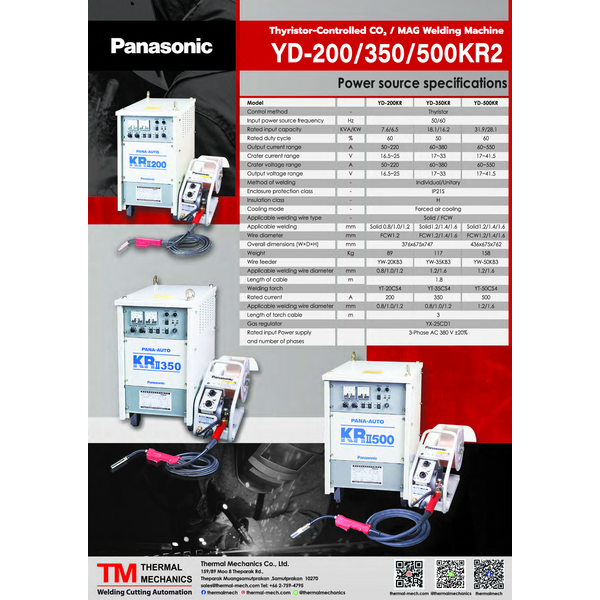
Panasonic CO2/MAG Welding Machine YD-200/350/500KR2 Catalog - Download Now
(Available for free download)
 PDF Download