


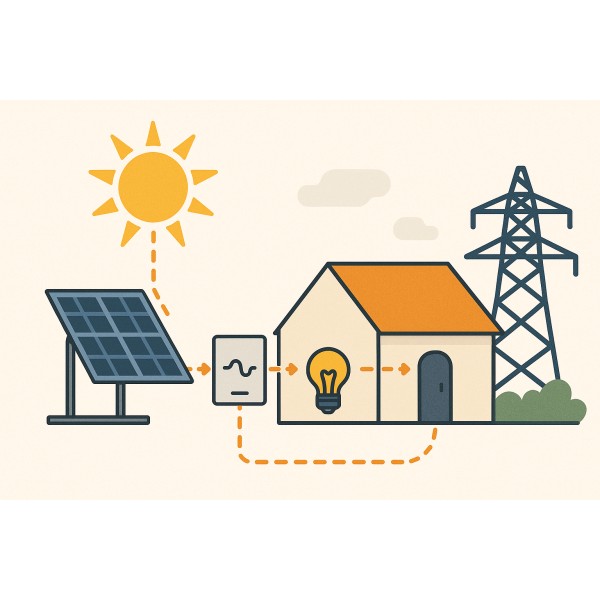
How Solar Power Systems Work|Key Components & Energy Flow
A solar energy system operates through several stages with various components that help convert energy efficiently:
Solar Panels
The system starts with solar panels, which are composed of photovoltaic (PV) cells that absorb energy from sunlight.
These cells use the Photovoltaic Effect to convert light energy into direct current (DC) electricity.
Most solar panels are made from mono crystalline silicon, polycrystalline silicon, or thin-film materials.
Inverter (DC to AC Conversion)
Since most household and industrial appliances use alternating current (AC), an inverter is required to convert the DC electricity generated by the solar panels into usable AC power.
Types of inverters include string inverters, micro inverters, and hybrid inverters.
Battery Storage (Optional Equipment)
Solar batteries are used to store excess energy generated during the day for use at night or during cloudy periods.
Common types of batteries include lithium-ion batteries and lead-acid batteries.
Charge Controller (For Battery-Based Systems)
A charge controller regulates voltage and current to prevent overcharging, thereby extending the battery’s lifespan.
This device is essential for off-grid systems and hybrid solar systems.
Grid Connection (For Grid-Tied Systems)
A grid-tied system allows excess power to be sent back to the main power grid, enabling the system owner to earn credits through net metering programs.
When solar energy is insufficient, electricity can be drawn from the grid as needed.
CONTACT
Contact FormCompany Information
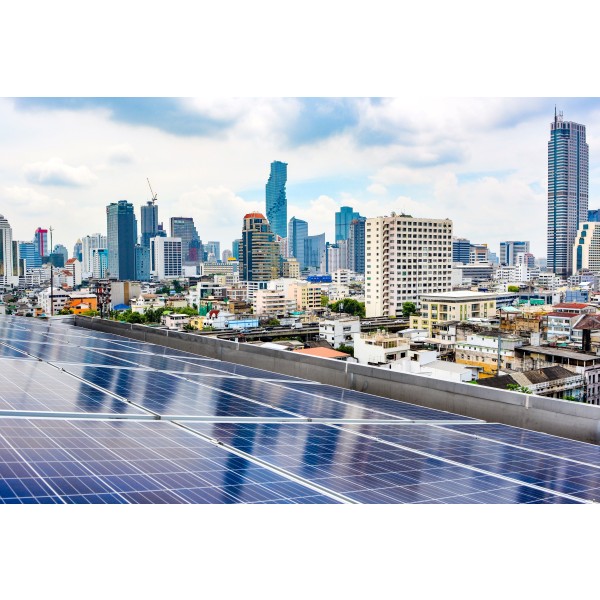
Solar power generation / Energy-saving related business / Renewable energy business
ITC ENEX (THAILAND) CO., LTD. is a Thailand-based company providing sustainable solutions in the energy sector. Leveraging the extensive technology and experience of its parent company, Japan's ENEX G ...