_d14c9c1b-9850-49e8-adfb-d520564df20c.png)
SERVICES
Technology & Services
Hot Stamp Consumables | Complete Materials for Consistent Quality in Industrial Applications
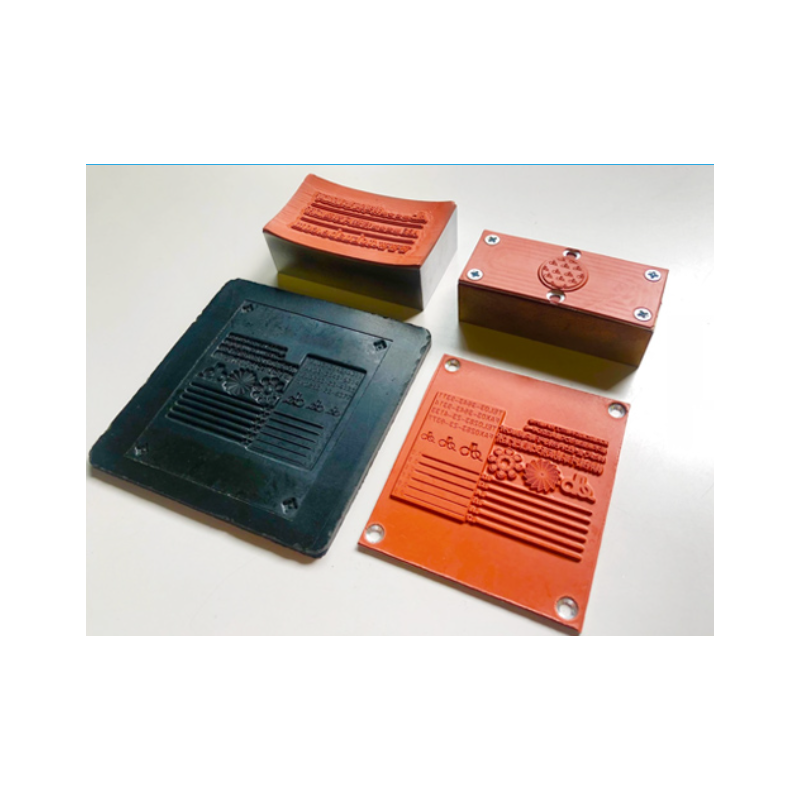
TOKUABE (THAILAND) CO., LTD., a Japanese specialist in printing and surface decoration materials and equipment, designs and manufactures Hot Stamp Dies, Silicone Rubber Dies, Jigs, and Hot Stamp Foils for industrial plastic parts decoration.
We support complex applications such as 3D plastic parts, curved surfaces, and hard-to-bond materials like PP and PE, from trial testing to high-volume industrial production.
Table of Contents
- Instability and Defect (NG) Issues in the Hot Stamping Process
- TOKUABE's Engineering Approach and Materials Variables Control
- TOKUABE Hot Stamping Consumables Lineup
- Case Study: Optimization of Materials for Curved Plastic Parts Decoration
- Frequently Asked Questions (FAQ)
■ Instability and Defect (NG) Issues in the Hot Stamping Process
In plastic parts production lines, such as automotive instrument panels, interior trims, or home appliance components, common issues encountered during the Hot Stamping process include:
- Incomplete foil transfer, resulting in broken lines or text
- Foil cracking or tearing on curved surfaces
- Inconsistent foil adhesion
- Misalignment of printed patterns from the designated position
These issues are not caused by machine settings alone; they involve multiple interconnected variables, including temperature, pressure, dwell time, foil materials, and variations in the size and shape of parts after Injection Molding. Particularly on curved parts or those with molding tolerances, standard dies and jigs fail to achieve uniform contact with the surface, resulting in quality issues and high defect (NG) rates.
■ TOKUABE's Engineering Approach and Materials Variables Control
TOKUABE resolves hot stamping process instability and reduces defect (NG) rates by focusing on controlling the variables of consumables through three key engineering approaches:
- Simultaneous Die & Jig Design: TOKUABE designs the Silicone Rubber Die and the support Jig simultaneously, referencing the customer’s actual sample part. By designing the rubber contact surface and the jig base to match the parting lines and angles of the part, pressure and temperature are distributed uniformly across all coordinates during the stamping process. This prevents misalignment or edge distortion and reduces machine setup and adjustment times.
- Optimal Material Selection for Hard-to-Bond Plastics: For low surface energy materials like PP or PE, TOKUABE utilizes Brass Dies that offer high thermal conductivity and stable temperature maintenance, paired with silicone rubber surfaces that distribute compression force appropriately.
- On-site Technical Support with Japanese Quality Standards: Stationed at Asia Suvarnabhumi Industrial Estate in Samut Prakan Province, TOKUABE's local Thai team has undergone intensive training directly from our Japanese headquarters. They are ready to visit customers' production sites to analyze and troubleshoot transfer issues—measuring pressure, temperature, and dwell time—to resolve foil tearing or burrs immediately, minimizing production line downtime.
■ TOKUABE Hot Stamping Consumables Lineup
TOKUABE offers a comprehensive range of hot stamping materials and tools to help customers control quality and enhance production process stability, spanning from consumable materials to technical support.
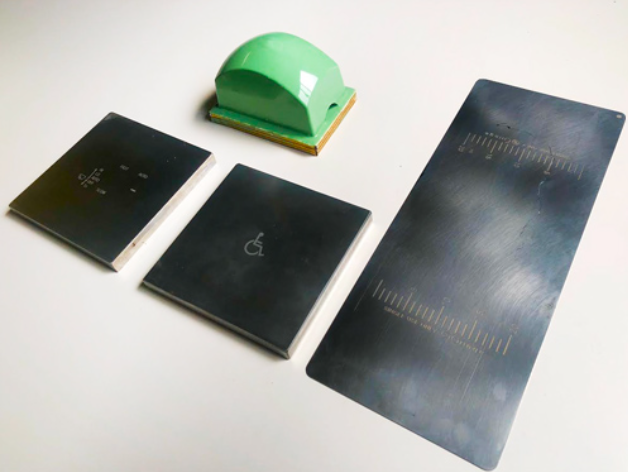
- Metal Dies and Rubber Dies: Deliver high sharpness and definition, ideal for fine lines, logos, and industrial applications requiring consistent quality.
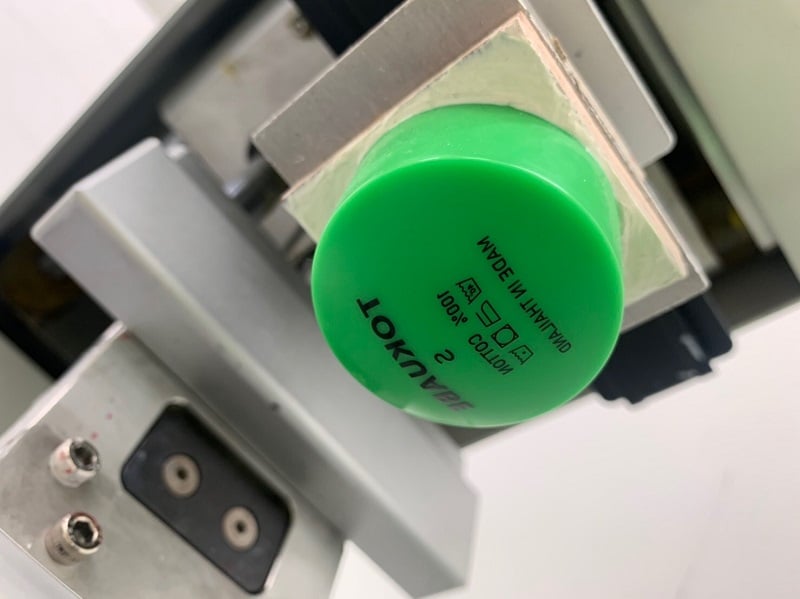
- Rubber Rollers (Roll Rubber) / Japanese-Quality Rubber: Support curved surfaces, prevent foil cracking, and improve pressure stability.
- Multiple Grades of Hot Stamp Foils (Foil): Selection is tailored to surface materials and application requirements to enhance adhesion, aesthetics, and durability.
- Custom Jigs: Securely clamp the parts to minimize misalignment, making machine setup fast and straightforward.
- Consultation Services: Provided to reduce NG risks and verify material-process compatibility.
- High-quality dies improve print sharpness by 20–40%.
- Matching the correct foil to the substrate reduces NG rates by 15–30%, especially on curved surfaces.
- Combining customized jigs with rubber rollers significantly improves printing consistency.
Hot Stamp Materials & Support Specifications Table
Materials / Support | Technical Specifications & Features | Expected Results & Performance |
Metal Dies and Rubber Dies | Designed and manufactured for high-definition applications such as small text, logos, and patterns. Helps control uniform foil transfer. | Increases the stability of hot stamping quality and reduces incomplete foil transfer issues. |
Rubber Rollers (Roll Rubber) / Japanese-Quality Rubber | Designed to support curved surfaces and 3D shapes. Helps distribute pressure evenly and minimizes foil cracking risks. | Enhances printing consistency and uniform transfer when used in combination with customized jigs. |
Multiple Grades of Foils (Foil) | Selected to match specific substrate materials such as general plastics, PP, or PE to achieve target adhesion, aesthetics, and durability. | Reduces the risk of foil peeling and enhances the consistency and reliability of product quality. |
※For more details, please download the attached materials or contact us via the form below.
■ Case Study: Optimization of Materials for Curved Plastic Parts Decoration
- Challenge: A home appliance manufacturer faced instability in their hot stamping process for curved plastic parts. Specific problems included incomplete foil transfer, poor adhesion at the part edges, and foil cracking at tight corners, which led to high defect rates and costly re-stamping work.
- Approach: TOKUABE's technical team analyzed the actual plastic parts from the production line. We custom-designed a matching Rubber Die and support Jig tailored to the parts' geometry, and selected the optimal foil grade compatible with the specific plastic substrate.
- Outcome: Following the implementation, the hot stamping process achieved highly uniform foil transfer. Logos and text obtained excellent sharpness, foil cracking on curved areas was resolved, and production quality became consistently stable across all batches.
■ Frequently Asked Questions (FAQ)
Q1: If the plastic parts have curved shapes and we experience foil cracking at the edges, how can this be resolved?
A1: Foil cracking on curved surfaces is typically caused by uneven pressure and heat distribution because the die does not make proper contact with the part. The solution is to custom-design a matching Rubber Die and support Jig based on the part's actual physical shape. This ensures that pressure and heat are distributed evenly throughout the stamping area.
Q2: What is the solution for PP or PE plastic parts where foil adhesion is extremely difficult?
A2: PP and PE are low surface energy materials, making foil adhesion a significant manufacturing challenge. TOKUABE helps by analyzing your part material and selecting a foil grade specifically formulated for those substrates. We also perform a standard Cross-Cut Tape Test to evaluate the adhesion strength and ensure reliability before proceeding to production.
Q3: If our Silicone Rubber Die wears out from mass production, do we need to manufacture the entire die assembly from scratch?
A3: No, that is not always necessary. If the original metal backing or base plate (such as the Aluminum Base or PC Plate) is still in good condition, we can replace just the silicone rubber component. TOKUABE can inspect your existing die base and vulcanize new silicone rubber onto it, helping you significantly cut tooling costs and lead times compared to making a completely new set.
※For more details, please download the attached materials or contact us via the form below.
Company Information
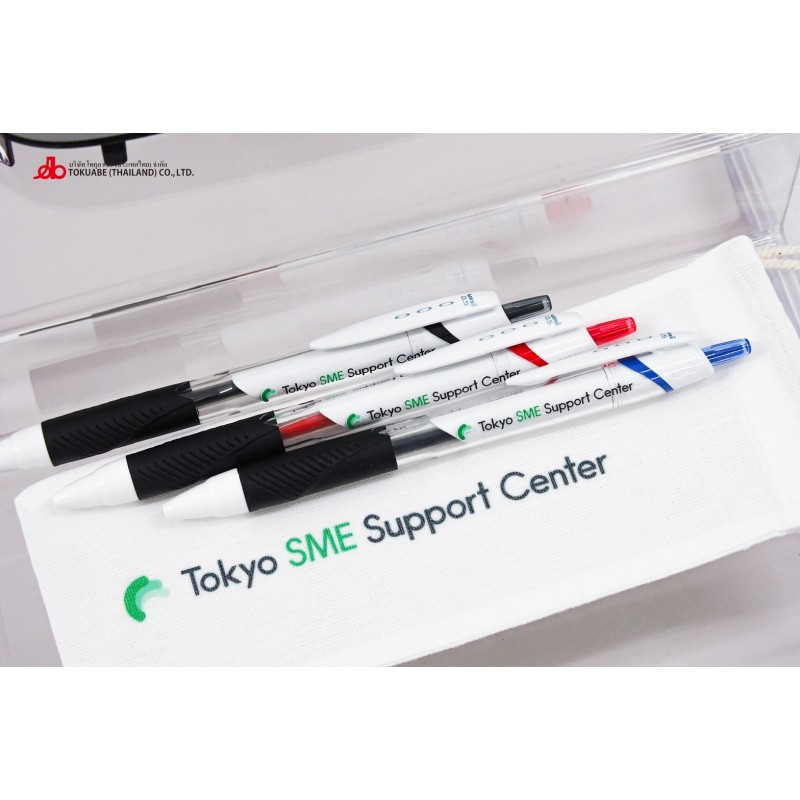
Pad printing services / Printing materials / Printing consultation services
Tokuabe (Thailand) Co., Ltd. was established in December 2014 as part of Tokushu Abe Seihanjo Co.Ltd., Japan, a company with over 60 years of expertise. We bring proven Japanese knowledge and techniqu ...
CATALOG
Related Catalogs
PICKUP
Technology & Services
CONTACT
Contact