


-
Check
Chonburi
FUJILLOY (THAILAND) CO., LTD.
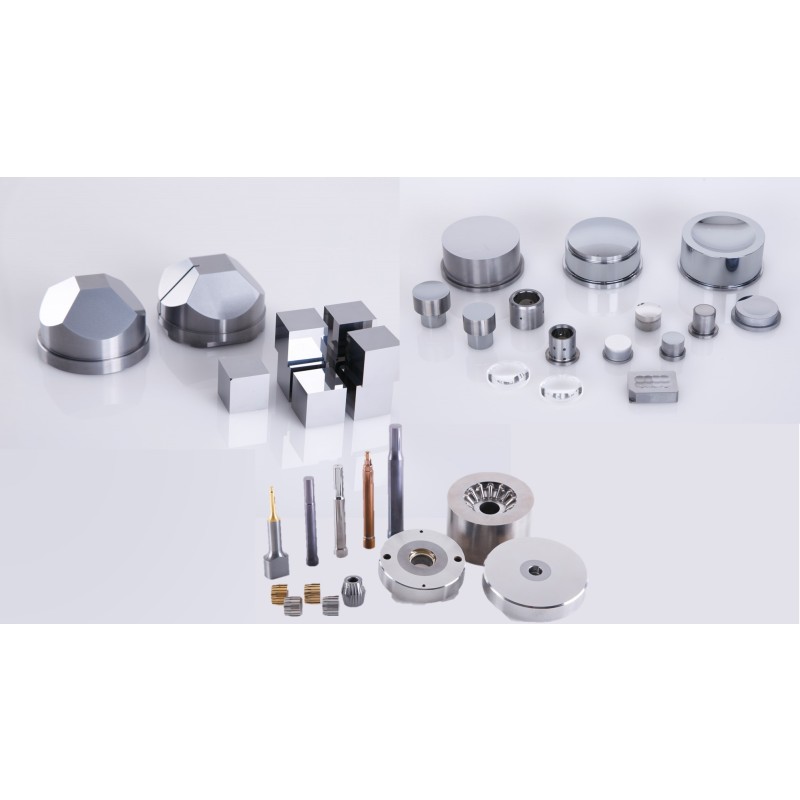
FUJILLOY (THAILAND) is the Thai subsidiary of Fuji Dies Co., Ltd., which was established in 2003. The Fuji Dies Group is a leading manufacturer of carbide wear-resistant tools in Japan, with the number one market share domestically. Based on the technology and quality cultivated by the company, FUJILLOY (THAILAND) provides high-precision and reliable products to customers in the Thai market. Their products are used in a wide range of fields, including skyscrapers, optical communication, high-speed trains, automobiles, medical devices, and home appliances, playing an important role in supporting the industrial development of Thailand. ■ Business Activities FUJILLOY (THAILAND) provides products and services centered on cemented carbide, including: - Carbide Tools: High-precision tools for various press molds, hot and cold rolling rolls, cold forging molds, and other tools with high performance requirements. - Material Proposals: In addition to carbide, they offer proposals for a variety of materials such as ceramics and steel products. - Customization: Manufacturing and providing made-to-order products based on customer needs. ■ Strengths The unique strengths of FUJILLOY (THAILAND) are as follows: - Japanese Quality: Inherited the high technological capabilities of the Fuji Dies Group and realized them in the Thai market. - Wide Industry Coverage: Capable of handling a broad range of fields, from industrial parts to consumer goods manufacturing. - High Reliability: A product line that combines wear resistance and high precision to secure customer trust. - Localized Service: Quick and flexible responses tailored to the Thai market.

About PU (polyurethane)
Electrical discharge machining (EDM) is a machining method that removes material without physical contact, utilizing the thermal energy of an electric discharge arc generated between an electrode and a workpiece. In a dielectric fluid, short-duration, high-frequency electrical discharges are generated between the electrode and the workpiece, and the heat melts, vaporizes, and scatters the material. As long as the material is conductive, machining is possible regardless of its hardness, and it is particularly effective for machining difficult-to-cut materials such as cemented carbides, high-hardness steels, and mold components with complex shapes. Representative methods include "die-sinking EDM," which transfers the shape of the electrode, and "wire EDM," which cuts material with a thin wire electrode. These are widely used in fields requiring micro-machining and high-precision machining, such as aerospace, medical, and electronic component industries.
