
SERVICES
Technology & Services
【Process Conversion for Connector Terminals and Pins】From Press Stamping and Machining to Header Forming|Proposing Design Modifications Starting from Existing Drawings
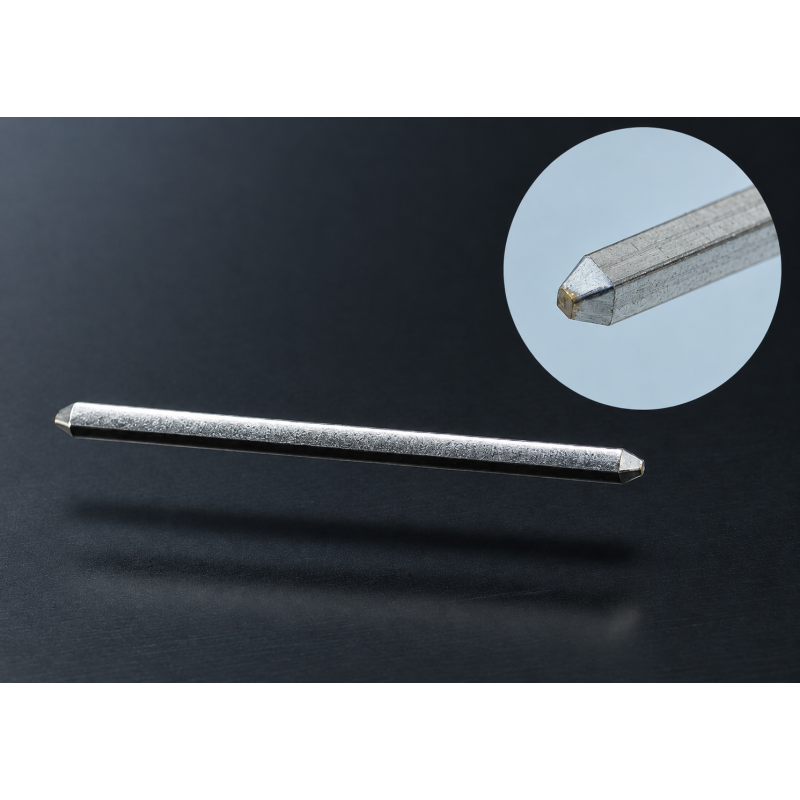
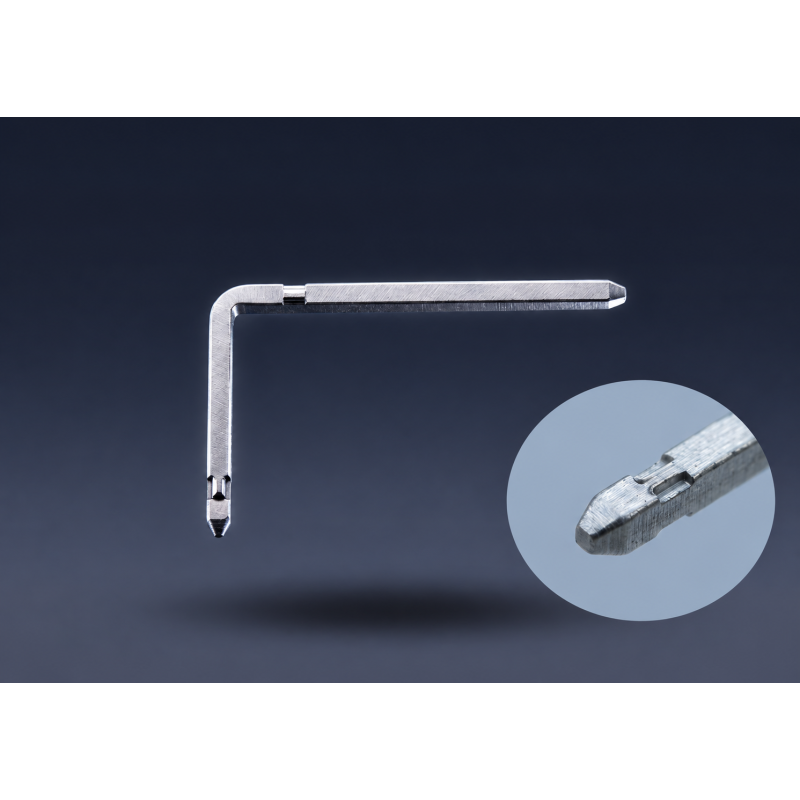
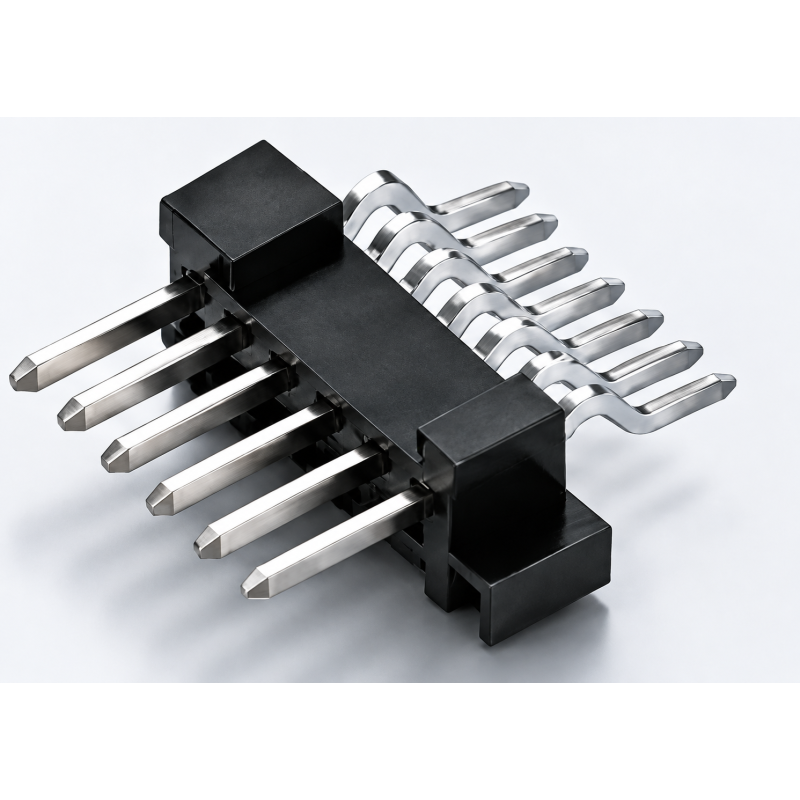
Connector terminals and pins originally designed for press stamping or machining may be suitable for conversion to header forming by modifying their shapes.
However, existing drawings cannot always be used directly for header forming. When the manufacturing process changes, the product geometry best suited to that process also changes. Even if the original shape can be manufactured, it may not fully benefit from the advantages of header forming, such as improved material utilization.
Matsuda (Thailand) Co., Ltd. accepts inquiries starting from the existing drawing stage. We review the drawings and, where necessary, propose design modifications, such as incorporating tapers and ribs, to make the product geometry more suitable for header forming.
Table of Contents
- Why Existing Drawings Cannot Always Be Used Directly for Header Forming
- Proposing Header-Forming-Friendly Designs Based on Existing Drawings
- Design Modifications Using Tapers and Ribs
- Reviewing Material, Plating, and Manufacturing Costs Through Process Conversion
- From Drawing Review to Mass Production
- Frequently Asked Questions
■ Why Existing Drawings Cannot Always Be Used Directly for Header Forming
When converting from press stamping or machining to header forming, it is important to consider how the material will be deformed during the header forming process, rather than simply reproducing the existing geometry.
Machining creates the required shape by removing unwanted material. In contrast, header forming uses plastic deformation to shape wire material inside a die, directing the material to flow into the required positions. Therefore, instead of asking "Which parts should be removed?", the key consideration becomes "Where should the material be moved, and how much should be displaced?"
Even when the original geometry is difficult to form using header forming, incorporating features such as tapers and ribs may make it possible to modify the design into a shape better suited to the process.
At Matsuda (Thailand), we propose design modifications that make products easier to manufacture in volume through header forming while maintaining their required functions and specifications.
■ Proposing Header-Forming-Friendly Designs Based on Existing Drawings
When considering a process conversion to header forming, customers do not need to prepare drawings specifically for header forming in advance.
Matsuda (Thailand) reviews existing drawings currently used for press stamping or machining and evaluates the feasibility of converting the products to header forming. If certain features are difficult to form in their original shape, we propose design modifications suited to header forming while taking the product's required functions and specifications into account.
For products being converted to header forming for the first time, it can be difficult to determine which geometric features should be retained and which should be modified to gain the benefits of the new process. Matsuda (Thailand) supports this process conversion from the initial drawing review stage.
■ Design Modifications Using Tapers and Ribs
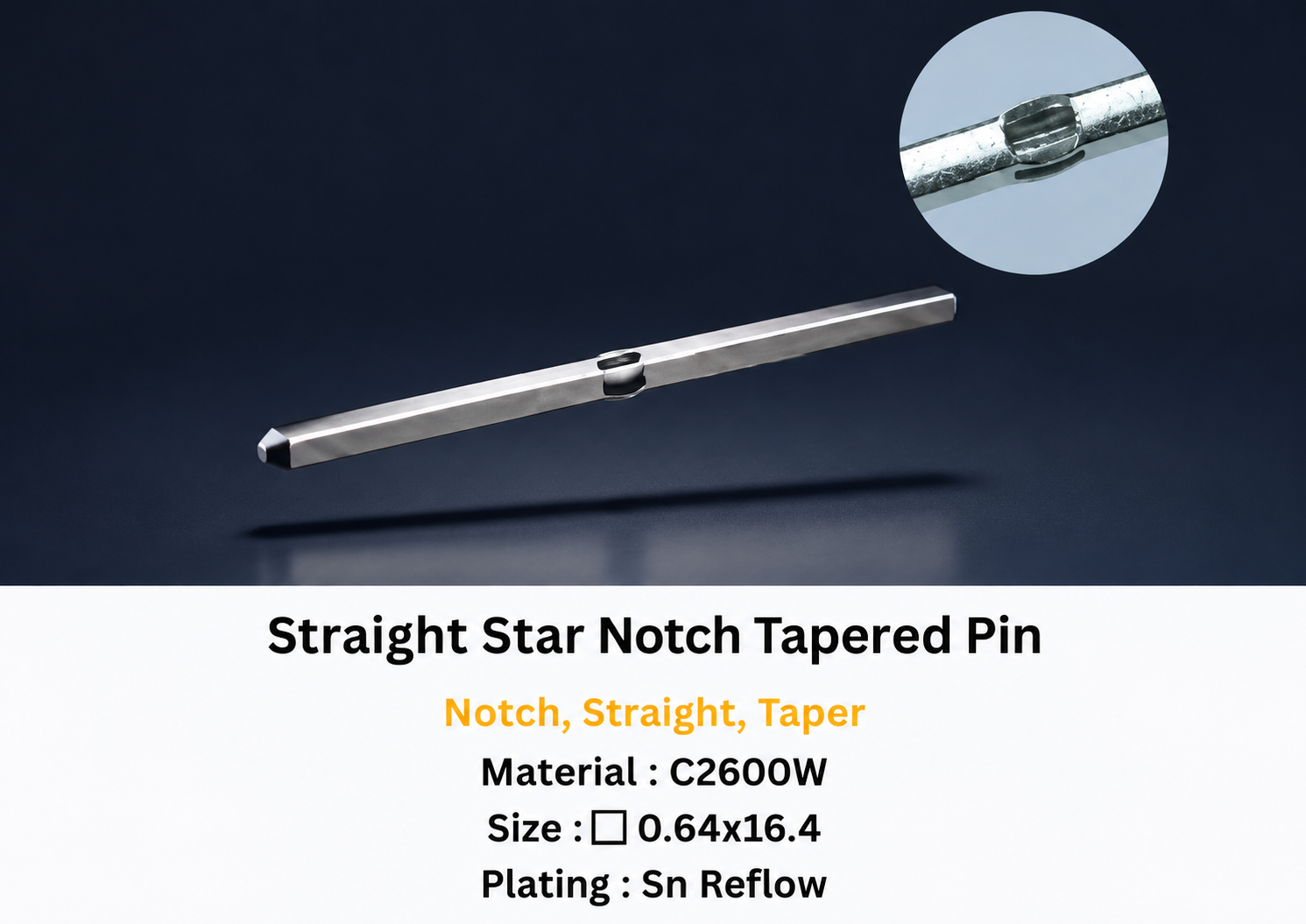
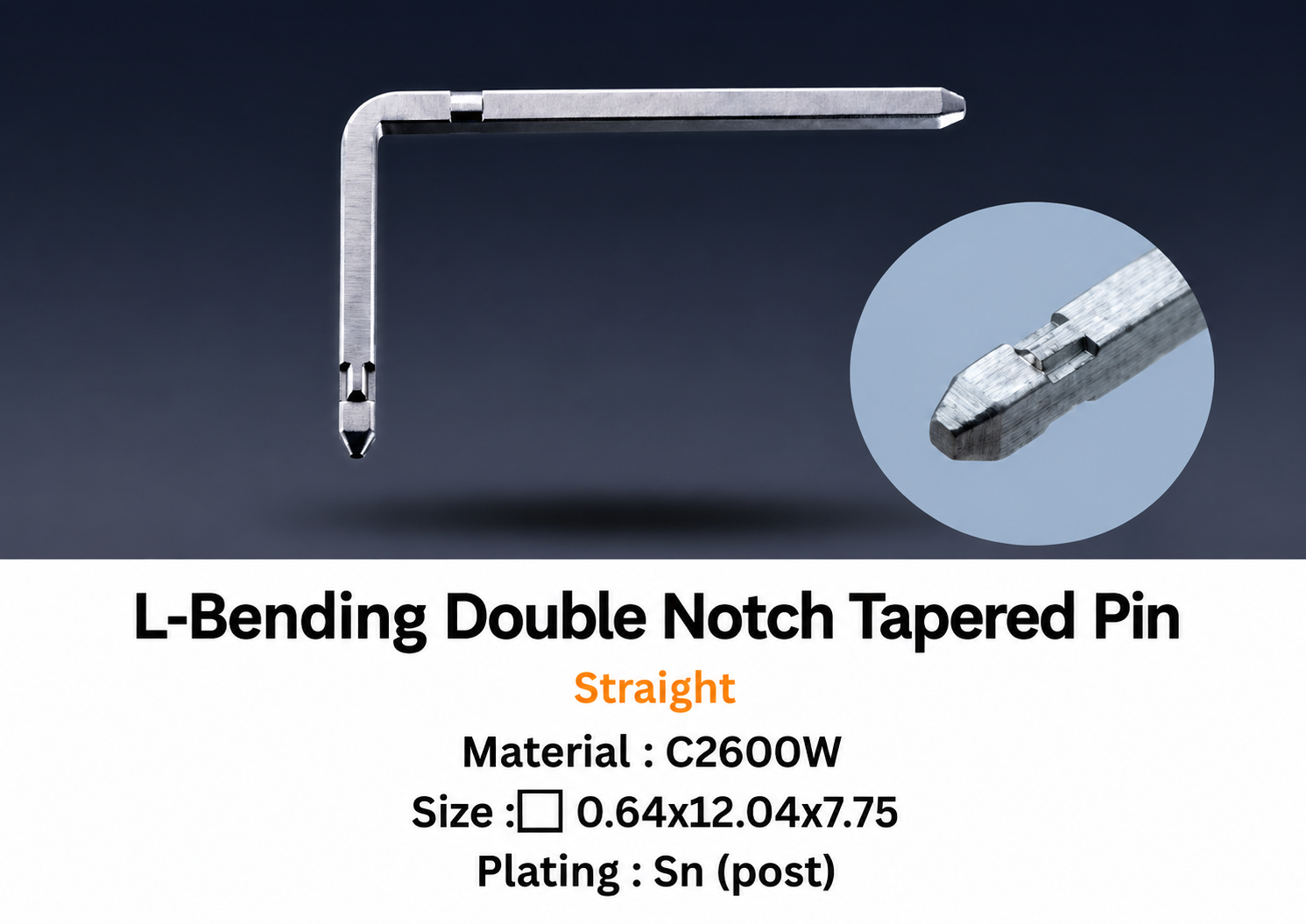
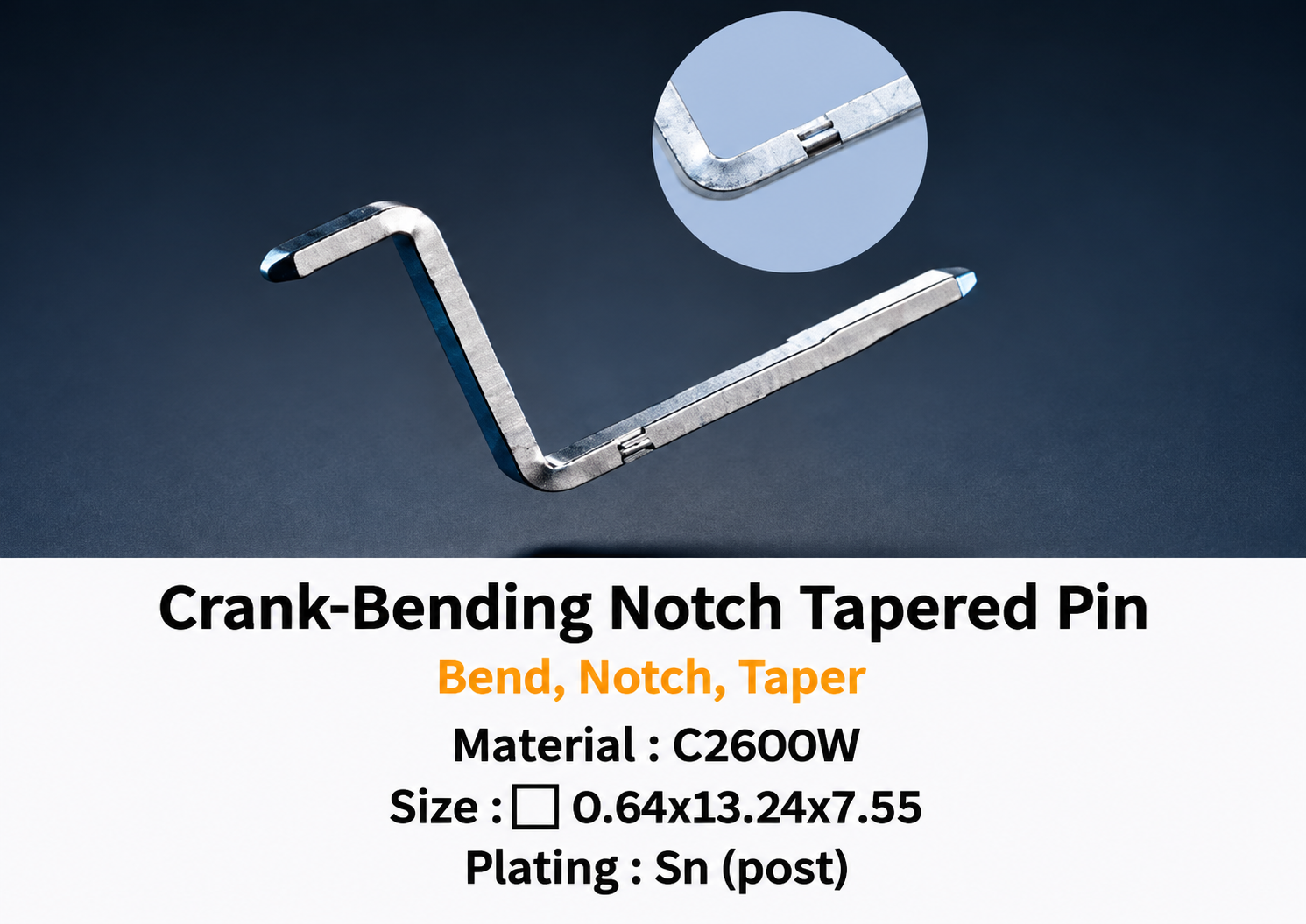
Converting to header forming is not simply about reproducing the original geometry. In some cases, the design may need to be modified by incorporating features such as tapers and ribs to make the product easier to form.
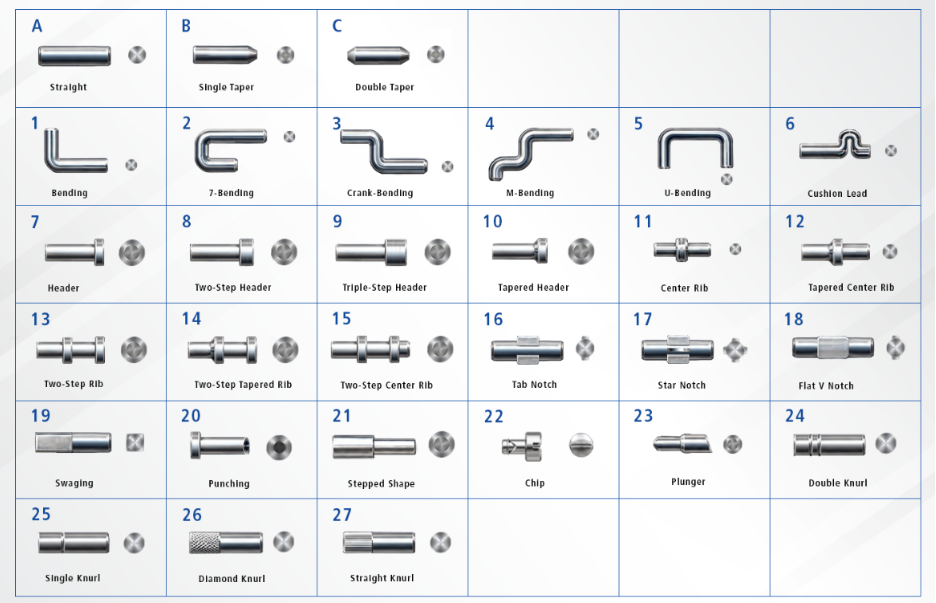
Matsuda (Thailand) has manufacturing experience with terminals and pins featuring tapered geometries, including straight taper pins and header pins with tapered tips. We also support press-fit pins incorporating combinations of ribs and notches.
By considering combinations of these features, we evaluate product geometries that are more suitable for mass production through header forming while maintaining the required functions and specifications.
■ Reviewing Material, Plating, and Manufacturing Costs Through Process Conversion
Converting to header forming creates opportunities to review not only the product geometry but also the manufacturing process as a whole, including material consumption and plating operations.
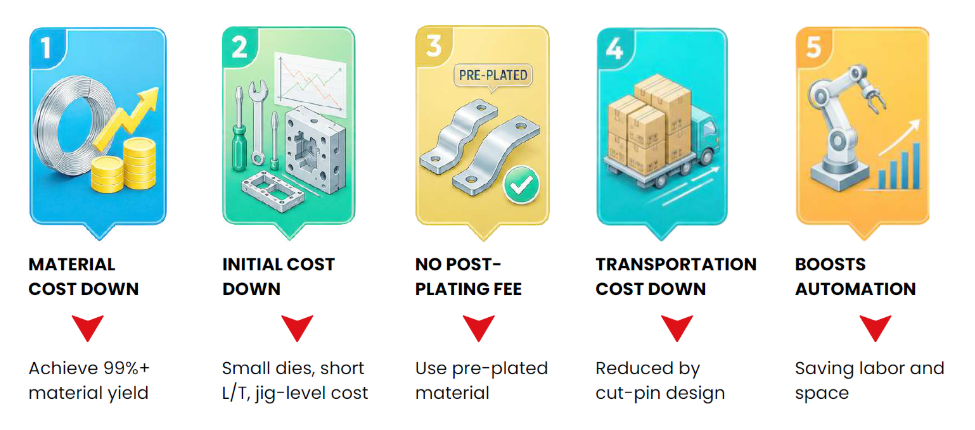
Matsuda (Thailand) achieves a material yield of 99% or higher through header forming. Because the process forms wire material through plastic deformation, it generally produces less material waste than machining or press stamping, creating opportunities to review material consumption during mass production.
The main wire sizes and materials we support are as follows.
Wire sizes: Round wire Φ0.09~2.5mm / Square wire □0.09~2.5mm Materials: Brass, copper alloys, phosphor bronze, stainless steel, Kovar, nickel-iron alloys Plating: Tin, gold, silver, pre-plated materials
For products whose specifications allow the use of pre-plated materials, it is also possible to eliminate the plating process after forming.
In addition, header machines and dies are designed and manufactured by our headquarters in Japan. Compared with outsourcing die manufacturing, this may help reduce initial costs and the lead time required to start production in certain cases.
In this way, process conversion allows manufacturers to review more than just the processing cost of an individual pin. It also provides an opportunity to evaluate the overall manufacturing approach, including material yield, plating operations, and die-related costs.
■ From Drawing Review to Mass Production
The process of converting to header forming begins with a review of existing drawings.
First, we examine drawings currently used for press stamping or machining and evaluate which features can be produced through header forming without modification and which require design changes.
Next, we propose design modifications, such as incorporating tapers and ribs where necessary, and confirm the wire sizes, material types, and plating specifications.
Once the general direction of the design and specifications has been established, we prepare a quotation that takes the dies and manufacturing processes into account, followed by preparations for mass production.
Our headquarters in Japan handles the design and manufacture of header machines and dies, while Matsuda (Thailand) is responsible for terminal and pin production in Thailand, basic equipment maintenance, and local customer support.
If you would like to determine whether terminals or pins currently manufactured through press stamping or machining can be converted to header forming, please contact us for a consultation using your existing drawings.
■ Frequently Asked Questions
Q1: We only have drawings designed for press stamping or machining. Can we still consult you? A1: Yes. We review your existing drawings and evaluate whether conversion to header forming is feasible. You do not need to prepare drawings specifically for header forming in advance.
Q2: Can you also propose design modifications?
A2: Yes. We review your existing drawings and, where necessary, propose design modifications suited to header forming, such as incorporating tapers and ribs.
Q3: Can switching to header forming reduce material waste?
A3: Matsuda (Thailand) achieves a material yield of 99% or higher through header forming. Converting from an existing manufacturing process to header forming may provide opportunities to review and reduce material consumption.
Q4: What materials and sizes do you support?
A4: We support round wire Φ0.09~2.5mm and square wire □0.09~2.5mm. Compatible materials include brass, copper alloys, phosphor bronze, stainless steel, Kovar, and nickel-iron alloys.
Q5: Can we also consult you about plating specifications?
A5: Yes. We support tin, gold, and silver plating, as well as header forming using pre-plated materials.
※For more details, please download the attached materials or contact us via the form below.
Company Information

Transportation equipment / Electrical component for transportation equipment / Electronic parts
Header pin / Connector Assembly / Cold forged product
Matsuda (Thailand) Co., Ltd. manufactures and supplies precision metal components, with a particular focus on connector pins and header pins. Building on the precision machining technology and experti ...
PICKUP
Technology & Services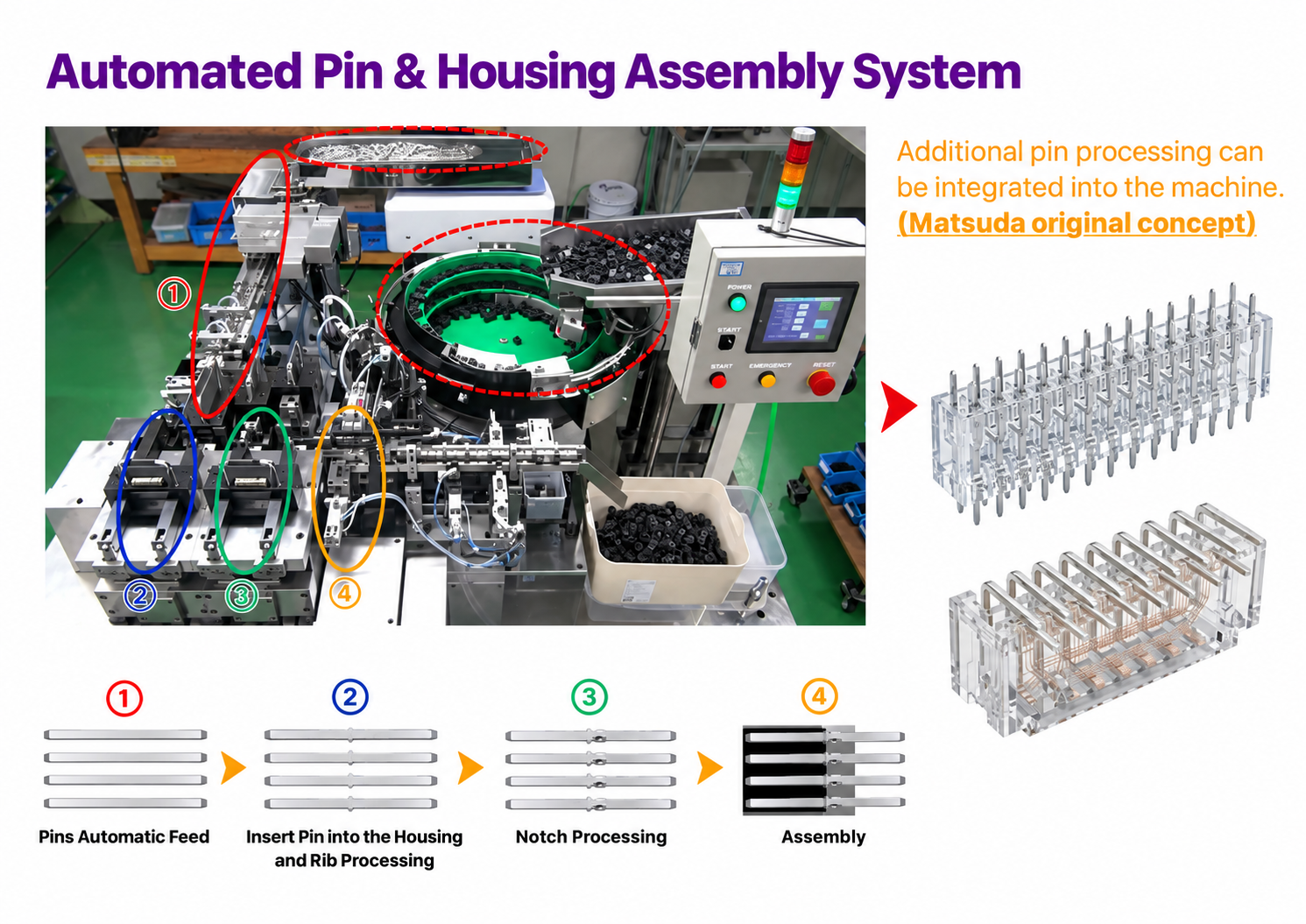
CONTACT
Contact