
SERVICES
Technology & Services
【Header Forming for Connector Terminals and Pins】Cold Heading to Reduce Material Loss|Mass Production Technology with Material Yield of Over 99%
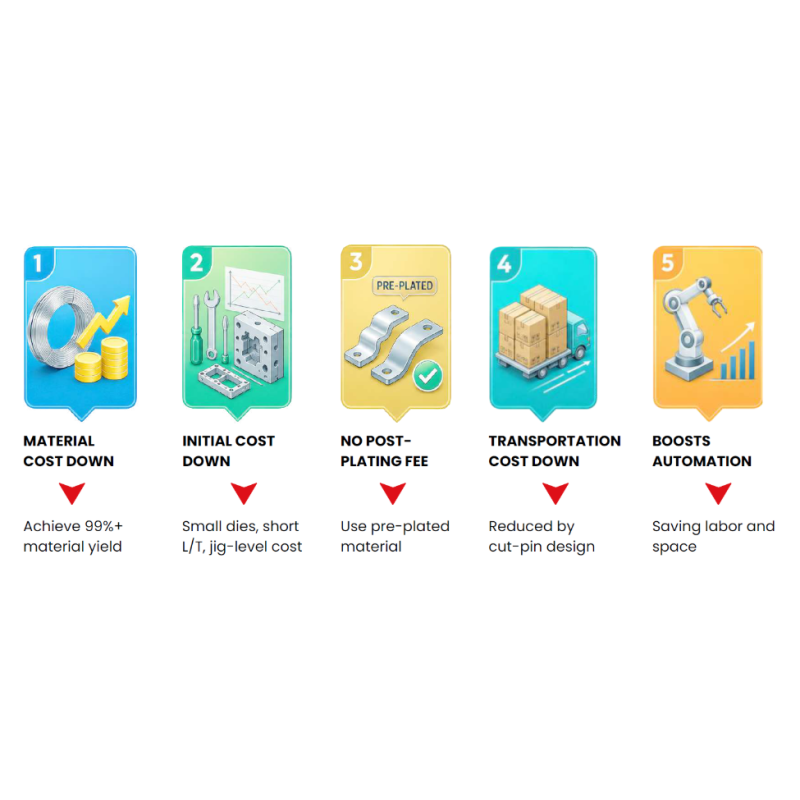
Header forming is a processing method in which high pressure is applied to wire material and the material is plastically deformed inside a die to form the required shape. The way material is used differs from machining, which removes material to create a shape, and press forming, which punches material to form a part. One of the major features of header forming is that it makes it easier to reduce material loss.
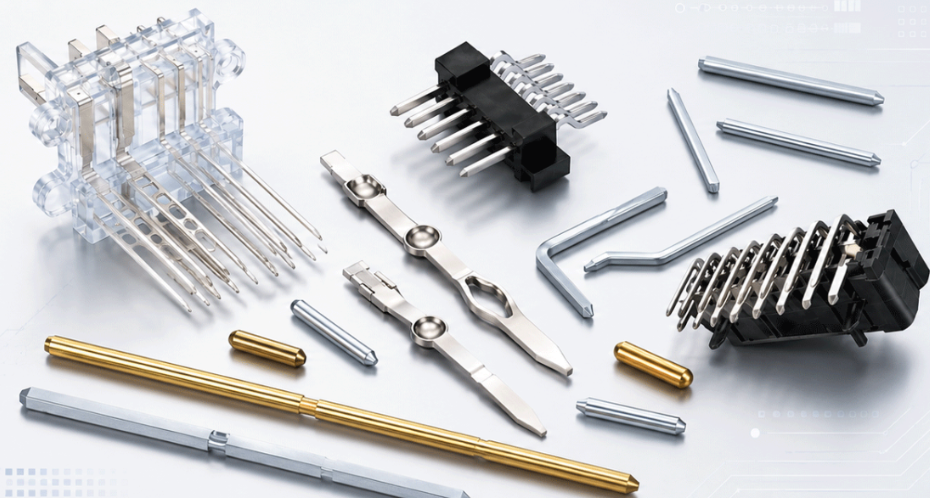
Matsuda (Thailand) Co., Ltd. manufactures connector terminals and connector pins using header forming and achieves a material yield of more than 99%. We handle round wire from Φ0.09~2.5mm and square wire from □0.09~2.5mm, and mass-produce terminals and pins from a variety of materials, including brass, copper alloys, phosphor bronze, and stainless steel.
This page introduces how header forming works, how it differs from press forming and machining, material yield, supported wire sizes, materials and plating, and processing speed.
Table of Contents
- What Is Header Forming?
- Differences from Press Forming and Machining
- Achieving Material Yield of Over 99%
- Supported Wire Sizes and Materials
- Support for Pre-Plated Materials
- Processing at 100~500 Cycles per Minute
- Design Changes for Shapes Suitable for Header Forming
- Frequently Asked Questions
■ What Is Header Forming?
Header forming is a processing method in which high pressure is applied to wire material and the material is plastically deformed using dies. It is also known as cold heading. Instead of creating a shape by removing material, the required shape is produced by deforming the material itself.
By forming wire material inside a die, it is possible to manufacture terminals and pins with straight shapes as well as features such as tapers, steps, ribs, and notches.
Because the material can be formed while using as much of it as possible as the finished product, one of the major features of header forming is its suitability for mass production while reducing material loss.
■ Differences from Press Forming and Machining
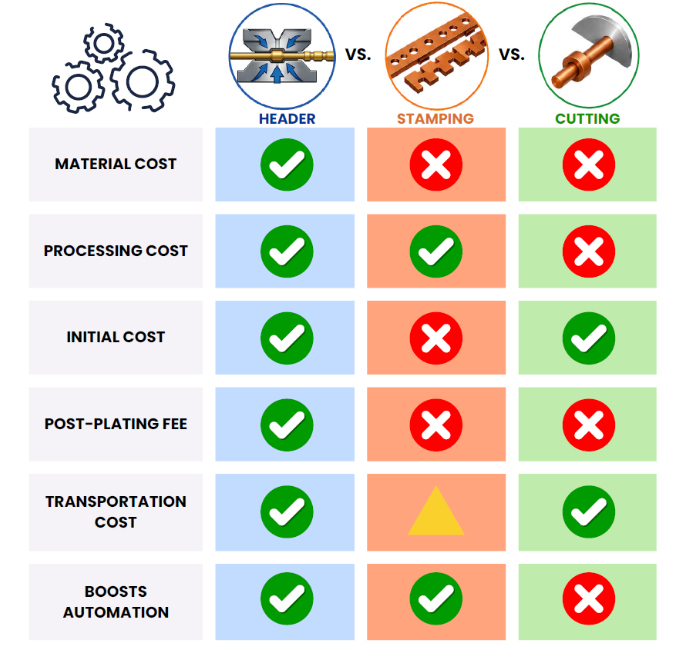
Connector terminals and pins can be manufactured by several methods, including header forming, press forming, and machining. Each method differs in both how the shape is created and how the material is used.
Machining is a processing method in which unnecessary portions of the material are removed to produce the required shape. Chips are generated during processing, so not all of the input material becomes part of the finished product.
Press forming creates a shape by punching and bending material with dies. Depending on the product shape and material layout, scrap may be generated around the product.
In contrast, header forming creates the required shape by deforming the wire material itself inside a die. Because there is no need to remove large amounts of material or punch away the material around the part, a greater proportion of the input material can be used as the finished product.
Processing Method | Main Forming Method | How Material Is Used |
Header Forming | Plastic deformation of wire material inside a die | Creates the shape by deforming the material |
Press Forming | Forms the material by punching and bending | Scrap may be generated around the product depending on the shape |
Machining | Forms the shape by removing unnecessary portions | Generates chips |
This difference in how the material is used leads to the high material yield of header forming.
■ Achieving Material Yield of Over 99%
Matsuda (Thailand) achieves a material yield of more than 99% through header forming.
For mass-produced parts such as connector terminals and pins, even if the material loss per part is small, its impact on total material consumption becomes greater as production volumes increase.
In header forming, most of the input wire material can be used as part of the finished product, allowing mass production while reducing material loss. For terminals and pins currently manufactured by press forming or machining, converting to header forming may also improve material yield.
■ Supported Wire Sizes and Materials
Matsuda (Thailand) supports both round wire and square wire.
Wire sizes:Round wire Φ0.09~2.5mm / Square wire □0.09~2.5mm
Supported materials:
- Brass
- Copper alloys
- Phosphor bronze
- Stainless steel
- Kovar
- Nickel-iron alloys
Manufacturability and production conditions are checked from the drawing based on the product shape, dimensions, material, plating specifications, and other requirements.
■ Support for Pre-Plated Materials
For plating specifications, we support tin, gold, silver, and other options. Header forming using wire material that has already been plated is also possible.
By using pre-plated materials, the plating process after forming can be eliminated depending on the specifications. Another advantage of header forming is that it allows the manufacturing method to be reviewed not only in terms of material yield but also in terms of downstream processes.
■ Processing at 100~500 Cycles per Minute
Matsuda's header forming process operates at around 100 cycles per minute depending on the product, and for faster products, at approximately 400~500 cycles per minute.
Because the wire material is continuously fed and formed inside the die, header forming is also suitable for mass production of connector terminals and pins. Its combination of high material yield and processing speed supports mass production of connector terminals and pins.
■ Design Changes for Shapes Suitable for Header Forming
Terminals and pins currently manufactured by press forming or machining can also be considered for conversion to header forming.
However, rather than processing shapes designed specifically for press forming or machining directly by header forming, the key point is to review the shape so that the advantages of header forming can be utilized.
Matsuda (Thailand) reviews existing drawings and proposes shape changes suitable for header forming, incorporating features such as tapers and ribs.
If you are considering reviewing your manufacturing method not only to reduce material loss but also to reconsider plating and downstream processes, you can consult us from the drawing stage.
■ Frequently Asked Questions
Q1:What is header forming?
A1:It is a processing method in which high pressure is applied to wire material and the material is plastically deformed inside a die to form the required shape. Because the material can be formed without removing large amounts of it, the process makes it easier to reduce material loss.
Q2:What is the material yield?
A2:Matsuda (Thailand) achieves a material yield of more than 99% through header forming.
Q3:What materials can you handle?
A3:We handle brass, copper alloys, phosphor bronze, stainless steel, Kovar, and nickel-iron alloys.
Q4:Can press forming or machining be converted to header forming?
A4:Conversion can be considered. We review the existing drawing and, where necessary, propose design changes for header forming that incorporate features such as tapers and ribs.
Q5:What is the processing speed?
A5:Depending on the product, processing starts at around 100 cycles per minute, while faster products can be processed at approximately 400~500 cycles per minute.
※If you are considering header forming for connector terminals or connector pins in Thailand, or would like to check whether your current press forming or machining process can be converted to header forming, please contact us.
Company Information

Transportation equipment / Electrical component for transportation equipment / Electronic parts
Header pin / Connector Assembly / Cold forged product
Matsuda (Thailand) Co., Ltd. manufactures and supplies precision metal components, with a particular focus on connector pins and header pins. Building on the precision machining technology and experti ...
PICKUP
Technology & Services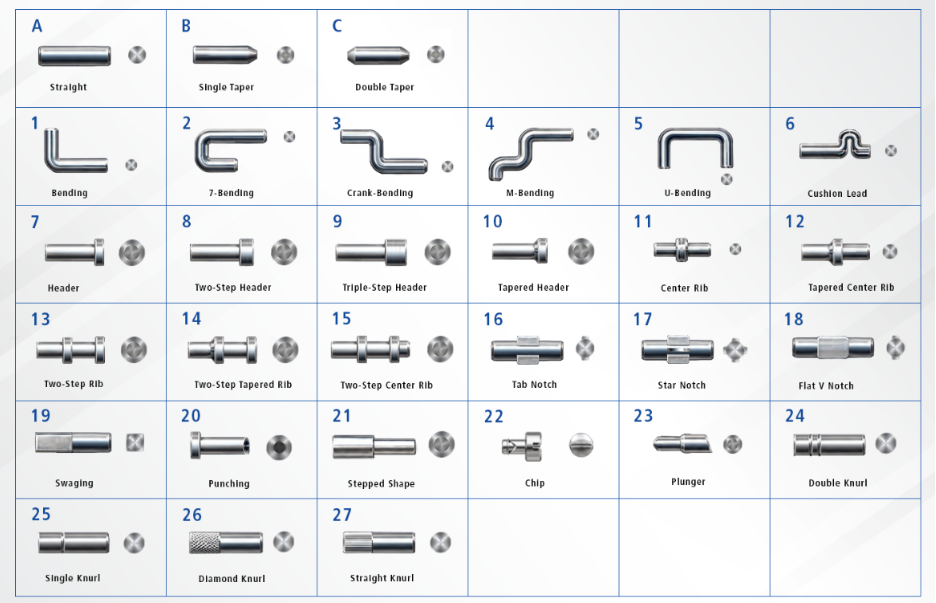
CONTACT
Contact