PRODUCT
Production Goods
Production Goods
16 items
Filter by category
History and Evolution of Plastic Injection Molding|From Celluloid to Industry 4.0
Key Takeaways• The injection molding process has evolved for more than 150 years, beginning in 1872 with the first patented molding machine.• New materials such as Bakelite, polystyrene, and nylon accelerated industrial expansion in the 20th century.• The 1946 screw-type injection machine significan ...
Engineering Plastics Explained|Selection Guide and Design Tips for Optimal Performance
Key Takeaways• Engineering plastics provide high mechanical strength, heat resistance, chemical resistance, and dimensional stability, enabling metal replacement in many industries.• Each material has unique properties for example, PBT for heat resistance, POM for low friction, LCP for high precisio ...
Common Plastic Injection Molding Defects|Causes and Practical Fixes
Key Takeaways• Common injection molding defects include flow marks, air traps/voids, warpage, burn marks, and short shots.• Most issues originate from improper temperature, injection speed, pressure, venting, or flow-channel design.• Adjusting parameters such as injection speed, melt temperature, an ...
Thermoplastic vs Thermosetting Resins|Key Differences and How to Choose the Right One
Key Takeaways• Thermoplastics and thermosetting plastics differ clearly in structure, forming behavior, and application.• Thermoplastics can be melted and solidified repeatedly, making them suitable for high-volume production and recycling.• Thermosetting plastics cannot be remelted after curing due ...
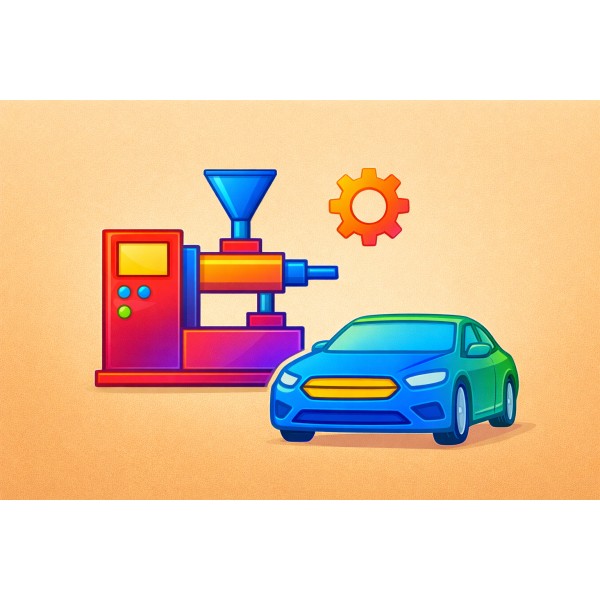
Injection Molding in Automotive Manufacturing|Why It’s Key for Lightweight, Precision Parts
Key Takeaways• Plastic injection molding helps reduce weight and production cost for automotive components while maintaining strength and dimensional accuracy.• Applicable to exterior, interior, and high-temperature engine-bay parts, including components with specific functional requirements.• Suppo ...
Injection Mold Design & Maintenance Basics|Maximizing Quality and Efficiency
Key Takeaways• Proper mold design directly influences part quality, dimensional accuracy, cycle stability, and production cost.• Mold material selection and surface treatment must match operating conditions, especially when molding glass-fiber–reinforced resins.• Preventive design measures such as g ...
Latest Trends & Innovations in Injection Molding|Advancing Efficiency, Precision & Sustainability
Key Takeaways• Injection molding technology is shifting toward higher precision, design flexibility, and support for advanced-performance components.• High-performance resins and composites such as glass fiber and carbon fiber reinforced materials enable strong yet lightweight parts that can replace ...
Material Selection & Performance Optimization in Injection Molding|Engineering Best Practices
Key Takeaways• Selecting the appropriate resin is essential for quality, stability, and cost efficiency in injection molding.• Resin selection criteria must consider mechanical strength, dimensional stability, heat resistance, chemical resistance, and surface finishing capability.• Additives such as ...
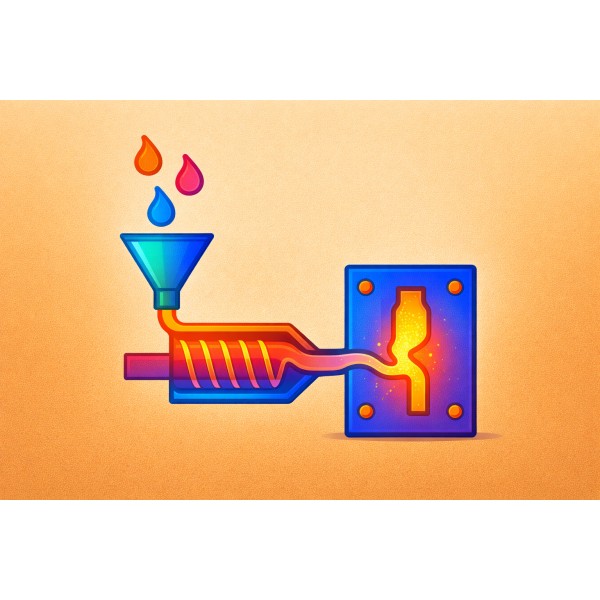
Understanding Melt Flow in Injection Molding|Reduce Waste and Optimize Plastic Processing
Key Takeaways• The flow behavior of molten plastic determines part quality and molding stability.• Molecular structure and molecular weight strongly influence flow characteristics.• Molten plastics are non-Newtonian and exhibit shear thinning—viscosity decreases as shear rate increases.• Proper temp ...
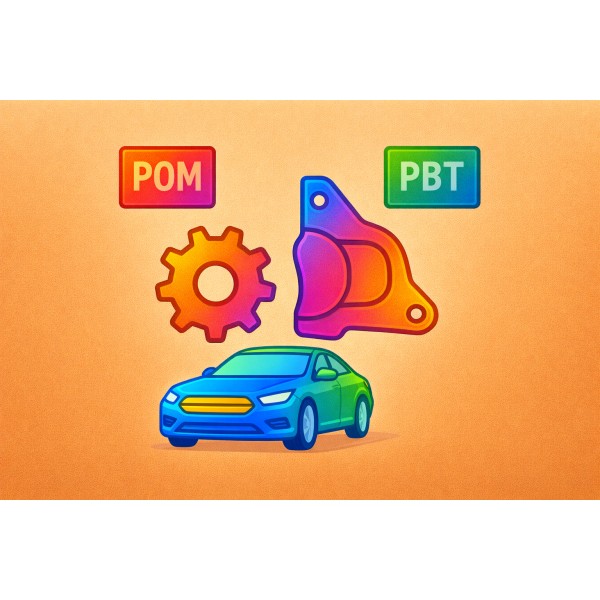
Differences and Appropriate Use of POM and PBT|Choosing the Best Material for Automotive Parts
Key Takeaways• POM is ideal for components requiring smooth movement, low friction, and high wear resistance, such as gears and mechanisms.• PBT is suitable for applications that require heat resistance, dimensional precision, and electrical insulation, such as connectors and sensors.• POM resists o ...
How to Choose Engineering Plastics for Precision Component Design|LCP, PPS, PEI Compared
Key Takeaways• Selecting engineering plastics for high-precision parts requires evaluating dimensional stability, moisture absorption, heat resistance, and molding accuracy.• LCP offers extremely low thermal expansion and excellent flow, ideal for thin and micro-detailed parts.• PPS provides high he ...
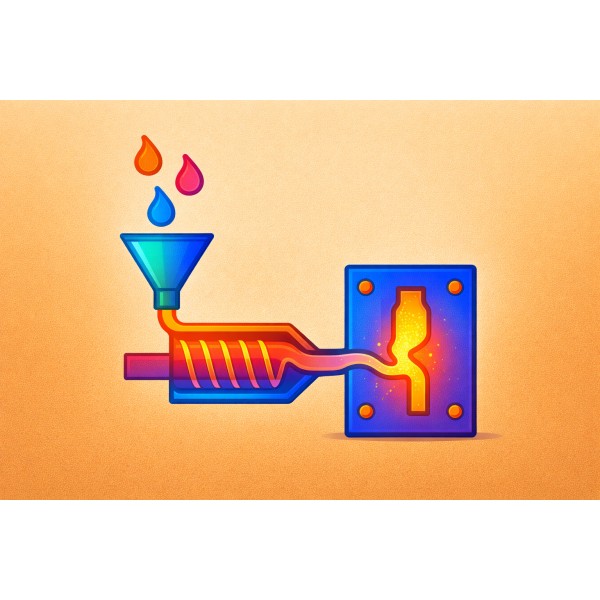
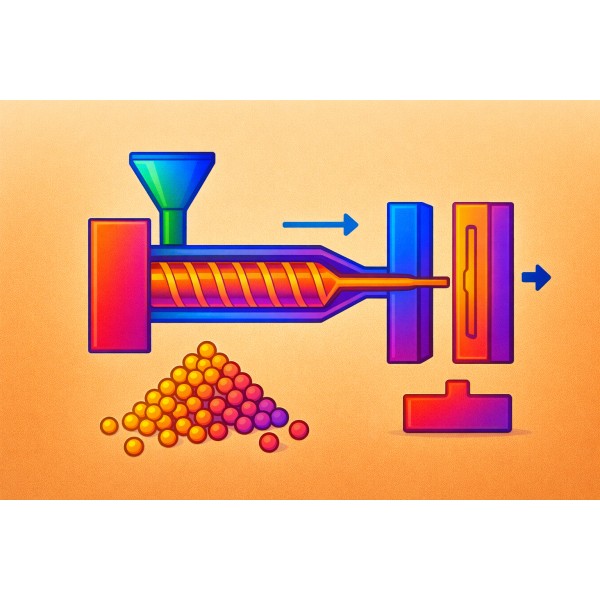
Understanding Plastic Injection Molding|Mechanism and Key Process Parameters for Mass Production
Key Takeaways• Injection molding is a highly accurate, fast, and scalable plastic manufacturing process suitable for mass production.• The process consists of five main steps: melting → injection → packing → cooling → part ejection.• Key machine units include the hopper, screw, injection unit, mold, ...
What is Insert Molding?|Integrating Metal and Resin for Durable, Space-Saving Parts
Key Takeaways• Insert molding bonds metal or other rigid materials with plastic in a single process, increasin• g strength and precision. It eliminates multiple assembly steps such as welding, pressing, or adhesive bonding, improving speed and reducing human error. • Commonly used in automotive, ele ...
High-Precision Molds for Automotive Parts|Reduce Defects, Ensure Global Standards
Key Takeaways• High-precision molds significantly reduce scrap and stabilize production of automotive components.• Micron-level tolerances are critical for safety-related systems such as brakes, airbags, and ECUs.• High-precision molds reduce long-term costs by lowering downtime, rework, and equipme ...
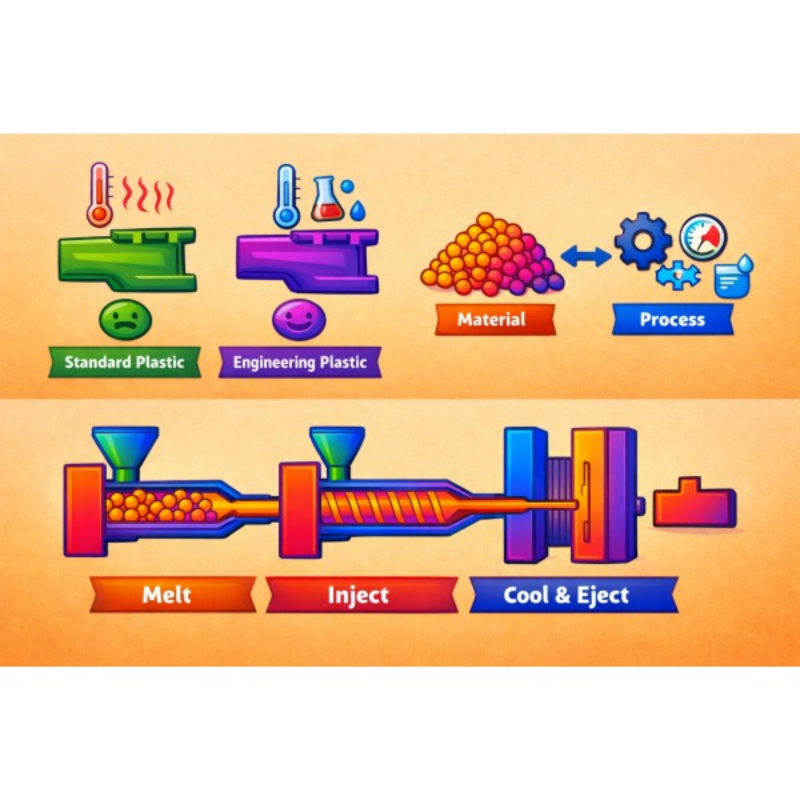
Engineering Plastics in Injection Molding|How to Select Materials for Real-World Applications
Key Takeaways• Engineering plastics provide higher mechanical, thermal, and chemical properties than general-purpose plastics.• Proper material selection helps reduce warpage, wear, and short service life.• Injection molding must consider the combination of material, process, and mold design.• Facto ...
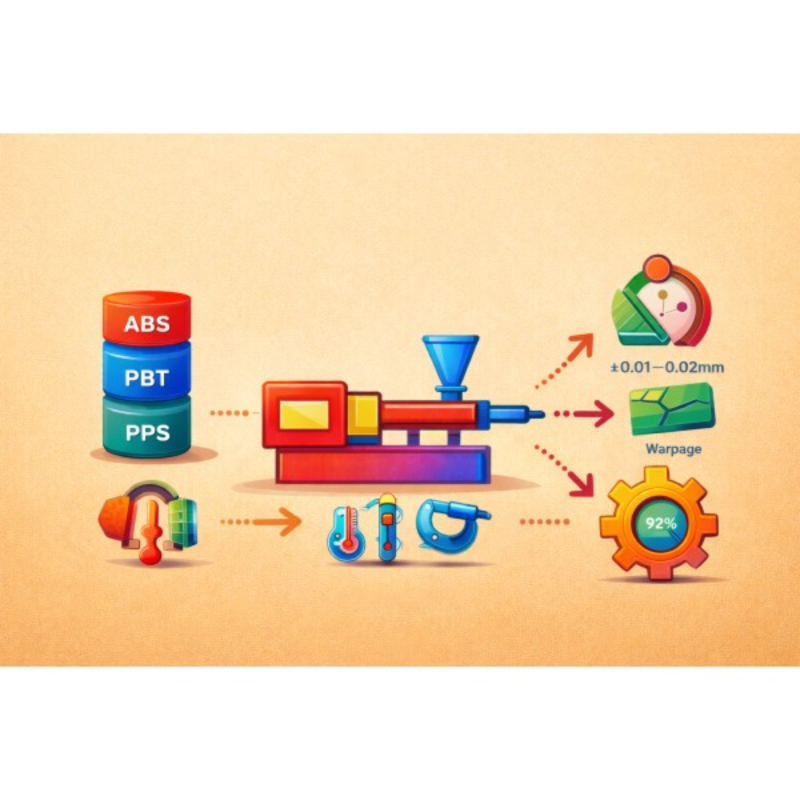
Engineering Plastics and Precision Injection Molding|Linking Materials, Processes, and Quality KPIs
Key Takeaways• Injection molding quality issues often arise from misalignment between material and process• Different engineering plastics directly affect KPIs such as warpage, tolerance, and yield• Proper control of injection parameters and mold design enables full material performance• Factories w ...
CONTACT
Contact