
KNOWLEDGE
Knowledge
Technology and Services
10 Tasks Collaborative Robots Can Perform | Easy-to-Understand Explanation of Their Applications in Factory Automation
2026-04-14
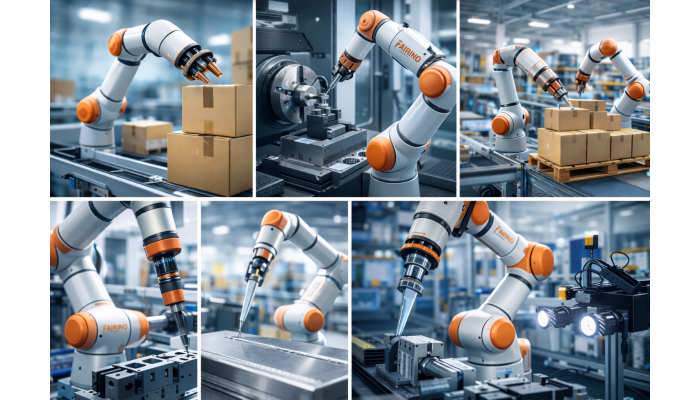
10 Tasks Collaborative Robots Can Do | Easy-to-Understand Explanation of Applications for Factory Automation
In recent years, the introduction of collaborative robots has been progressing as a measure against labor shortages in factories and a means of improving productivity. Collaborative robots are attracting attention in many workplaces because they are easy to use in the same workspace as humans and are relatively easy to introduce.
However, when actually considering their introduction, many people probably want to know specifically what kind of tasks collaborative robots can perform.
This article provides an easy-to-understand explanation of 10 representative tasks that collaborative robots can perform. Please use it as a reference if you are considering factory automation or robot introduction.
What Are Collaborative Robots?
Collaborative robots are robots designed to work safely in the same workspace as humans. Compared to conventional industrial robots, they excel in safety and operability, and are characterized by being relatively compact and easy to introduce.
For this reason, their adoption is progressing in many manufacturing sites as a means to automate repetitive and simple tasks that were previously performed manually.
10 Tasks Collaborative Robots Can Perform
1. Pick & Place
One of the most commonly introduced applications for collaborative robots is Pick & Place. It is suitable for tasks involving grasping parts or products and moving them to another location.
For example, it can be used for tasks such as picking parts from a tray and placing them into a jig, or arranging finished products in a box. Since it involves simple repetitive work, it is an application where automation can easily yield results.
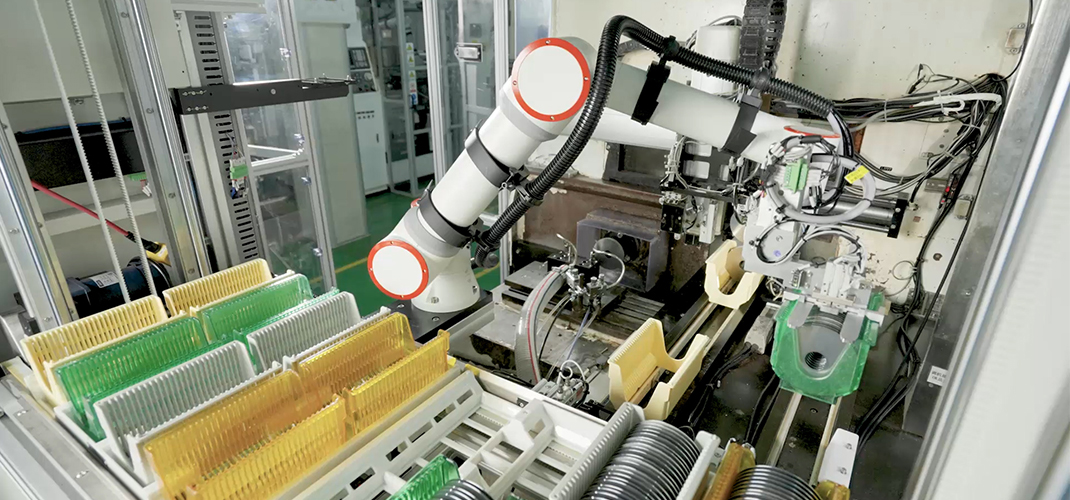
2. Machine Loading/Unloading: Machine Tending
Loading and unloading workpieces into NC lathes, processing machines, molding machines, and similar equipment are also tasks at which collaborative robots excel.
This process tends to be monotonous when performed by humans, but using collaborative robots enables stable operation. It can easily handle night shifts and long hours of operation, leading to improved productivity.
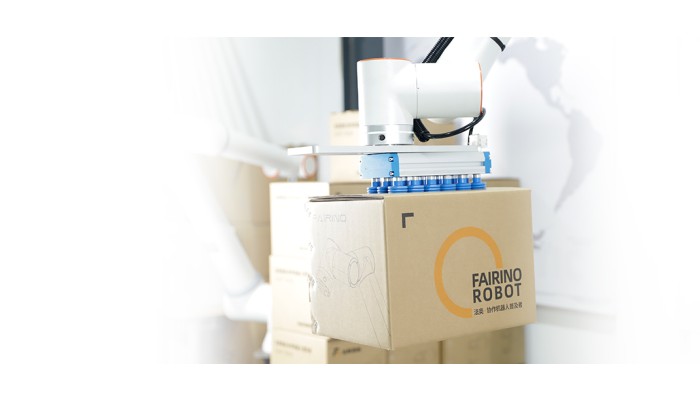
3. Palletizing
Collaborative robots can also be utilized for palletizing tasks, which involve stacking boxes or products.
Handling heavy objects and repetitive lifting tasks place a significant burden on workers. By introducing collaborative robots, a reduction in back strain and labor savings can be expected.
4. Boxing and Packaging
Collaborative robots are also suitable for tasks such as packing products into boxes and arranging them according to specific rules.
Even though boxing and packaging may seem like simple tasks, they require a certain speed and accuracy. By utilizing collaborative robots, it becomes easier to suppress variations in quality.
5. Screw Driving
Collaborative robots can also handle screw driving tasks by attaching tools such as electric screwdrivers.
In processes where screws are repeatedly tightened at a fixed position, automation is easy and leads to stable work quality. It is also effective for labor saving in assembly processes.
6. Adhesive and Sealant Application
Applying adhesives and sealants along a fixed trajectory is also an application at which collaborative robots excel.
When performed manually by humans, the application amount and width tend to vary, but using robots enables uniform application. Improvement in quality and reduction in material loss can be expected.
7. Visual Inspection Assistance
By combining them with cameras and lighting, collaborative robots can also be utilized for visual inspection assistance.
For example, they can be used to set workpieces in a fixed position for easier imaging, or to transport them in front of a camera. By linking with image processing systems, more advanced automation of inspection processes is also possible.
8. Part Alignment and Sorting
Collaborative robots can also handle tasks such as aligning parts in the correct orientation and sorting them by type.
Alignment and sorting tasks are simple, but they require a lot of human labor when quantities are large. By introducing collaborative robots, it becomes easier to establish a stable supply process.
9. Setting and Removing from Inspection Jigs
Setting products into inspection jigs and removing them after inspection is also an application that is easy to automate.
Since this process often requires high positioning accuracy, collaborative robots with high repeatability are useful. By operating them in combination with inspection equipment, the efficiency of the inspection process can be improved.
10. Simple Assembly Tasks
Collaborative robots can also be utilized for simple assembly tasks such as fitting, pushing, or combining parts into designated positions.
While not suitable for all assembly, it is an area that is easy to automate if the task content is simple and highly repetitive.
Characteristics of Tasks Suitable for Collaborative Robots
Collaborative robots are suitable for tasks with the following characteristics.
- Many repetitive tasks
- Simple tasks that are easy to standardize
- High burden on workers
- Susceptible to labor shortages
- Need for consistent quality
In particular, transportation, loading, alignment, screw driving, and inspection assistance are representative applications where the introduction of collaborative robots can easily yield results.
Points to Note When Introducing Collaborative Robots
Collaborative robots are convenient automation tools, but they are not suitable for all tasks.
For example, the following points need to be confirmed in advance.
- Weight and size of the workpiece
- Required operating speed
- Positioning accuracy
- Integration with peripheral equipment
- Necessity of safety measures
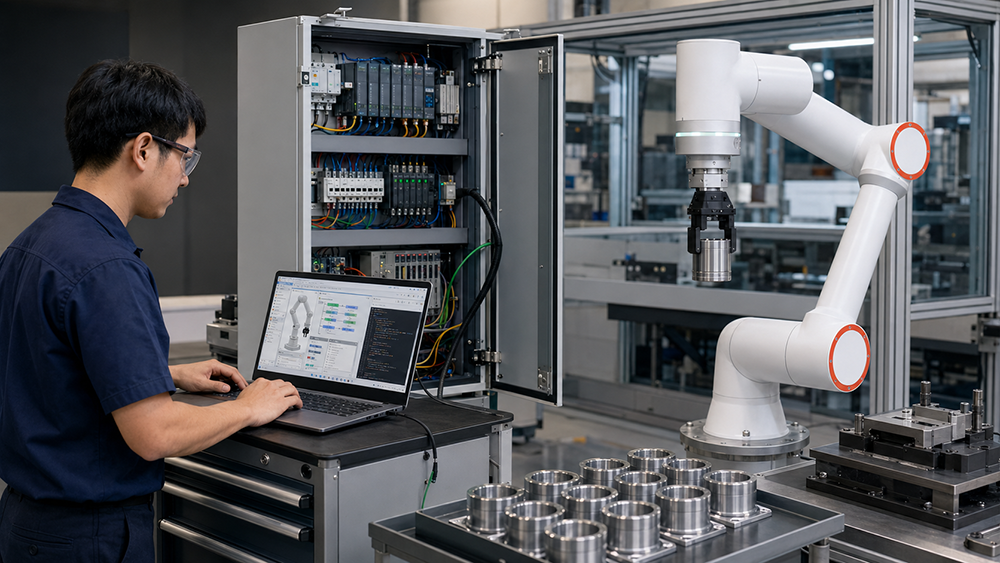
Furthermore, in some cases, more advanced automation can be achieved by combining cameras, lighting, sensors, PLCs, and other components. It is important to consider a system configuration that suits the specific workplace.
Summary
Collaborative robots are being increasingly utilized in various factories as robots that are easy to use alongside humans and relatively easy to introduce.
Representative applications include the following tasks.
- Pick & Place
- Machine loading/unloading
- Palletizing
- Boxing/packaging
- Screw driving
- Application tasks
- Visual inspection assistance
- Sorting/alignment
- Setting into inspection jigs
- Simple assembly
Which tasks can be automated with collaborative robots varies depending on the workpiece and process content. When considering introduction, it is important to identify applications that suit your company's specific workplace.
Company Information

Industrial machinery / Measuring machinery
Collaborative robot
We, FAIRINO THAILAND Official Distributor by Shodensha Thailand, have been selling optical equipment, including microscopes, since our establishment in October 2012, as the Thai local subsidiary of Sh ...



PICKUP
Technology & Services
CONTACT
Contact