


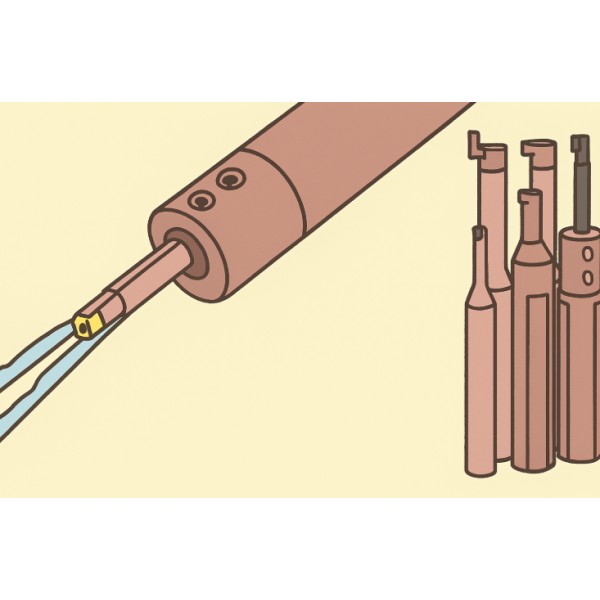
Cutting Tools for Boring | Principles for Accurate Selection & High-Precision Applications
This article introduces the key principles for selecting cutting tools in boring operations to achieve high-precision machining, improve surface quality, reduce vibration, and enhance overall production efficiency. It is essential reading for engineers, technicians, and factories aiming to optimize their internal turning processes for higher accuracy and lower costs.
Boring is a crucial process used to enlarge existing holes and achieve precise internal diameters and smooth surfaces. Unlike drilling, which creates holes from solid material, boring focuses on improving accuracy and surface finish. Selecting the right boring tool directly impacts the dimensional accuracy, roundness, and concentricity of workpieces — all critical factors in industrial manufacturing.
■ Boring fundamentals
Boring improves:
・ Dimensional accuracy of internal diameters
・ Roundness and straightness of holes
・ Surface finish quality
Boring operations are usually performed on lathes or boring machines with specialized boring bars or heads. The correct tool choice depends on the material, depth, diameter, and required precision level.
■ Principles for tool selection
● Workpiece material
Material affects tool material and coating choice. For example, carbide tools with high wear resistance are common for carbon steel and cast iron, while aluminum requires sharp edges and special coatings to prevent built-up edge (BUE) formation.
● Accuracy and surface finish
For tight tolerances and fine finishes, choose vibration-resistant boring bars or fine-adjustment heads. Use inserts designed for finishing to achieve smoother surfaces.
● Hole depth and size
For deep holes, use rigid boring bars with minimum overhang to prevent deflection and ensure consistent accuracy.
■ Fine adjustment and modular design
Modern boring tools often feature fine adjustment mechanisms, enabling precise on-site diameter correction and reducing rework. Modular boring heads offer flexibility and reduce downtime, improving overall cost efficiency.
■ Choosing the right insert
Select inserts based on operation type — roughing, finishing, or interrupted cuts. The right choice improves tool life, ensures superior surface finish, and cuts overall production costs.
■ Recommended product: XB series from MMC Hardmetal (Thailand) Co., Ltd.
For precision boring, we recommend the XB series from MMC Hardmetal (Thailand) Co., Ltd. Designed for small-diameter and precise boring, it supports internal diameters as small as 7.8 mm and internal grooving up to 4 mm. This reduces tool changes, setup time, and significantly boosts production efficiency.
The XB series enables both boring and grooving with a single tool, making it ideal for factories prioritizing high-precision and long-term cost savings.
For more information, download the product PDF or contact MMC Hardmetal (Thailand) Co., Ltd. directly.
#Boring #CuttingTools #PrecisionMachining #Metalworking #FactorySolutions #IndustrialTools #BoringBar #HighPrecision #CostReduction #ManufacturingEngineering
CONTACT
Contact FormCompany Information
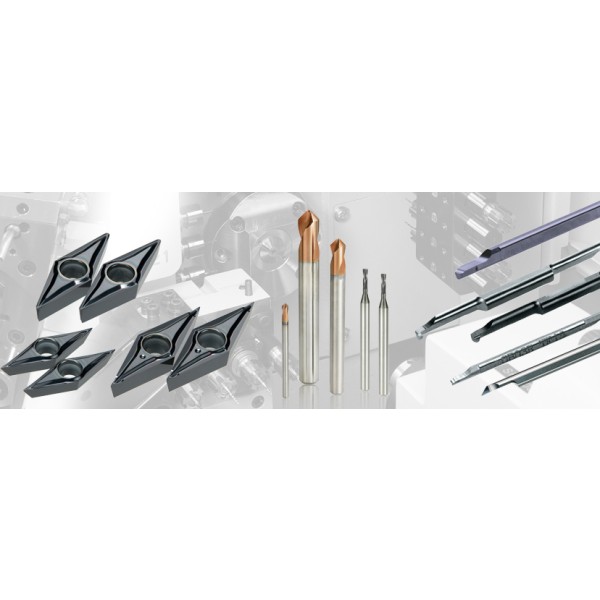
Jigs and tools
Turning Tools / Rotary Tools / Drilling Tools
Mitsubishi Materials carbide tools provide innovative cutting tools and solutions to customers worldwide.