


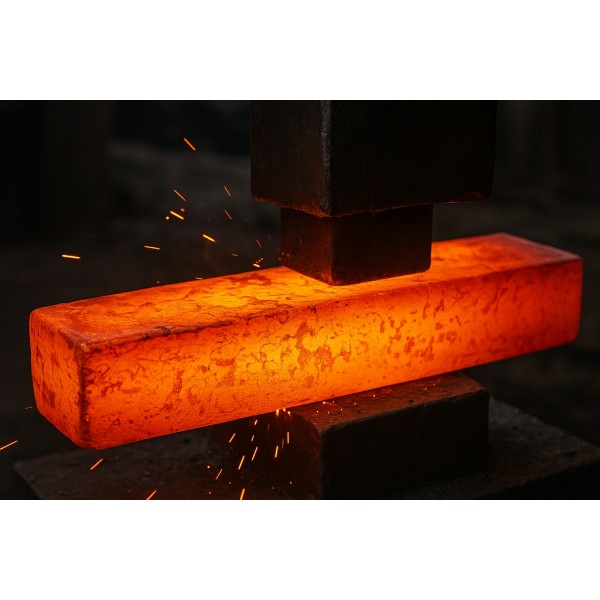
Hot Work Tool Steel|Fundamentals, Grade Selection, and Maintenance
Key Takeaways
- Hot work tool steel is engineered to withstand temperatures around 200–700°C while maintaining strength and wear resistance.
- Its key alloying elements Chromium, Molybdenum, Vanadium, and Tungsten enhance heat resistance, toughness, and tool life.
- Common grades such as H10, H11, H13, H21, H22, H42, H43 support a wide range of hot work applications.
- Proper heat treatment, controlled heating, and regular maintenance directly affect tools and die longevity.
- Although more expensive than standard carbon steel (3–5×), hot work tool steel delivers significantly better long-term cost efficiency due to higher production cycles.
Hot Work Tool Steel is a specialized class of tool steel designed for operations involving continuous exposure to high temperatures. These steels typically maintain hardness and strength within the 200–700°C range, making them ideal for tools and dies that contact molten metal or undergo repeated thermal cycles such as aluminum injection molds, die-casting molds, and hot-forming tools used in the automotive and metalworking industries.
Production Benefits
- Reduced Production Costs: Much longer service life compared to standard carbon steel; fewer tool changes required.
- Higher Efficiency and Throughput: Capable of withstanding high cycle counts, allowing longer continuous operation with minimal downtime.
- Dimensional Accuracy and Stable Quality: Retains shape and dimensions even under continuous high-temperature conditions, reducing product defects and deformation.
Guidelines for Grade Selection
- H10, H11, H13: Ideal for aluminum die-casting molds and general hot-work applications.
- H13 is the most widely used grade due to its balanced hardness, toughness, and heat resistance.
- H21, H22: Suitable for molds used with brass and copper, where resistance to high temperature and chemical attack is required.
- H42, H43: Designed for extremely high-temperature, high-pressure applications involving heavy thermal and mechanical loading.
Maintenance for Maximum Tool Life
- Heating Control (Preheating / Gradual Heating): Heat the tool gradually and evenly to prevent thermal shock and reduce cracking risk.
- Heat Treatment (Hardening / Tempering): Strict control of temperature, soaking time, and cooling methods are essential. Proper heat treatment ensures the designed balance of hardness and toughness.
- Post-Operation Cleaning: Remove oxides, scale, and adhered metal after each use. Surface contamination increases the likelihood of cracking and accelerating wear.
Common Misconceptions
- Hot work tool steel withstands all temperatures → Each grade has specific temperature limits. For example, aluminum die-casting and hot forging require different thermal performance.
- Hot work tool steel doesn’t require maintenance → Even high-performance grades fail early if heating control, cleaning, and heat treatment are not properly managed.
Hot work tool steel is an essential material for dies and tools exposed to continuous high temperatures. With the ability to maintain hardness and toughness within 200–700°C, it is widely used in aluminum injection molding, die casting, and various hot-forming operations. Selecting the correct grade and applying proper heat treatment and maintenance significantly extend tool life and improve long-term production efficiency.
ーーーーーーーーーーーーーーーーーーーーーーーーーーーーーーーーーーーーーーーーーーー
❓ FAQ
Q: What’s the difference between H13 and H11?
A: H13 contains more Vanadium, offering higher hardness and superior wear resistance ideal for high-pressure, high-temperature applications. H11 has better toughness, making it suitable for applications requiring flexibility and crack resistance.
Q: Is hot work tool steel more expensive than regular steel?
A: Yes typically 3–5× higher in price, but it delivers far greater production cycles, making it more cost-effective when calculated per produced part.
Q: Can hot work tool steel be welded?
A: Yes, preheating, controlled cooling, and post-weld heat treatment (PWHT) are required to prevent cracking and reduce residual stress.
📚 Glossary
Hot Hardness: Ability to maintain hardness at elevated temperatures
Thermal Shock: Stress caused by rapid temperature changes
Chromium–Molybdenum Steel: Base composition for H11/H13
Heat Treatment: Hardening and tempering processes used to optimize steel properties
#HotWorkToolSteel #H13 #DieCasting #ToolSteel #HeatTreatment #AluminumInjectionMold #ThermalShock #SteelGrade #ManufacturingTools #HotForming
CONTACT
Contact FormCompany Information
Special steel / Machinery steel / Laser machine
Founded in 2016, Storemate Co., Ltd. specializes in the import and distribution of premium-quality steel, machinery, and industrial tools. With our headquarters located in Bangkok and two production f ...