


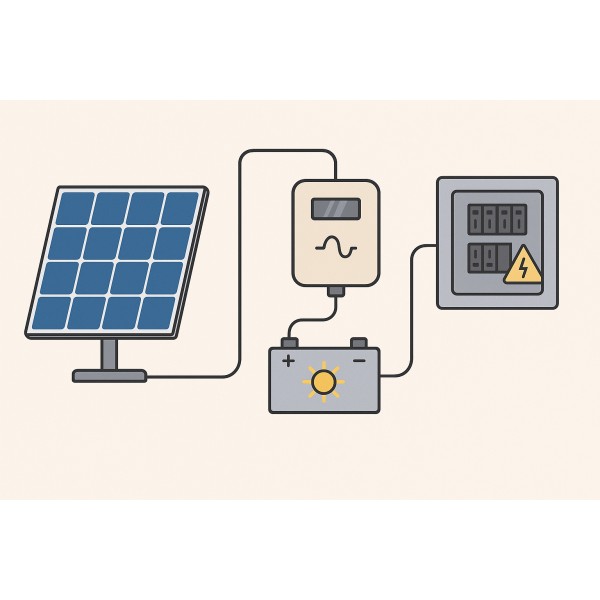
Equipment Required for a Solar Power Generation System|Components and Their Roles
A solar power system is more than just solar panels it’s a combination of devices working together to generate, convert, store, and manage electricity safely and efficiently. This guide explains each essential component from an engineering perspective to help ensure optimal system design and installation.
1. Basic Components of a Solar Power System
To deliver safe, stable, and efficient electricity, a solar power system typically includes:
- Solar cell modules (solar panels)
- Power Conditioner (PCS / inverter)
- Junction box
- Battery storage (optional)
- Monitoring devices
- Distribution board, meters, and other peripherals
Knowing the role of each component enables better product selection and system configuration.
2. Solar Panels – The Core of Power Generation
Solar panels convert sunlight directly into direct current (DC) electricity. Most panels are made of silicon and fall into two main categories:
- Monocrystalline: High efficiency, ideal where installation space is limited
- Polycrystalline: Lower cost, slightly less efficient, suitable for larger installations
Key selection factors:
- Conversion efficiency
- Temperature coefficient (performance in heat)
- Weather resistance
- Installation environment (roof, ground mount, solar carport)
3. Power Conditioner (PCS) – The Brain of the System
The PCS converts DC electricity from the panels into alternating current (AC) for home or commercial use, while performing several key functions:
- Voltage and current regulation for stable power supply
- Reverse power flow prevention to protect the grid
- Automatic night-time shutdown
- Battery integration with hybrid PCS models
A high-quality PCS directly impacts the overall efficiency of the solar system.
4. Junction Boxes and Safety Devices
A junction box collects electricity from multiple solar panels and routes it to the PCS. Typical built-in components include:
- Reverse current prevention diodes
- Overcurrent protection fuses
Additional required safety devices:
- Earth leakage breaker (ELCB)
- Surge protector (SPD) for lightning protection
5. Battery Storage and Monitoring Systems
- Battery Storage: Stores excess electricity for night-time use or peak demand, and serves as backup during outages improving energy self-sufficiency.
- Monitoring Devices: Display real-time power generation, consumption, and battery status. Many modern systems offer cloud connectivity for remote monitoring and instant alerts.
CONTACT
Contact FormCompany Information
Solar power generation / Energy-saving related business / Renewable energy business
ITC ENEX (THAILAND) CO., LTD. is a Thailand-based company providing sustainable solutions in the energy sector. Leveraging the extensive technology and experience of its parent company, Japan's ENEX G ...