


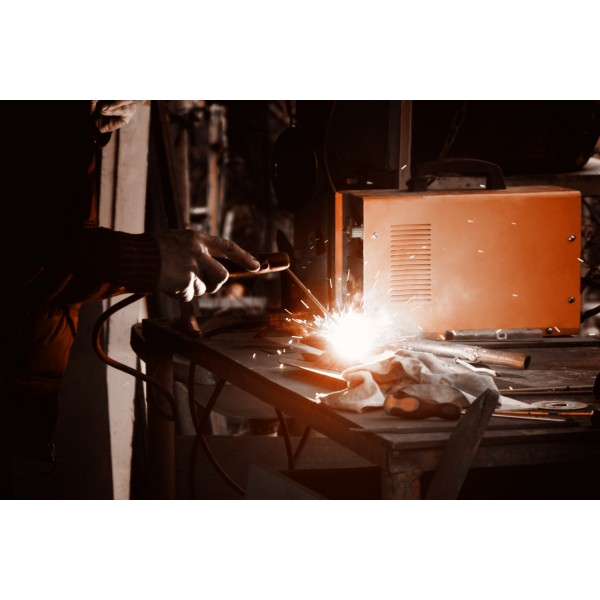
Basic Knowledge of Stainless Steel Welding Technology
― Principles and Practical Points of Welding You Should Know to Maintain Corrosion Resistance and Prevent Deformation ―
1. What is Stainless Steel? Its Properties and Classification
Stainless steel is an alloy steel that gains corrosion resistance by adding 10.5% or more chromium to iron, and it is used in a wide range of applications such as outdoor structures, food machinery, chemical plants, and medical equipment. Its key characteristics include excellent resistance to rust even in the atmosphere or underwater, as well as superior cleanability and strength.
Stainless steel is broadly classified into the following four series:
- Austenitic series (e.g., SUS304, SUS316): High corrosion resistance, most common. Non-magnetic.
- Ferritic series (e.g., SUS430): Magnetic, low cost, good formability.
- Martensitic series (e.g., SUS410): High hardenability, used for cutting tools, etc.
- Duplex series (e.g., SUS329J1): Mixture of ferrite and austenite, high strength and high corrosion resistance.
Since the behavior during welding and the tendency for defects differ for each of these series, understanding the material properties is extremely important in welding operations.
2. Main Welding Methods and Characteristics for Stainless Steel
In stainless steel welding, various welding methods are used depending on the application, plate thickness, and quality requirements. The main methods are as follows:
1. TIG welding (Tungsten Inert Gas Arc Welding)
Suitable for precision welding of thin plates, producing beautiful beads with low spatter. Heat input is easy to control, and it is widely used for austenitic and thin stainless steel.
2. MIG welding (Semi-automatic welding)
Suitable for medium to thick plates where efficiency is required. Welding speed is fast and workability is excellent, but spatter and bead appearance are inferior to TIG.
3. Laser welding / Plasma welding
Used in fields requiring precision equipment and high quality. Characterized by a small heat-affected zone and suppressed deformation.
4. Resistance welding (Spot welding)
A method used for joining sheet metal, adopted in automotive parts and home appliances.
Each method has its advantages and disadvantages, and it is necessary to select the appropriate method according to the required quality and productivity.
3. In stainless steel welding, defects such as the following are prone to occur, and many phenomena are attributable to material properties.
- Cracking (hot cracking / solidification cracking): Occurs due to excessive heat input or inappropriate welding materials. Particular caution is required for austenitic series.
- Deformation / Distortion: Due to a high coefficient of linear expansion, large shrinkage stress occurs during welding. Addressed by tack welding, jigs, or back-camber design.
- Oxidation / Scale formation: Corrosion resistance is impaired by high-temperature oxidation. Shielding with argon gas and back protection are important.
- Pitting corrosion / Intergranular corrosion: Caused by the destruction of the passive film or carbide precipitation after welding. Prevented by appropriate post-treatment (pickling / electropolishing).
To prevent these defects, prior material verification, appropriate welding conditions, and post-welding treatment processes are indispensable.
4. Management and Evaluation to Stabilize Welding Quality
To stabilize quality, not only the skills of the workers but also equipment management, recording of welding conditions, and establishment of an inspection system are essential.
- Establishment of WPS (Welding Procedure Specification) and PQR (Procedure Qualification Record)
These are indispensable for standardizing welding conditions and ensuring reproducibility.
- Non-destructive testing (PT, VT, RT, etc.)
The presence or absence of defects is confirmed using visual inspection, penetrant testing, X-ray inspection, etc.
- Traceability management
By recording who welded, when, and under what conditions for each welded part, the quality assurance system can be strengthened.
CONTACT
Contact FormCompany Information
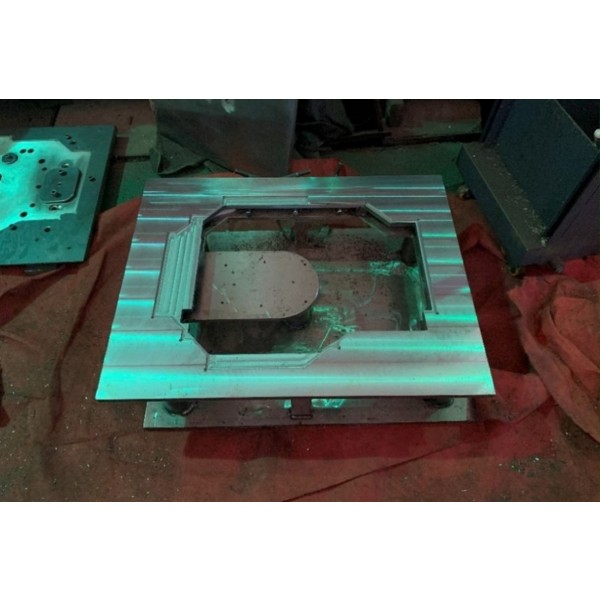
Tank equipment system / Metal processing / Control system
Belief Engineering Technology (Wuxi) Co., Ltd. was established in 2009 in Wuxi, offering a diverse range of services, including tank equipment manufacturing, control systems, and precision metal proce ...