


Solar Panel Maintenance & Monitoring | Keep Output Stable Over 20+ Years
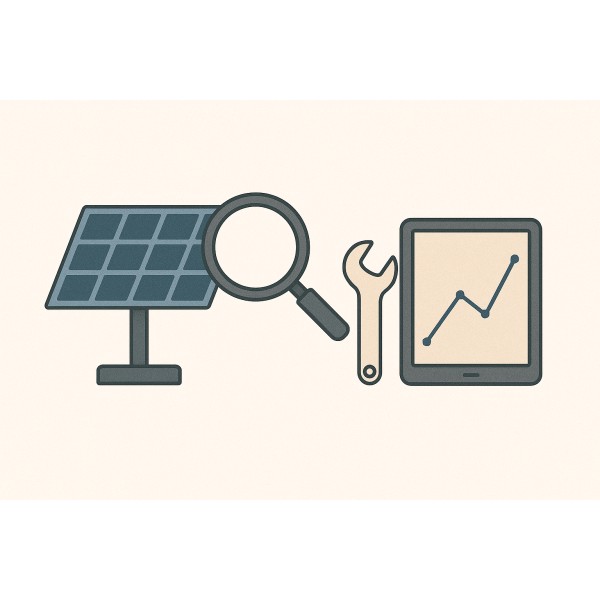
To ensure stable operation and return on investment for solar power systems, regular maintenance and real-time monitoring are essential. This guide explains the optimal maintenance strategies to prevent failures and output degradation, supporting long-term operation of over 20 years.
Why Longevity of Solar Power Systems Is Crucial
Solar power systems are infrastructure designed to provide electricity over a long term, typically 20–30 years. Maintaining their initial performance safely over this span is essential.
Even a few percent drop in output can significantly impact annual electricity sales revenue or self-consumption efficiency. Neglecting maintenance can also lead to serious malfunctions or fire risks. Longevity requires not only quality assurance at the design stage but also regular maintenance and a robust real-time monitoring system.
Major Degradation Factors and Common Troubles
Most components of solar systems are installed outdoors and subject to the following external and internal deterioration factors:
Dirt, damage, or potential-induced degradation (PID) of panels
Disconnection or loose wiring, arc faults
Component wear or fan failure in power conditioners (PCS)
Equipment damage from lightning surges or overcurrent
Corrosion, loosening, or tipping of mounting structures
These issues may lead to output loss, shutdowns, or even fire accidents, so early detection and response at the warning sign stage are crucial.
Maintenance & Inspection Items and Frequency
Maintenance is categorized into three areas: visual inspection, measurement, and cleaning.
Key inspection items:
PV modules: damage, dirt, hot spots, output checks
PCS: operation, heat, noise, life-limited components (fans, capacitors)
Junction boxes & cables: looseness, burns, disconnection, insulation checks
Mounts & foundations: corrosion, looseness, fixing conditions
Ground resistance & lightning rods: measurements and records
Inspection frequency:
Regular inspections once or twice a year (typically under maintenance contracts)
Daily visual checks and abnormality monitoring
Inspection records should be archived and used for trend analysis and maintenance planning.
Role of Remote Monitoring Systems
Remote monitoring systems are indispensable as a complement to physical maintenance. These systems collect and analyze data in real-time from various plant components.
Key data collected:
Current/voltage of each string
Power generation, solar irradiance, temperature
PCS status and error logs
Grid connection status and power usage (in self-consumption setups)
Benefits include:
Early detection of anomalies (output loss, module faults)
Troubleshooting down to the PCS or panel level
Optimized maintenance scheduling and avoiding unnecessary checks
Trend analysis and reporting based on historical data
Monitoring can be cloud-based or local, depending on plant size and security requirements.
Key Points for Efficient and Durable Operation
To ensure long-term, stable operation, consider the following:
Set up maintenance contracts and monitoring from the start
Regular panel cleaning (dust, bird droppings countermeasures)
Preventive replacement of parts based on lifespan (especially PCS)
Partial replacements based on output trends
Updating monitoring systems to reflect technological advancements
Also, manage total lifecycle costs, including post-20-year O&M, for better ROI planning.
The true value of a solar power system lies not just in generating electricity, but in generating it reliably over time. Thus, in addition to quality design and construction, ongoing maintenance and advanced monitoring are essential. Maximize your investment returns through proper asset management.
CONTACT
Contact FormCompany Information
Solar power generation / Energy-saving related business / Renewable energy business
ITC ENEX (THAILAND) CO., LTD. is a Thailand-based company providing sustainable solutions in the energy sector. Leveraging the extensive technology and experience of its parent company, Japan's ENEX G ...