
KNOWLEDGE
Knowledge
Producer goods
Are Filter Costs Eating Into Your Profits? Switch to Centrifugal Separation and Reduce Consumable Costs to Zero
2026-08-14
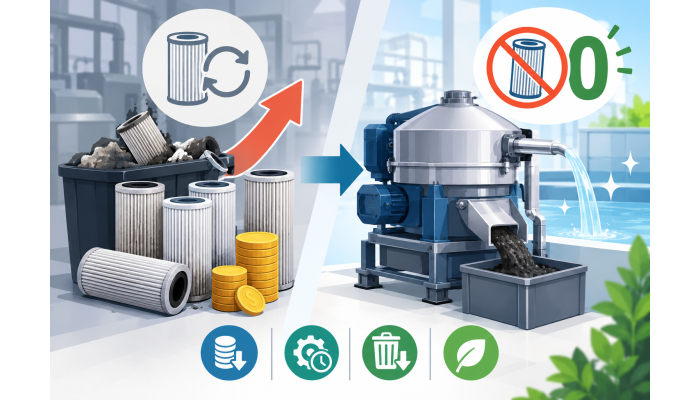
In industrial factories, separating sludge and contaminants from process fluids often creates recurring costs that increase with every operating cycle. Are filter expenses reducing your company’s profits?
Repeated filter replacement not only creates permanent consumable costs but also increases the amount of industrial waste generated by the system. This article introduces a physical separation alternative that does not require filters and can reduce these consumable costs to zero, subject to the appropriate technical conditions.
Table of Contents
- Why Filter Costs Limit Business Profitability
- How Sludge Accumulation Creates Waste in Filtration Systems
- Filter Systems vs. Centrifugal Separation: Differences in Cost Structure
- Viscosity and Sludge Volume to Check Before Selecting a Machine
- What Touto Separator Asia Can Provide
- Frequently Asked Questions
Why Filter Costs Limit Business Profitability
Using filtration systems that rely on filters or filter cloths in production processes creates variable costs through the continuous purchase of consumable materials.
When the amount of metal sludge or suspended contaminants in process fluids such as coolant or cutting oil increases, filters can become clogged within a short period of time, requiring frequent replacement.
In addition to the cost of purchasing replacement filters, factories also incur downtime costs when machines must be stopped for filter replacement, as well as disposal costs for contaminated industrial waste containing chemicals.
These expenses accumulate over time, increasing production costs and directly affecting the factory’s net profit margin. Managing these costs is therefore an important part of controlling overall operating expenses.
How Sludge Accumulation Creates Waste in Filtration Systems
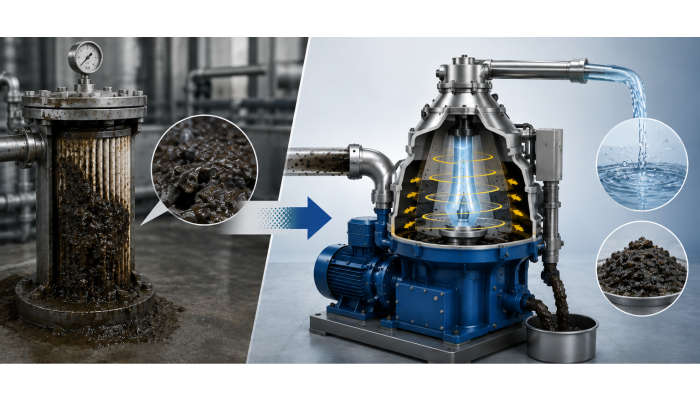
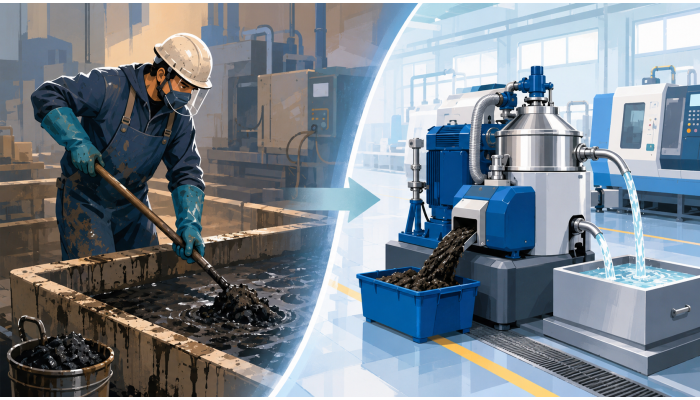
In conventional filtration systems, fluid containing sludge and contaminants is forced through a filter to capture impurities.
However, as metalworking or painting processes continue, the volume and concentration of sludge in the fluid increase in proportion to production.
Fine sludge particles gradually clog the pores of filter cloths or filter paper, increasing system pressure and reducing fluid flow.
This operating structure eventually forces the system to stop so that the filter can be cleaned or replaced.
The finer the sludge particles, the more frequently the filter material may need to be replaced. This creates a continuous cycle of wasted labor time and recurring expenditure on replacement consumables.
Filter Systems vs. Centrifugal Separation: Differences in Cost Structure
When comparing filter-based systems with centrifugal separation technology, there are clear differences in both maintenance requirements and cost structure.
Filter systems require a recurring budget for replacement components according to their service life.
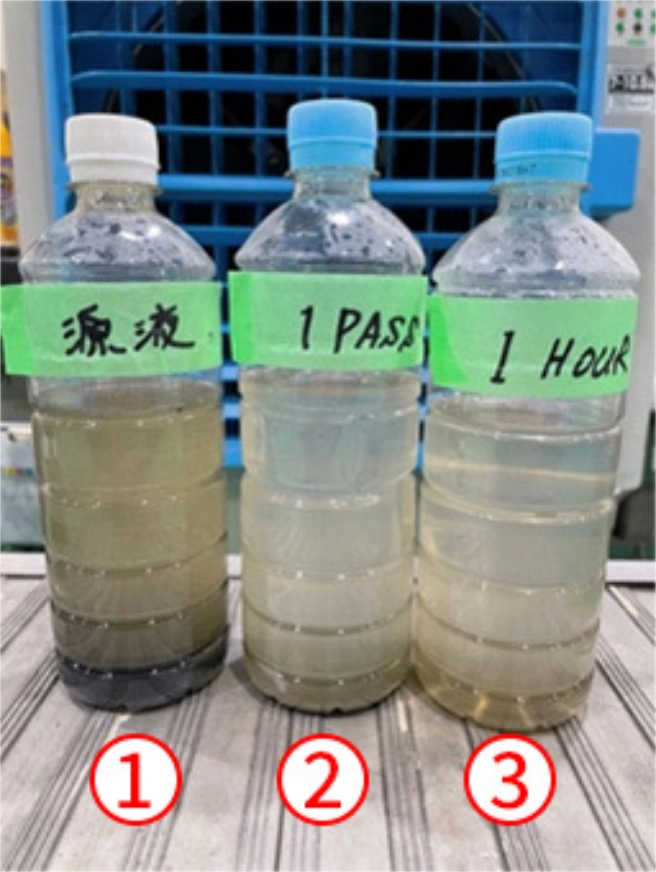
A centrifugal separator, on the other hand, uses high-speed rotation to separate solids from liquids based on differences in specific gravity. This is a physical separation process that does not require any filter media.
As a result, consumable costs associated with filters can be reduced to zero.
Centrifugal separation also helps maintain consistent fluid cleanliness without the decline in filtration performance caused by clogged filter media. This can help extend the service life of circulating coolant and other process fluids.
Viscosity and Sludge Volume to Check Before Selecting a Machine
Selecting the appropriate size and model of centrifugal separator requires clear technical information from the actual production site.
The first factor to check is the amount of sludge generated per hour. This information is used to determine the required sludge collection capacity and sludge removal cycle.
The second factor is the fluid viscosity and operating temperature. The viscosity of cutting oil or coolant affects the settling and separation behavior of sludge under centrifugal force.
The third factor is the particle size of the sludge to be separated. The rotational conditions must be capable of generating sufficient centrifugal force to remove the target particles from the fluid.
Therefore, the key conditions required for machine selection are:
- Sludge generation volume
- Fluid viscosity
- Sludge particle size
If you are unsure whether your actual operating conditions meet these requirements, you can contact Touto Separator Asia for consultation and further technical evaluation.
What Touto Separator Asia Can Provide
Touto Separator Asia provides centrifugal separation systems designed to help reduce operating costs in industrial factories.
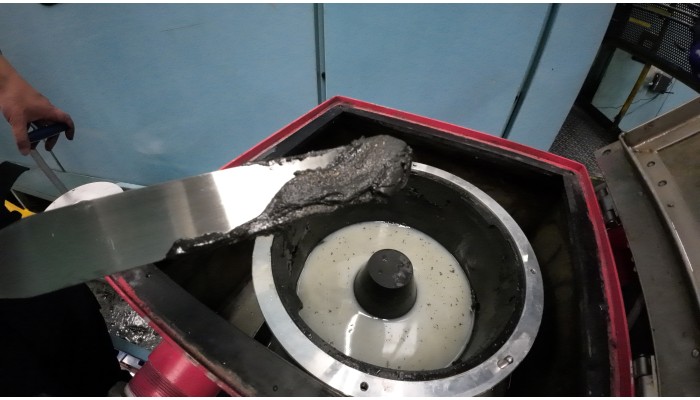
Our automatic centrifugal separator models are equipped with an internal sludge scraping system that helps eliminate clogging issues and reduces the workload required for manual tank cleaning.
The systems support both water-based and oil-based fluids and can effectively reduce sludge accumulation in coolant systems and circulating water systems used in paint booths.
This allows factories to reduce filter-related consumable costs to zero while extending the service life of process fluids.
※ For more information, please download the PDF file attached to this article or complete the form below to make an inquiry.
Frequently Asked Questions
Q1: How can a centrifugal separator reduce consumable costs to zero?
A1: A centrifugal separator uses physical centrifugal force to separate sludge instead of capturing contaminants with filters or filter cloths.
This eliminates the need to purchase replacement filter media and also reduces the cost of disposing of contaminated filter materials as industrial waste.
Q2: What types of process fluids can this system handle?
A2: Centrifugal separation systems can support both water-based and oil-based fluids.
Applications include coolant and cutting oil used in metalworking processes, as well as circulating water in paint booths. The system can efficiently separate sludge and solid particles whose specific gravity differs from that of the process fluid.
Q3: How does an automatic centrifugal separator differ from conventional models in terms of maintenance?
A3: Automatic centrifugal separators are equipped with an internal sludge scraping system that operates according to a preset schedule.
This reduces the need for operators to stop the machine, open the tank, and manually remove accumulated sludge, helping maintain continuous production line operation.
※ For more information, please download the PDF file attached to this article or complete the form below to make an inquiry.
Company Information
Industrial Centrifugal Separator
Touto Separator Asia Ltd. was established in 2025 as the Thai subsidiary of Touto Separator Industry Co., Ltd., a leading centrifuge manufacturer from Tochigi, Japan, with over 58 years of expertise ( ...
PICKUP
Technology & Services
CONTACT
Contact