
KNOWLEDGE
Knowledge
Technology and Services
【Durability Improvement】Extending Tool Lifespan and Reducing Replacement Frequency for Cost Reduction
2026-06-23
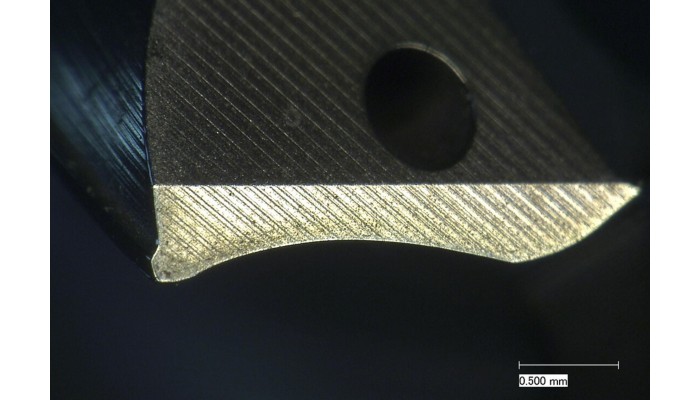
Cutting tools such as drills, end mills, and taps are consumables that endure heavy loads including friction, heat, and vibration on metalworking shop floors. As wear and chipping progress, they not only increase tool costs but also lead to equipment downtime, variation in machining quality, and the generation of defective products.
This article explains the mechanism and effects of "α (Alpha) processing," a surface modification technology, as a method to extend cutting tool lifespan, its application to molds and sliding components, and test/contract processing services available within Thailand.
Table of Contents
- Impact of decreased tool lifespan on production sites
- α-processing: Enhancing durability while suppressing shape alteration
- Preventing chip adhesion and suppressing built-up edges through improved sliding properties
- Application to molds and screws of plastic injection molding machines
- What Fuji Blastech can do
- Frequently Asked Questions (FAQ)
- Key terms for understanding this article
Impact of decreased tool lifespan on production sites
In production lines for automotive parts, electronic components, and precision parts, an increased frequency of cutting tool replacements impacts not only tool procurement costs but also production efficiency and machining quality. In addition to increased equipment downtime and readjustment man-hours due to tool changes, challenges include decreased dimensional accuracy caused by wear, variations in machined surface quality, and the occurrence of burrs or chipping.
Therefore, enhancing the wear resistance and impact resistance of tools to suppress replacement frequency leads directly to cost reductions and productivity improvements on the processing floor.
α-processing: Enhancing durability while suppressing shape alteration
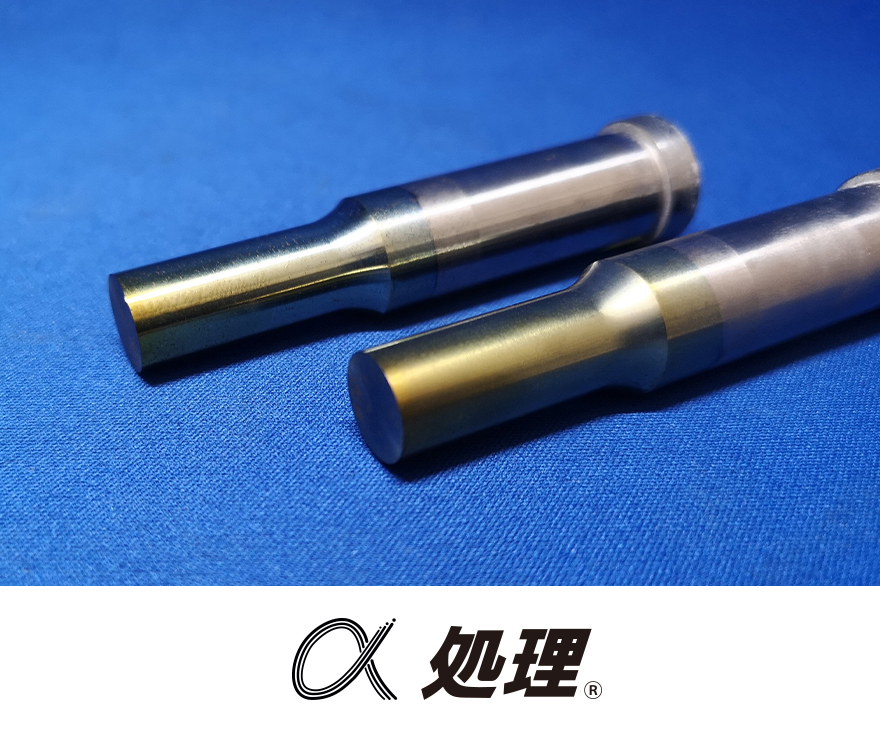
α-processing is a technology that modifies the metal surface layer by projecting extremely fine, specialized media onto the workpiece surface. Unlike conventional blast processing, its key feature is the ability to target improvements in sliding properties, wear resistance, and fatigue strength while suppressing alterations to dimensions and shapes.
It is particularly suited for drills, end mills, taps, mold components, and precision drive parts where edge shapes and dimensional accuracy are strictly required, allowing the surface to be strengthened while suppressing edge rounding.
Additionally, the treatment imparts nanocrystallization and residual compressive stress to the surface layer, which suppresses the generation and propagation of wear and micro-cracks. Consequently, an extended lifespan can be expected for cutting tools, molds, and sliding components.
Preventing chip adhesion and suppressing built-up edges through improved sliding properties
By applying α-processing, a microscopic irregular structure known as "micro-dimples" is formed on the tool surface. This structure alters the contact state between the cutting edge and chips, as well as between the tool and the workpiece, thereby reducing frictional resistance and making it easier for chips to release.
In cutting processes, higher friction makes heat generation and adhesion more likely to occur, leading to the formation of built-up edges, deterioration of the machined surface, and tool wear. Especially when processing materials like aluminum, stainless steel, and titanium, chip adhesion can significantly impact quality and tool lifespan.
Improving the sliding properties of the tool surface via α-processing suppresses chip adhesion, contributing to the reduction of built-up edges, suppression of frictional heat, and stabilization of machined surface quality. The process can also be applied over coating or plating films such as DLC (Diamond-Like Carbon) or chrome plating, reinforcing anti-friction and anti-adhesion measures while leveraging existing coating characteristics.
Application to molds and screws of plastic injection molding machines
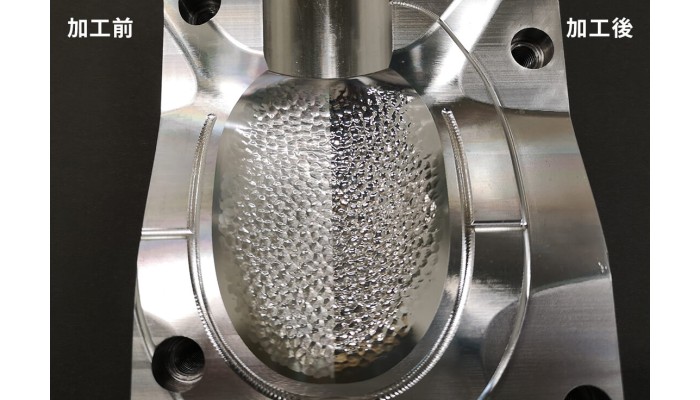
α-processing can be applied not only to cutting tools but also to plastic injection molds, injection molding machine screws, and various sliding components.
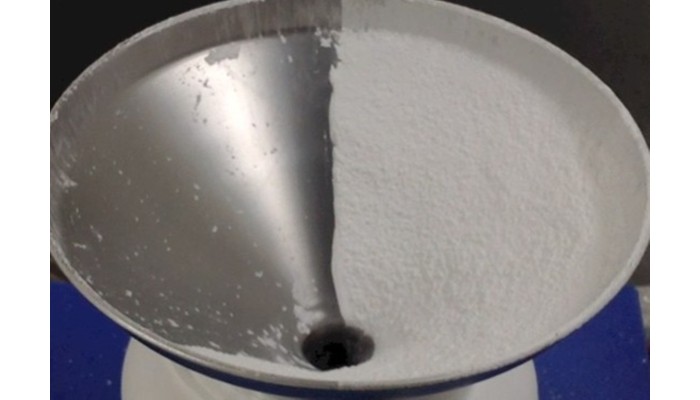
In plastic molding, wear or scratches on the mold surface, resin adhesion, poor mold release, and the accumulation of contamination or carbides on the screw surface can lead to molding defects and increased maintenance frequency.
Forming a fine micro-texture on the surface through α-processing can be expected to improve sliding and mold release properties. This contributes to suppressing mold wear, reducing resistance during mold release, and minimizing contamination adhesion or black spot defects on the screw surface.
What Fuji Blastech can do
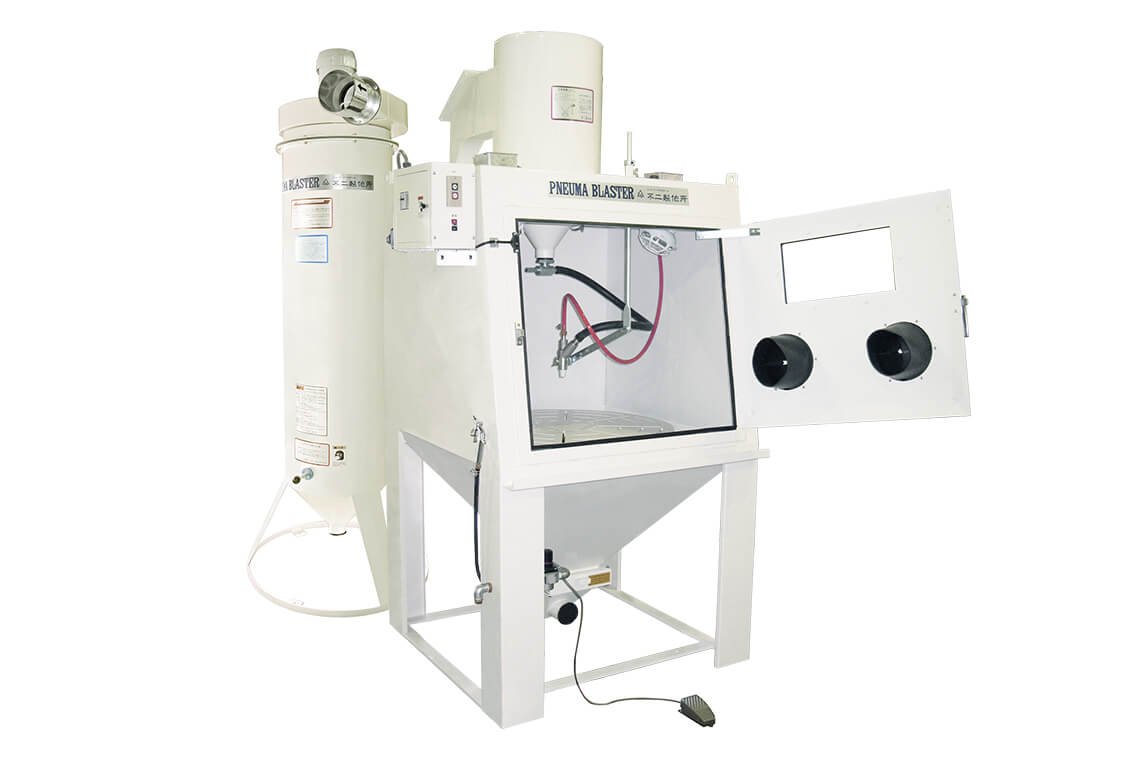
Our company provides blast processing, surface modification, tool/mold durability enhancement, contract processing, and equipment proposals locally in Thailand.
Before making expensive capital investments, you can confirm the effectiveness through test processing using your actual tools, molds, and parts. Because we accommodate prototyping and pre-mass-production evaluations within Thailand, you can proceed with your implementation study while suppressing the time and costs associated with shipping to Japan.
Please feel free to consult with us if you face challenges such as:
- Wanting to reduce the replacement frequency of drills and end mills
- Wanting to suppress variations in machining quality caused by tool wear
- Wanting to extend the lifespan of molds and sliding components
- Wanting to improve the sliding properties of components after DLC or plating treatments
- Wanting to suppress contamination adhesion and black spot defects on injection molding machine screws
- Wanting to verify the effectiveness of α-processing through test processing
Frequently Asked Questions (FAQ)
Q: How does α-processing differ from conventional sandblasting?
A: Conventional sandblasting is a treatment frequently used for rust removal, coating pre-treatment, surface roughening, and cleaning. On the other hand, α-processing is a surface modification technology that uses extremely fine media to form a micro-texture on the surface, aiming to improve sliding properties and durability while suppressing alterations to dimensions and shapes.
Q: Is there any concern that α-processing will round off cutting edges or corners?
A: A key advantage of α-processing is its ability to treat surfaces while suppressing edge rounding. However, because the impact varies depending on the material, shape, required tolerances, and treatment conditions, we recommend performing advance test processing and measurements for precision tools or workpieces with strict dimensional tolerances.
Q: Can this be applied to tools that already have surface coatings like DLC?
A: Yes, it is possible to apply the treatment over hard coating or plating films such as DLC or chrome plating to target improvements in sliding properties. Application conditions vary depending on film thickness, adhesion, coating type, and workpiece shape, so advance verification is required.
Q: What types of materials are suitable for this process?
A: Application can be considered for tool steel, high-speed steel (HSS), cemented carbide, heat-treated hardened materials, mold materials, and various metal components.
Q: How much can the tool lifespan be extended?
A: Depending on the case, cutting tool durability has improved by over 60%, cemented carbide drill lifespans have increased by approximately 5 times, and the lifespans of precision drive parts and molds (stamping/resin) have increased by 5 to 10 times or more.
Q: Is it possible to request a test process for just one piece?
A: Yes, it is possible. We support prototyping and test processing using actual workpieces or test pieces. Prior to mass production, you can conduct comparative evaluations regarding tool lifespan, wear status, machined surface quality, replacement frequency, and cost-reduction effects.
Key terms for understanding this article
- α-processing: A surface modification technology that projects extremely fine media to form a micro-texture on metal surfaces. It aims to improve the durability of tools and molds through nanocrystallization, residual compressive stress, and enhanced sliding properties.
- Residual Compressive Stress: Stress remaining in a compressive direction on the surface or inside of metal. It functions to suppress the generation and propagation of micro-cracks on the surface, contributing to improved fatigue strength and durability.
- Micro-texture: A microscopic irregular structure formed on a surface. It alters the contact area and friction state, contributing to improvements in sliding properties and lubrication.
※ For requests regarding test processing using actual workpieces or consultations on improving the durability of your cutting tools and molds, please feel free to contact Fuji Blastech (Thailand) Co., Ltd.
Company Information
Industrial machinery
Sales Blast Machines / Consumables and Abrasives / Contract Blasting Services
At FUJI BLASTECH, our mission is to deliver products and services that continuously evolve at the forefront of the industry. Since our founding, we have operated under a robust quality control system, ...
PICKUP
Technology & Services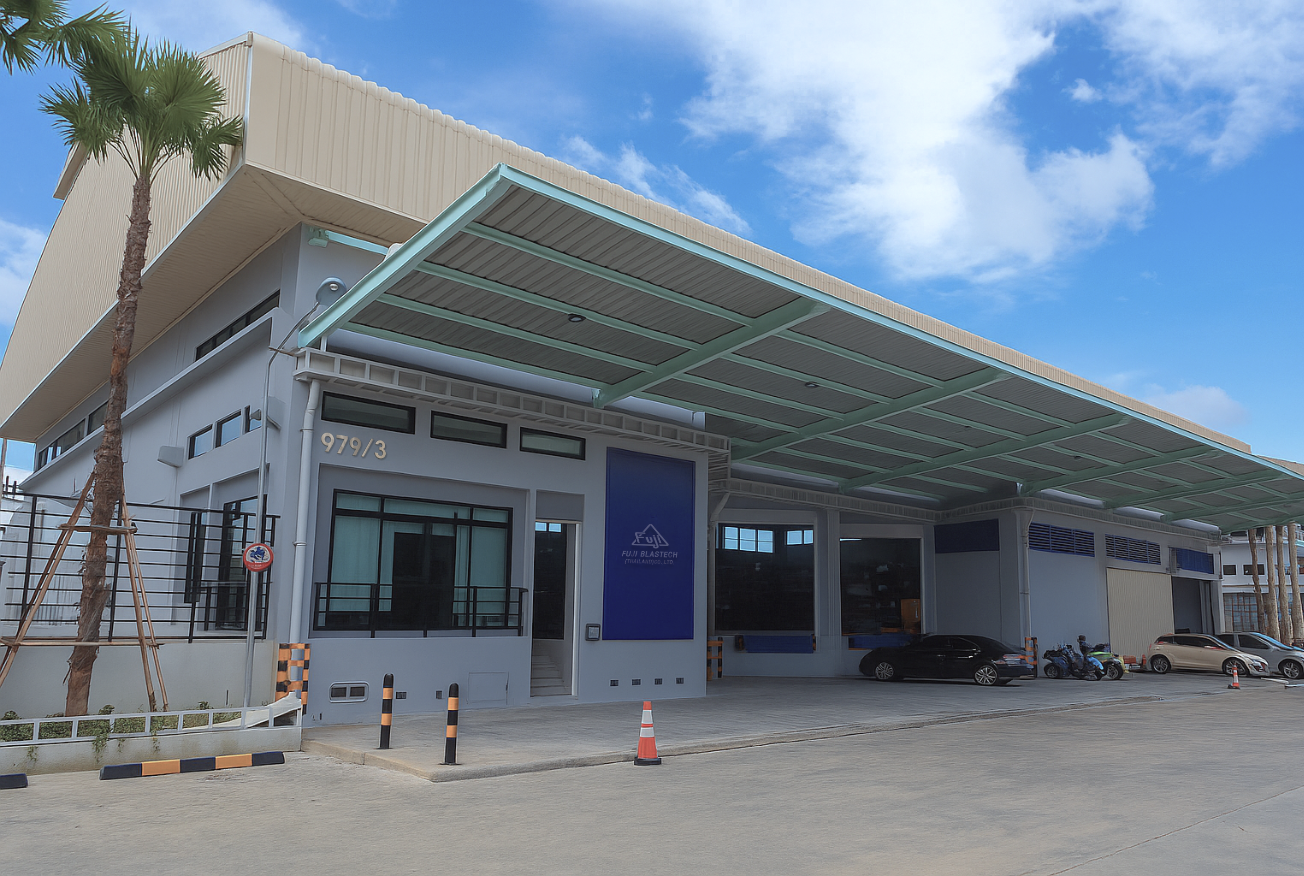
CONTACT
Contact