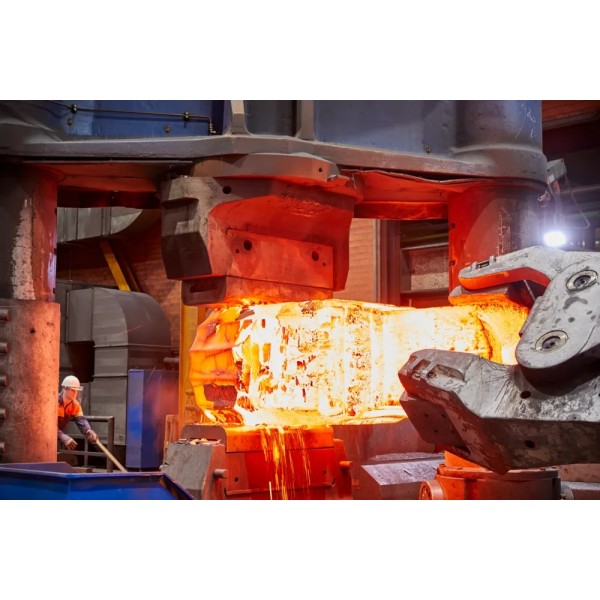
Points to Consider When In-Sourcing Pin-Hole and Scratch Repairs Using a Laser Welder in Factories Where Production Stops Every Time a Mold Is Repaired
In Thai automotive component and household appliance manufacturing sites, sudden defects such as pinholes or microscopic scratches on molds can cause entire production lines to grind to a halt. When molds are transported to external vendors or a separate in-house factory for repair, transportation and logistics alone can take several days, leading to prolonged downtime. To mitigate the risk of such production shutdowns, an increasing number of companies are considering bringing mold repairs in-house by utilizing precision laser welding machines.
Table of Contents
- Mold Transport to Repair Vendors and the Resulting Downtime Issues
- Thermal Impact and Quality Variances in Conventional Welding
- Advantages of Precision Repair via Laser Welding
- Implementation Costs and ROI Considerations for In-Sourcing Mold Repairs
- Implementation and Technical Support by STOREMATE
- FAQ
- Key Terms to Understand This Article
Mold Transport to Repair Vendors and the Resulting Downtime Issues
In Thailand's automotive and electrical/electronic equipment manufacturing plants, sudden damage or wear to plastic injection molds and press dies is a major factor disrupting overall production schedules. Even for minor wear or pinhole repairs, transporting the mold to a maintenance department or an external vendor takes considerable time for logistics and waiting. If the repair destination is far from the production line, the shutdown period can last for several days when factoring in packing, loading, round-trip transportation, and waiting for work on-site. Such unexpected downtime leads to delayed deliveries, wasted labor costs, and reduced production efficiency. In-sourcing mold maintenance is an effective option to minimize these risks.
Thermal Impact and Quality Variances in Conventional Welding
When repairing microscopic pinholes and scratches on molds, conventional methods like Argon welding, TIG welding, and standard plasma welding present a major challenge: excessive heat is easily transferred to the base material.
Excessive heat causes distortion, deformation around the repaired area, and hardening or softening of the heat-affected zone (HAZ), which compromises the dimensional accuracy of the mold. Furthermore, if issues like undercuts, sink marks (sinkage), or discoloration occur, the subsequent post-process polishing and finishing will require significant extra time.
Additionally, TIG welding relies heavily on highly seasoned skills, and securing or training experienced welding craftsmen is no easy task in Thailand. Consequently, it can be difficult to consistently maintain the repair quality of precision molds using traditional welding methods.
Advantages of Precision Repair via Laser Welding
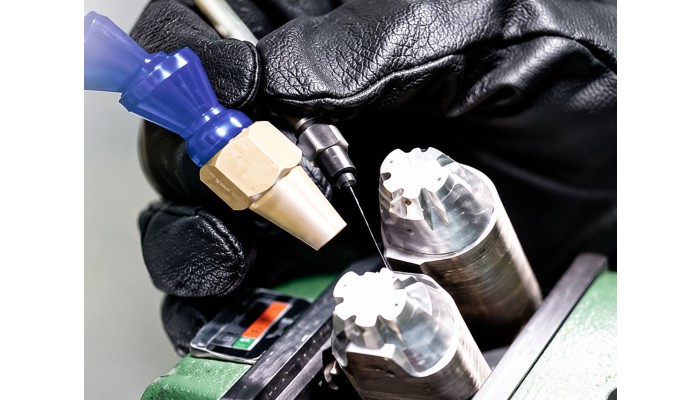
One solution to these challenges is mold repair using the "T-LASER" precision laser welding machine. Because laser welding concentrates energy onto a microscopic spot, it minimizes heat input into the base material, reducing the occurrence of thermal deformation and distortion associated with welding. By using ultra-fine welding wires and performing buildup under a microscope or microscope system, it is possible to repair pinholes and fine scratches with high precision.
For example, using welding wires ranging from approximately φ0.1mm〜0.4mm, you can select the appropriate wire such as choosing SKD-61 or SKD-11 wires for an SKD-61 base material based on the base metal and the specific repair location. Since the heat-affected zone is small, it prevents sink marks and depressions at the welding boundary, making it highly suitable for repairing precision plastic molds that require an ultra-mirror finish.
Implementation Costs and ROI Considerations for In-Sourcing Mold Repairs
When introducing a laser welding machine to bring mold repairs in-house, it is crucial to analyze the cost-effectiveness rather than just looking at the equipment price. Since general industrial laser welders can be expensive, it is necessary to verify the return on investment (ROI) outlook before implementation.
The "T-LASER" achieves a price design that is easy to adopt while maintaining Japanese-quality welding precision and durability. Combined with its ability to reduce sudden downtime, it is a piece of equipment for which ROI can be easily justified. When evaluating the implementation, it is important to map out current external outsourcing fees, transportation costs, losses due to production shutdowns, finishing process man-hours, and repair frequency to confirm the concrete benefits of in-sourcing.
Implementation and Technical Support by STOREMATE
To successfully and stably operate in-house mold repairs, post-installation technical support and operator education are just as vital as the performance of the welder itself.
STOREMATE CO., LTD. is an authorized distributor of the "T-LASER" precision laser welding machine, providing seamless service from equipment delivery to after-sales support. Upon installation, they conduct hands-on training using the actual machine, helping operators master everything from basic operations to the specific workflows required for mold repair.
Furthermore, they offer consultations on welding conditions tailored to the base material grade, heat treatment status, and the geometry of the repair area. By providing ongoing operational support, they assist companies in establishing a stable, in-house mold maintenance system within Thailand.
FAQ
Q: What types of mold materials is the "T-LASER" laser welding machine suitable for repairing?
A: It is primarily compatible with cold-work and hot-work tool steels such as SKD-61 and SKD-11, as well as various steel materials used for plastic molds. By selecting a welding wire that matches the base material, repairs can be made while considering post-weld machinability and heat treatment characteristics.
Q: Can operators with no prior welding experience learn to use it in a short period?
A: Yes, they can. The "T-LASER" is designed with user-friendly operation in mind, and STOREMATE CO., LTD. provides tailored training programs led by specialized engineers. Unlike conventional TIG welding, which relies heavily on years of intuition and master-level skills, this setup makes it easy to acquire precision buildup repair techniques.
Q: Can we keep implementation costs down while ensuring durability and support?
A: The "T-LASER" is developed and manufactured under Japanese quality control standards, ensuring excellent durability. Additionally, STOREMATE CO., LTD., which is based in Thailand, provides consumable supplies, inspections, and support through their learning center, allowing you to use the equipment with peace of mind after installation.
Key Terms to Understand This Article
- Precision Laser Welding Machine: A device that uses a laser light source (such as Nd) to perform precise welding with localized and minimal thermal impact. It is used for micro-repairs and buildup repairs on molds.
- Pinhole: Microscopic pores or pits that form on the mold surface. These can cause cosmetic defects on the product surface or molding failures.
- Downtime: The period during which a production line or machinery is non-operational due to mold damage, maintenance, troubleshooting, or other disruptions.
※ If you are experiencing production shutdowns due to mold repairs, or if you are interested in the "T-LASER" precision laser welding machine, please feel free to contact STOREMATE CO., LTD.