_8b61f9d7-8c67-4be0-948a-f747539ca760.png)
KNOWLEDGE
Knowledge
Technology and Services
【Why Is PTFE Difficult to Injection Mold?】Why Machining Is Considered for Parts with Complex Shapes
2026-11-16
_thumb_e27c3273-d676-47c8-846c-4f9b3e18f945.jfif)
PTFE is a fluororesin with heat resistance, chemical resistance, and low-friction properties, and is used across a variety of industrial fields.
However, when attempting to manufacture a part specifically from PTFE, you may be told that “it cannot be produced by injection molding.” This is because PTFE behaves very differently from ordinary plastics when heated.
Why, then, is PTFE unsuitable for conventional injection molding? And what manufacturing methods are available when producing complex shapes or parts in small quantities?
This article explains why PTFE is difficult to injection mold and the key points to consider when using machining to manufacture PTFE parts.
Table of Contents
- Why PTFE is difficult to injection mold
- How PTFE parts are manufactured
- Why machining is used for complex shapes and small-volume production
- Dimensional accuracy considerations when machining PTFE
- PTFE machining at Technoplast
- Frequently asked questions
- Keywords for understanding this article
■ Why PTFE Is Difficult to Injection Mold
In conventional injection molding of thermoplastics, the material is heated until it flows and is then injected into a mold to form the shape of the part.
Even when PTFE is heated above its melting point, its melt viscosity remains extremely high, and it does not flow like ordinary thermoplastics. As a result, it is difficult to fill the fine details of a mold using conventional injection molding.
This does not mean that all fluororesins are unsuitable for injection molding. Materials such as PFA and ETFE can flow when heated and can be processed by injection molding or extrusion.
The key point is therefore to understand the specific characteristics of PTFE rather than treating all materials simply as “fluororesins.”
■ How PTFE Parts Are Manufactured
For PTFE, compression molding is a representative manufacturing method. Powdered material is compressed inside a mold and then heated and sintered.
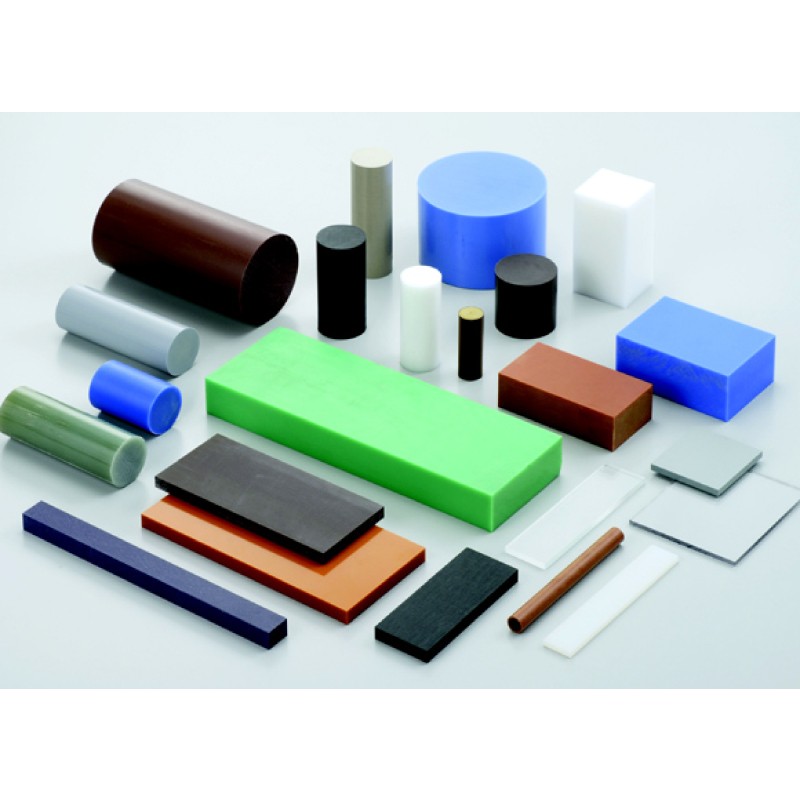
This method can be used to produce stock materials such as sheets and round bars, which are then machined into the required shape. Tubes, tapes, and similar products may also be produced from stock material made by extrusion.
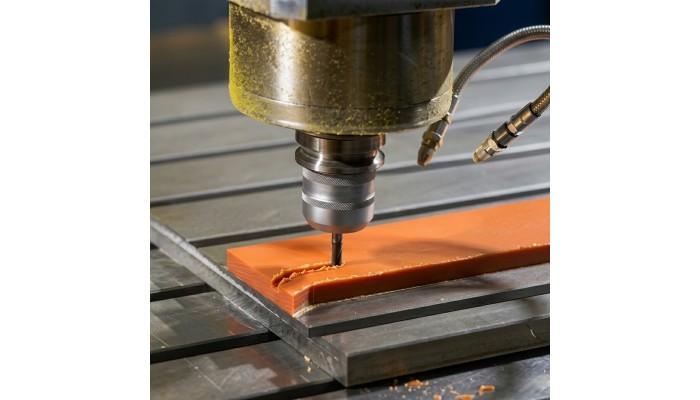
When machining parts from sheets or round bars, equipment such as lathes and machining centers is used to create holes, grooves, steps, and other features before finishing the part to its final shape.
■ Why Machining Is Used for Complex Shapes and Small-Volume Production
Machining does not require the preparation of a dedicated new mold, making it suitable for prototypes and small-volume production. Shapes containing holes, grooves, steps, and other features can also be manufactured by combining appropriate tools and machining processes.
For example:
- You want to manufacture only one prototype
- The required quantity is small and you do not want to produce a dedicated mold
- You need a part containing holes, grooves, or steps
- You want to reproduce the shape of an existing part using PTFE
- The part contains fine details that are difficult to finish through molding alone
In these situations, machining can be one of the available manufacturing options.
Machining is particularly useful during the prototype stage, when specifications may change frequently, because parts can be manufactured while drawings are being revised.
■ Dimensional Accuracy Considerations When Machining PTFE
PTFE is a material that can be machined, but when tight dimensional tolerances are required, its material characteristics need to be taken into consideration.
PTFE is relatively soft, so applying excessive clamping force during machining may deform the material. Dimensions may be correct while the part is clamped, but its shape or dimensions can change after the clamps are released.
PTFE also undergoes relatively large dimensional changes with temperature. Heat generated during machining and changes in the surrounding temperature can affect dimensions. When higher accuracy is required, controlling the machining and measurement environments therefore becomes important.
PTFE also has a tendency to deform gradually when subjected to a load over an extended period. For applications such as sealing components or fastening areas that remain continuously loaded, the design needs to take into account not only the dimensions during machining but also the actual conditions of use.
Dimensional accuracy in PTFE is not determined solely by machine-tool accuracy. The clamping method, machining temperature, and product geometry can also affect the final dimensions.
■ PTFE Machining at Technoplast
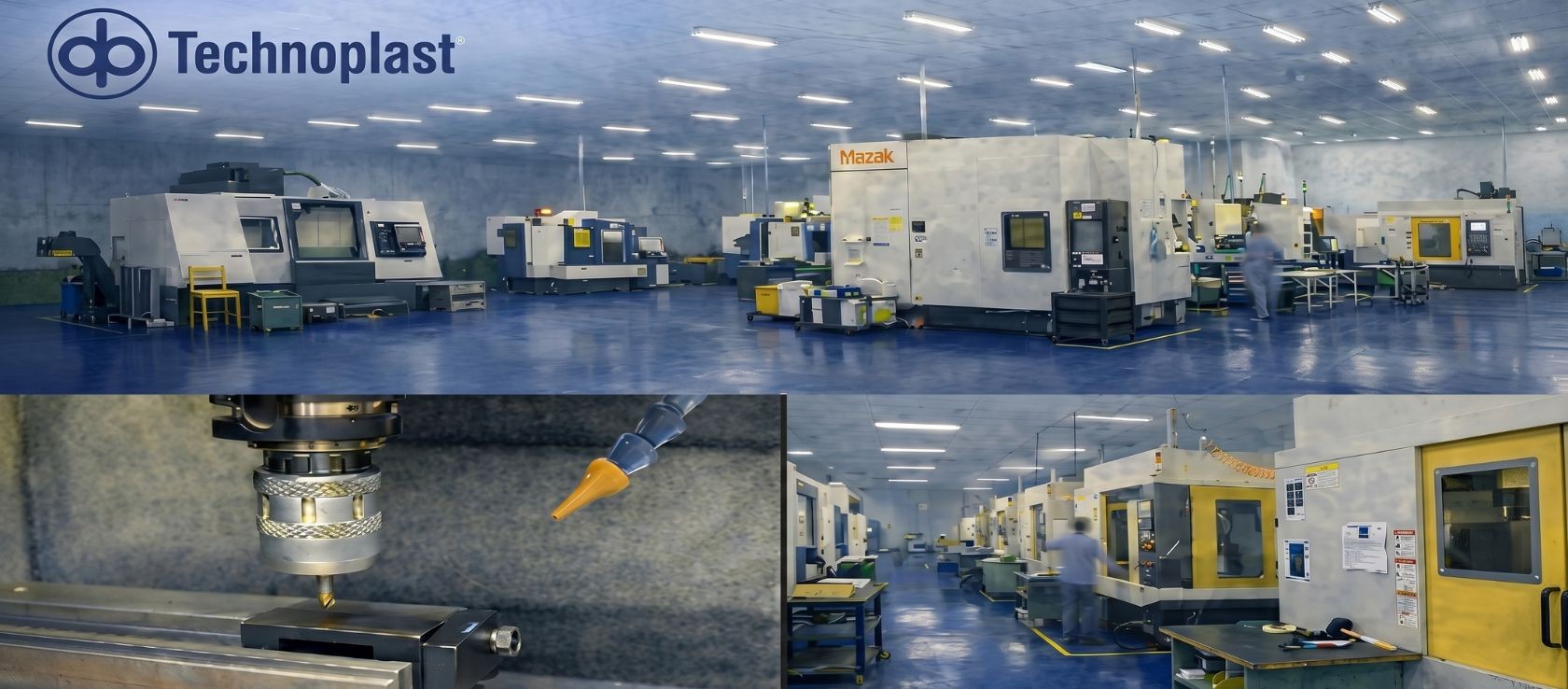
Technoplast (Thailand) provides machining services for PTFE parts at its own factory in Thailand.
The company supports production ranging from a single prototype to continuous mass production, machining parts to customer drawings from stock materials such as sheets and round bars. Complex geometries containing holes, grooves, and steps can also be discussed.
The maximum supported size is 100×1,000×2,000 mm.
For dimensional tolerances, ±0.05 mm is used as a general guideline for plastic machining, while tolerances of up to ±0.03 mm may be possible depending on the product shape and machining conditions.
The factory is temperature-controlled at 25°C±2°C, and dimensions are checked after machining using equipment such as coordinate measuring machines and image measurement systems.
If you are having difficulty producing PTFE parts by injection molding, or require PTFE machining for small-volume or complex-shaped parts, please contact Technoplast.
■ Frequently Asked Questions
Q1: Why is PTFE difficult to process using conventional injection molding?
A1: Even when heated above its melting point, PTFE has an extremely high melt viscosity and does not flow as readily as conventional thermoplastics. For this reason, we manufacture PTFE parts using methods other than injection molding.
Q2: How are PTFE parts manufactured?
A2: One method is to produce stock materials such as sheets or round bars through processes such as compression molding and then machine the stock material into its final shape.
Q3: Can PTFE with complex shapes be machined?
A3: Shapes containing holes, grooves, steps, and other features may be machined. Machinability depends on factors including the product geometry, size, and required tolerances.
Q4: Can you manufacture just one PTFE part?
A4: Technoplast supports prototype production starting from a single piece for plastic parts, including PTFE. Continuous production after the prototype stage can also be discussed.
Q5: Can PTFE parts be produced to a tolerance of ±0.05 mm?
A5: For plastic machining at Technoplast, ±0.05 mm is used as a general guideline. However, because PTFE can be affected by deformation and temperature-related dimensional changes, feasibility is determined after reviewing factors such as the product geometry and the areas to be machined.
■ Keywords for Understanding This Article
- PTFE: A fluororesin with properties including heat resistance, chemical resistance, and low friction
- Injection molding: A processing method in which resin is heated until it flows and then injected into a mold to create the shape of a part
- Compression molding: A method in which material is compressed inside a mold and heated to form the product. It is widely used for PTFE
- Machining: A processing method in which stock materials such as sheets or round bars are cut with tools to produce the required shape
※For more information, please download the materials or contact us using the inquiry form at the bottom of the page.
Company Information
Industrial machinery / Electronic parts
PEEK / PTFE / POM
Our company performs plastic cutting processes such as machining in our own factory, specializing in high-precision, small-lot, multi-product manufacturing. With over 50 years of history and experienc ...
PICKUP
Technology & Services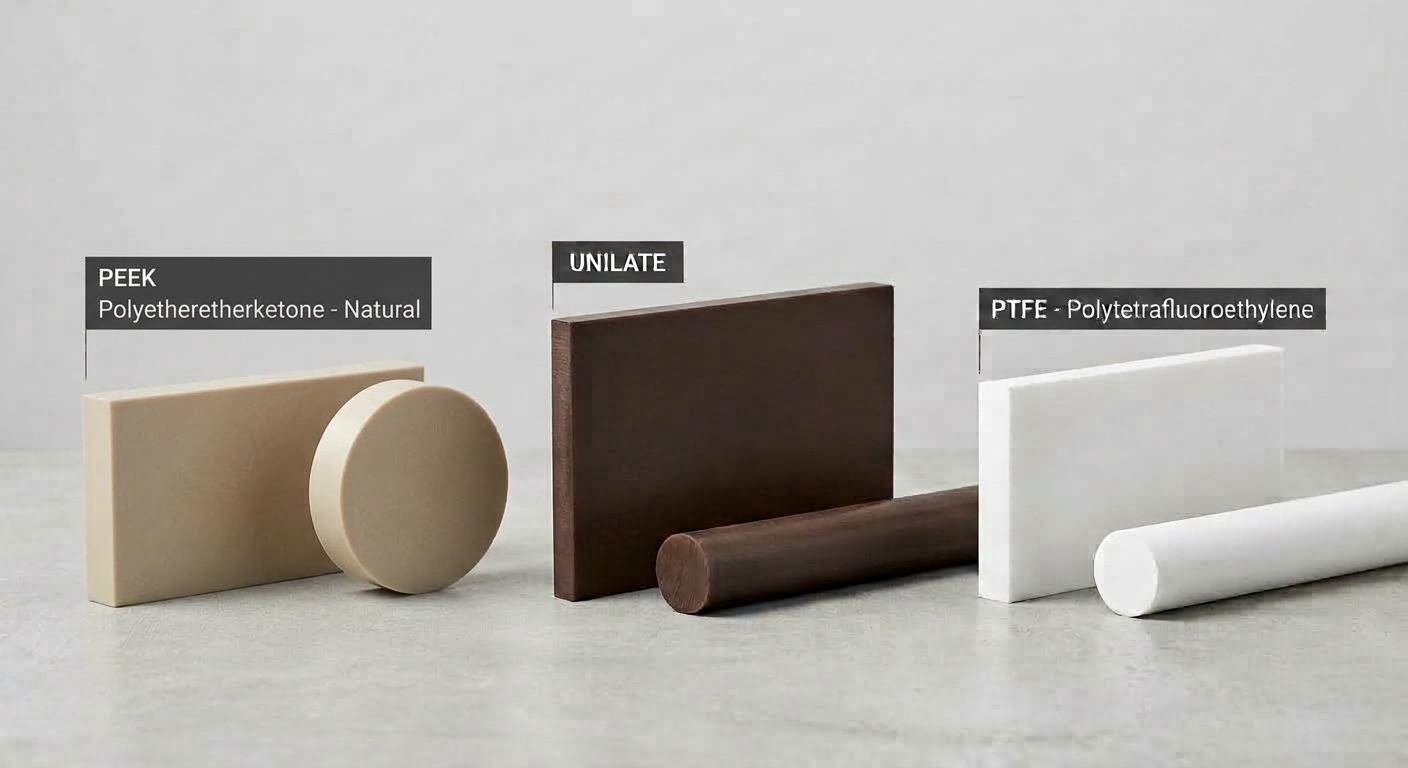
CONTACT
Contact