
KNOWLEDGE
Knowledge
Technology and Services
Reduce Large Lead Electrode Replacement Costs by Up to 50%|How to Choose “Repair” in Thailand
2026-09-16
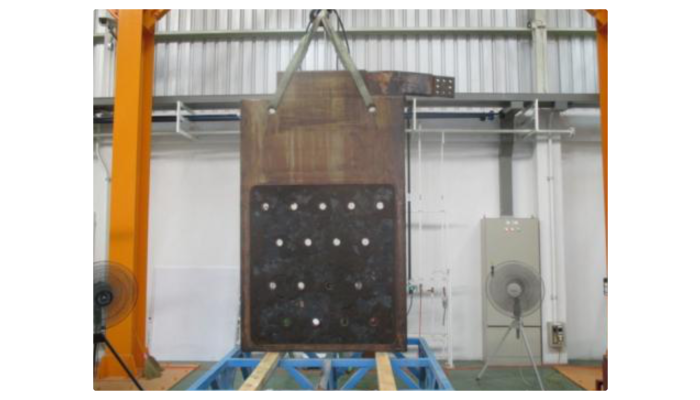
At manufacturing sites in Thailand, many equipment and procurement personnel face challenges related to the consumption of large lead electrodes used in the production of plated steel sheets and the associated procurement costs.
When expensive large electrodes reach the end of their service life in one to two years, replacing them with new ones each time or sending them back to Japan for repair can result in substantial costs and long lead times. In addition, for electrodes imported under BOI privileges, the burden of disposal procedures cannot be overlooked.
One option for reducing the costs and workload associated with procurement, repair, and disposal is “repairing” used electrodes in Thailand.
This article explains key points for reducing the replacement cost of large lead electrodes while maintaining stable line operation.
Table of Contents
- Why Replacing Large Lead Electrodes Places a Financial Burden on Factory Operations
- Differences in Cost and Lead Time Between Returning Electrodes to Japan and Repairing Them in Thailand
- The “Integrated Structure” and Recovery Timing That Determine the Service Life of Reconditioned Electrodes
- Large Lead Electrode Repair Services Provided by SPF (THAILAND)
- FAQ
- Keywords for Understanding This Article
■ Why Replacing Large Lead Electrodes Places a Financial Burden on Factory Operations
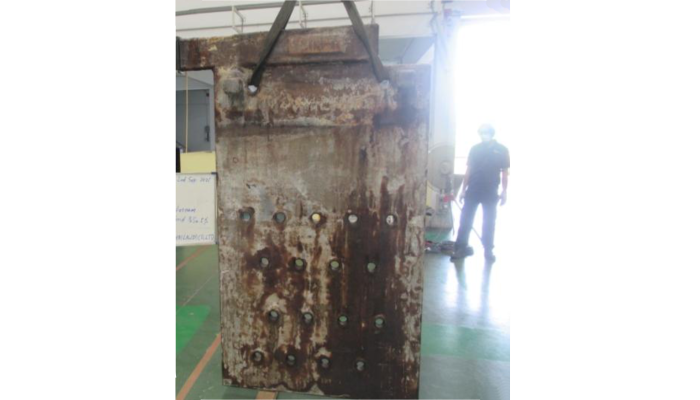
Large lead electrodes used in the production of plated steel sheets are exposed to harsh electroplating environments. With continued use, lead dioxide forms on the surface and gradually flakes off, reducing the thickness of the lead. Depending on operating conditions, repair or replacement may therefore be required approximately one to two years after operation begins. Purchasing expensive new large electrodes every time they need replacement causes equipment maintenance costs to increase continuously.
In Thailand, disposal of electrodes imported under BOI privileges may also require prescribed procedures. As a result, there are cases in which used electrodes cannot be disposed of immediately and must continue to be stored inside the factory.
In other words, large lead electrodes involve the following costs:
- High procurement costs for purchasing new electrodes
- International transportation costs and customs-related burdens when returning electrodes to Japan
- The cost of holding spare electrodes to cover long repair periods
- The burden associated with storing and disposing of used electrodes
One way to reduce these issues is to collect used electrodes in Thailand and “repair” them by reusing the core material and reconditioning the electrodes.
■ Differences in Cost and Lead Time Between Returning Electrodes to Japan and Repairing Them in Thailand
Traditionally, one option for repairing large lead electrodes used in Thailand has been to return them to a processing manufacturer in Japan.
However, transporting large electrodes internationally involves high freight costs as well as export, import, and customs procedures. When transportation to Japan, repair there, and re-importation into Thailand are all included, the total lead time may extend to several months.
During that period, maintaining stable operation of the plating line requires holding several expensive spare electrodes. The resulting additional investment and inventory burden can place pressure on cash flow.
By contrast, repairing electrodes in Thailand eliminates the need for round-trip transportation to Japan. This makes it possible to reduce both transportation costs and lead time.
As a general indication, repair costs in Thailand may be approximately 60–70% of the cost of returning the electrodes to Japan for repair, and in some cases approximately 50% of the cost of purchasing new electrodes.
Comparison of Electrode Procurement and Repair Methods
Item | New Purchase | Repair in Japan | Repair in Thailand |
Cost | Base price (100%) | Approximately 70–80% of the cost of a new purchase | Approximately 50% of the cost of a new purchase |
Lead Time | May be prolonged due to manufacturing, transportation, and various procedures | Prolonged by international transportation and customs procedures | Can be shortened because the process is completed within Thailand |
Transportation Burden | Depends on the procurement conditions for new electrodes | International round-trip transportation of large electrodes is required | Can be handled through domestic transportation |
Disposal / Resource Circulation | Used electrodes must be disposed of | Core material can be reused, but the international transportation burden is high | Core material is reused, reducing waste and resource loss |
In addition, having a repair base in Thailand makes it easier to inspect the actual electrode and provide emergency support when an unexpected problem occurs.
The major benefit of repair in Thailand is therefore not limited to lowering repair costs. It can also reduce total cost of ownership, including the number of spare parts held, transportation costs, inventory burden, and lead time.
■ The “Integrated Structure” and Recovery Timing That Determine the Service Life of Reconditioned Electrodes
The service life of a large lead electrode cannot be extended simply by adding lead again. Two important factors affecting durability after repair are the method used to build up the lead layers and the timing at which the used electrode is collected for repair.
An “Integrated Structure” Without Interfaces Helps Prevent Internal Corrosion
Processing that simply stacks lead mechanically may create interfaces between the built-up layers.
If microscopic defects exist at these interfaces or joints, the plating solution may gradually penetrate into the interior and cause internal corrosion, cracks, or pinholes. As a result, the electrode may deteriorate earlier than expected.
SPF, by contrast, builds up new lead while melting it into the underlying lead layer, creating an integrated structure without interfaces.
This helps suppress the penetration of plating solution into the interior and is intended to provide stable continuous current conduction and longer service life under harsh operating conditions.
After machining, pinhole inspection and penetrant testing are also performed to check for microscopic defects that are difficult to identify visually.
Recover the Electrode Before the Iron Core Is Exposed
The timing of recovery is also important for maximizing the economic benefits of repair.
If the lead is completely consumed and the iron core becomes exposed, iron may dissolve into the plating solution and disturb the balance of the solution. This may not only lead to quality problems but may also damage the core material intended for reuse, creating additional costs.
For this reason, a remaining lead thickness of approximately 8–10 mm is generally used as one guideline for considering recovery and repair.
SPF uses an ultrasonic thickness gauge to measure the remaining lead thickness nondestructively. Rather than relying only on visual appearance or subjective judgment, remaining service life can be assessed based on measurement data, allowing SPF to propose an appropriate recovery timing and repair details.
The actual recovery timing, however, varies depending on the electrode structure and material, the plating solution used, the allowable current value, and line operating conditions.
■ Large Lead Electrode Repair Services Provided by SPF (THAILAND)
SPF (THAILAND) CO., LTD., based in Thailand, provides an integrated service covering everything from the new design and manufacture of large lead electrodes to the repair of used electrodes.
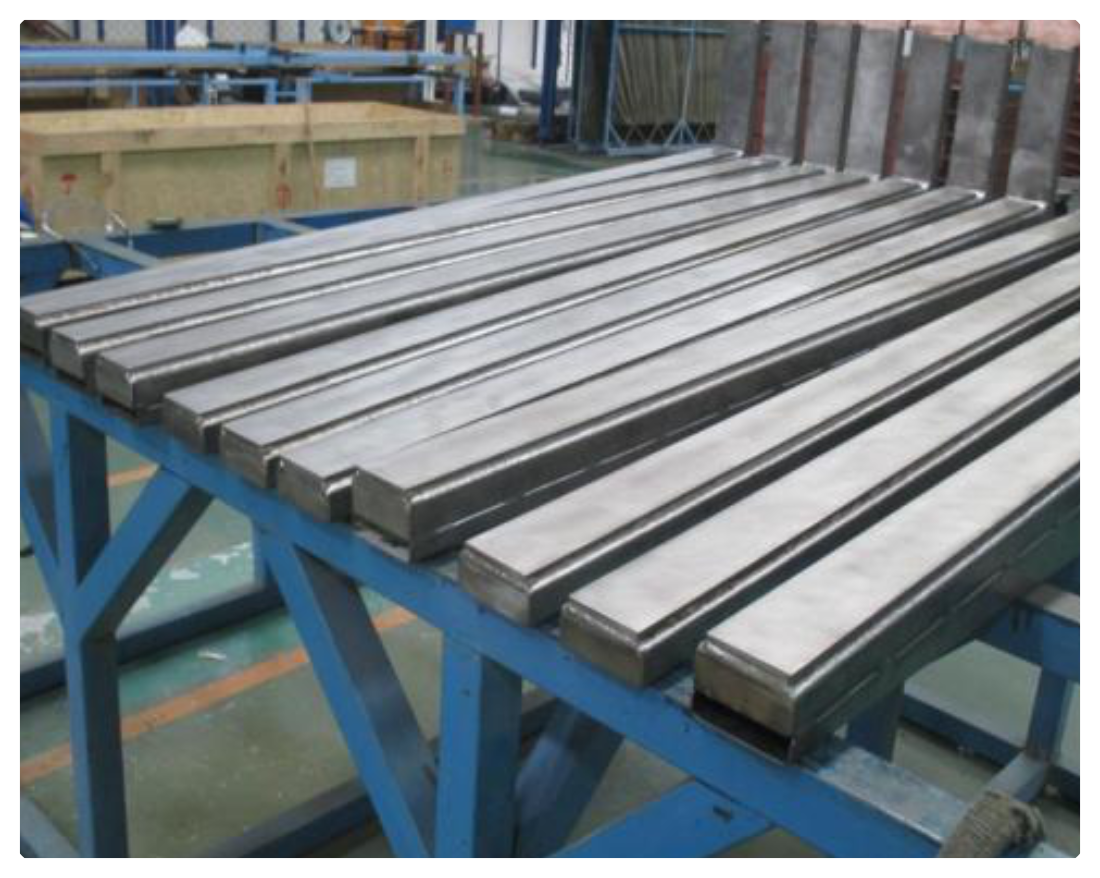
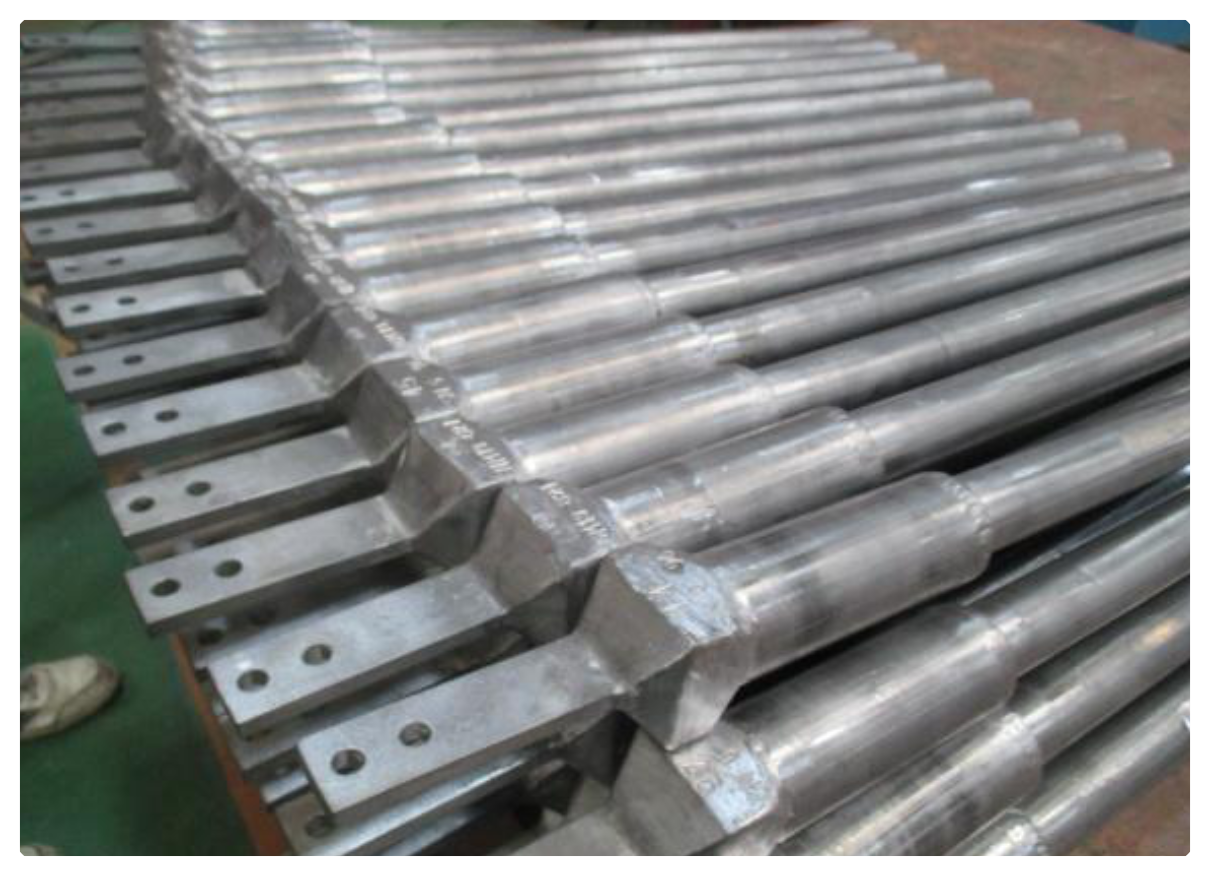
For repair, SPF collects used electrodes, removes the deteriorated discharge surface, and then performs machining, lead rebuilding, FRP coating, and various inspections to restore the electrodes to a reusable condition.
The main services include:
- Collection and repair of used large lead electrodes
- Measurement of remaining lead using an ultrasonic thickness gauge
- Pinhole inspection
- Penetrant testing of every unit
- Lead buildup using an integrated structure that does not create interfaces
- Repair of FRP lining
- Investigation of the causes of problems with electrodes manufactured by other companies
- New electrode design and manufacturing based on operating conditions
- Proposals for specification improvements based on electrode structure, material, and operating conditions
When electrodes manufactured by another company experience short service life, pinholes, internal corrosion, or similar problems, SPF can investigate the cause rather than simply recreating the same specification, and can propose changes to a more durable specification.
Handling the work in Thailand also reduces transportation costs and long lead times associated with returning electrodes to Japan, while contributing to resource circulation through the reuse of used core material.
If you are looking to reduce the cost of purchasing new large lead electrodes, are having difficulty disposing of used electrodes, or want to shorten the long repair periods associated with returning electrodes to Japan, consider repair in Thailand.
※For more details, please download the PDF materials attached to this article or contact us through the inquiry form at the bottom of the page.
■ FAQ
Q1 : How much can costs be reduced by repairing lead electrodes in Thailand compared with returning them to Japan?
A1 : When lead electrodes are repaired in Thailand, costs may be reduced to approximately 60–70% of the cost of returning them to Japan for repair.
Compared with purchasing new electrodes, the cost may be reduced to approximately 50% in some cases, helping lower the maintenance and procurement costs of large electrodes.
Actual costs vary depending on the size and structure of the electrode, the amount of lead remaining, and the extent of damage.
Q2 : When should used lead electrodes be collected for repair?
A2 : As one guideline, recovery and repair should be considered when approximately 8–10 mm of lead thickness remains.
If the lead is completely consumed and the iron core becomes exposed, this may damage the core material or affect the plating solution. Recovering the electrode before the iron core is exposed makes it easier to reuse the expensive core material and helps prevent unnecessary replacement costs.
Regular measurement of the remaining thickness with an ultrasonic thickness gauge is useful for determining the appropriate recovery timing.
Q3 : Our lead electrodes from another manufacturer have a short service life. Can SPF improve them?
A3 : Yes, this can be addressed.
When electrodes manufactured by another company experience a short service life, SPF checks pinholes, joints, internal corrosion, FRP lining, and other areas to investigate the cause of the problem.
When building up lead, SPF uses a processing technique that melts the underlying layer while integrating the new lead with it, making it less likely that interfaces will form inside the electrode. This helps suppress internal corrosion, pinholes, and cracks caused by the penetration of plating solution and is intended to extend electrode service life.
■ Keywords for Understanding This Article
- Lead Anode
An electrode composed primarily of lead or a lead alloy and used in electroplating and similar processes. In this article, the term mainly refers to insoluble lead electrodes used in large plating lines. - Integrated Structure
A structure created by melting the underlying lead layer while integrating newly added lead during the buildup process, making interfaces between layers less likely to form. Its purpose is to prevent liquid penetration and internal corrosion. - Ultrasonic Thickness Gauge
A device that uses reflected ultrasonic waves to measure material thickness nondestructively. It is used to measure the remaining thickness of lead anodes and determine recovery timing and the need for repair.
※For more details, please download the PDF materials attached to this article or contact us through the form at the bottom of the page.
Company Information

Maintenance of electroplating machinery / Maintenance of surface treatment equipment
SPF (THAILAND) CO., LTD. is a technical service provider specializing in electroplating components and metal processing solutions. We focus on the manufacturing, repair, and maintenance of electrode-r ...
PICKUP
Technology & Services
CONTACT
Contact