_15a3e843-c865-4cb1-9c30-8a9c1ded1366.png)
Nabelin (Thailand) Co., Ltd.
KNOWLEDGE
Knowledge
Technology and Services
Import License Acquisition Support (FDA, Ministry of Industry, etc.) — Individual Agency Service for Reagents Starting from a Single Bottle to Shorten Development Lead Time
2026-04-27
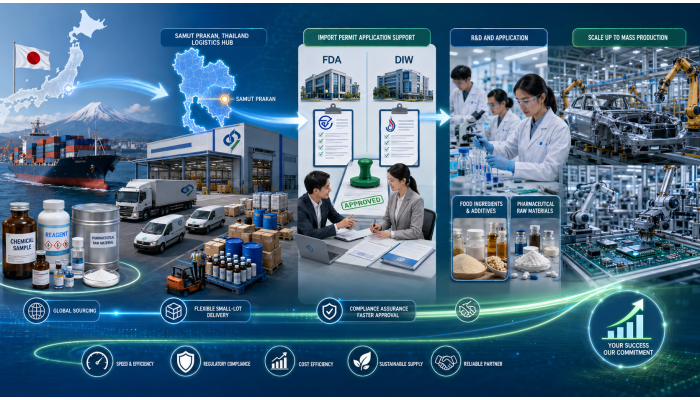
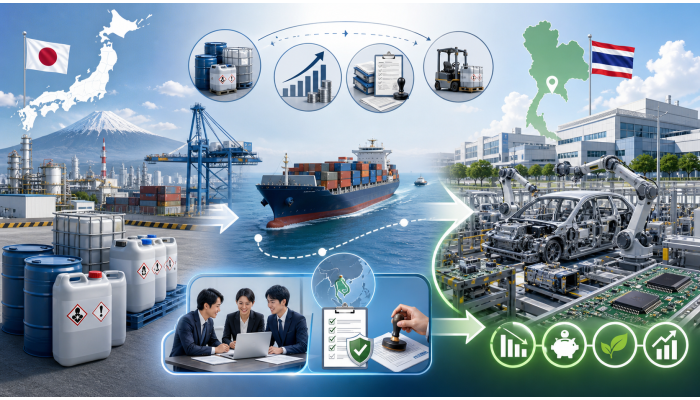
Under the "Thailand 4.0" industrial upgrading policy, Thailand is progressing with a structural shift toward next-generation automobiles and electronic components. Accelerating the procurement of reagents at local R&D centers has become a critical factor. However, obtaining import licenses from the Thai Food and Drug Administration (FDA) or the Department of Industrial Works (DIW) can be a constraint in procuring small-lot, high-variety items. Even for a single bottle test introduction, complex administrative procedures are required, often causing development lead times to stagnate by several months.
Table of Contents
• Why Obtaining Chemical Import Licenses Restricts R&D Speed
• Structure of Prolonged Lead Times in Small-Lot, High-Variety Reagent Procurement
• Efficiency Difference: Individual Import of a Single Bottle vs. Integrated Support
• Specific Specification Values to Check Before FDA or Ministry of Industry License Application
• Supply Network Across 8 Asia Sites and Scope of Reagent Procurement Support
• What Nabelin Thailand Can Do
• FAQ
• Key terms for understanding this article
■ Why Obtaining Chemical Import Licenses Restricts R&D Speed
When conducting R&D within Thailand, compliance with regulations is necessary when ordering test reagents from Japan. Particularly for reagents related to cosmetics, healthcare, and advanced materials, import licenses from the Thai Food and Drug Administration (FDA) or hazardous substance import permits under the jurisdiction of the Department of Industrial Works (DIW) are required. Even for companies utilizing Board of Investment (BOI) privileges, these individual licenses are not exempted, and compliance is mandatory. License acquisition involves checking Safety Data Sheets (SDS), explaining intended use, and administrative procedures from application to approval. Even for local subsidiaries of Japanese companies, if there is no internal personnel dedicated to chemical applications, delays may occur due to procedural deficiencies. Such cumulative delays can undermine the "test one bottle first" speed required in the early stages of R&D.
■ Structure of Prolonged Lead Times in Small-Lot, High-Variety Reagent Procurement
General chemical trading companies may handle industrial chemicals in drum units but are often reluctant to handle individual imports of research reagents, such as a single 50ml bottle. This is because license procedures are required even for small-volume products just as for large volumes, making it difficult for trading companies to ensure profitability. When trading companies refrain from handling such cases, selectors must search for multiple suppliers and individually check license feasibility. Furthermore, it becomes necessary to adjust reagent ordering timing or find agents to handle license acquisition. The accumulation of these procedures is a factor that prolongs procurement lead times. Reagents available next day in Japan can take two months to over half a year in Thailand due to license verification and transportation schedules. Especially for chemicals, ingredient classifications are strictly reviewed by authorities, so delays in response affect development schedules.
■ Efficiency Difference: Individual Import of a Single Bottle vs. Integrated Support
There is a difference in the required man-hours between conducting reagent procurement in-house and outsourcing it, including license acquisition. Particularly, verifying ingredient information and matching it with Thai regulatory classifications (such as Hazardous Substances Type 1 to Type 4) is critical. Nabelin Thailand provides integrated support for procedures from license necessity verification to import and delivery, even for a single 500ml bottle. This is expected to reduce the procurement burden on selectors.
■ Comparison of the response process for reagent procurement
| Item | Managed internally or through a general trading company | End-to-end support by Nabelin Thailand |
| Minimum Supported Lot Size | From one case upward (small-lot orders may not be feasible in some cases) | From 1 bottle (500 mL and up) |
| Workload for License Verification | Reviewed by in-house personnel | Verified against an existing database |
| Regulatory Application (FDA / DIW) | Documentation and application procedures handled in-house | One-stop service from application handling to final delivery |
| Transportation Cost | Spot shipments such as air freight | Monthly scheduled consolidated shipments |
| Delivery After Arrival | Delivery by external logistics providers | Proprietary logistics network |
■ Specific Specification Values to Check Before FDA or Ministry of Industry License Application
To smoothly proceed with import license acquisition, it is important to understand regulated values at the reagent selection stage. Under the Hazardous Substance Act of the Department of Industrial Works (DIW), if ingredient content exceeds 0.1% or falls under specific chemical groups, license necessity and procedural details change. Furthermore, if annual import volume exceeds 1 ton, additional reporting obligations (Jor Ngor. 8) arise. For products under FDA jurisdiction, documents disclosing 100% of the ingredient composition are required. If part of the composition is non-disclosed as a trade secret, the license may not be accepted. Selectors should check the CAS Number, ingredient content (w/w%), and capacity, matching them against the regulatory lists in Thailand. Judging the classification of hazardous substances based on such information is a key point in proceeding with import procedures.
■ Supply Network Across 8 Asia Sites and Scope of Reagent Procurement Support
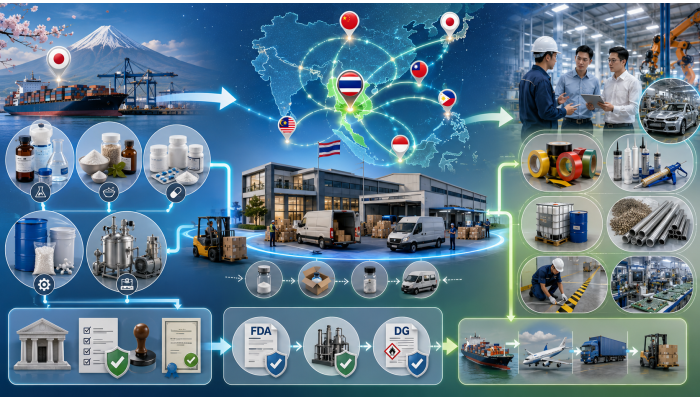
Nabelin Thailand utilizes a network of sites across Asia, including Japan, Taiwan, China (Shanghai), Hong Kong, Malaysia, Indonesia, and the Philippines. Even if supply in a specific region is disrupted, the supply system allows for considering procurement from other sites. In Thailand, where manufacturing bases for semiconductors and electronic components (PCB) are concentrated, maintaining supply chains through coordination with neighboring countries is vital. Additionally, for imports from Japan, a monthly regular consolidated shipment is utilized. This system enables the supply of small-volume reagents while suppressing the burden of individual transportation costs. Being able to procure necessary reagents at the necessary time is an important consideration for R&D centers.
■ What Nabelin Thailand Can Do
Nabelin Thailand is the Thai subsidiary of Nabelin Co., Ltd., which has a history of over 100 years in Japan. In addition to supplying chemicals and reagents, it provides support for import license procedures. As a sales agent for FUJIFILM Wako Pure Chemical, it supplies reagents and handles applications with the Thai Food and Drug Administration (FDA) and the Department of Industrial Works (DIW). With a logistics system utilizing its base in Samut Prakan, it can also accommodate small-lot deliveries. Furthermore, it handles the import and sale of Japanese materials such as food additives and pharmaceutical raw materials, in addition to industrial chemicals. Through support combining procurement duties and license application procedures, the establishment of a supply system from R&D to the mass production stage can be considered.
※For more details, please download the PDF attached to this article or contact us via the form at the bottom of the page.
■ FAQ
Q1: Is it possible to handle license acquisition even for a one-time spot order?
A1: Yes, it is. Nabelin Thailand provides license verification and acquisition support from a single bottle for reagents used in R&D or quality control tests, regardless of whether there is an ongoing business relationship.
Q2: Do you handle reagents or chemicals produced outside of Japan?
A2: Yes. In addition to imports from Japan, we support procurement utilizing network sites across Asia, such as Taiwan, China, Malaysia, the Philippines, and Indonesia. We consider procurement routes based on use and conditions.
Q3: How long does it take from license acquisition until the product arrives?
A3: It varies depending on the reagent's ingredients and the review status of the governing authority (FDA/DIW). By using monthly regular shipments from Japan, the transportation process after license acquisition can proceed on a fixed schedule. Specific dates will be provided after ingredient verification.
Q4: Can support be received even if the company is receiving BOI (Board of Investment) privileges in Thailand?
A4: Yes, it is possible. Duty exemption procedures via BOI privileges and DIW/FDA import license acquisition are separate procedures.
■ Key terms for understanding this article
• Thai Food and Drug Administration (FDA): The authority overseeing the import of products related to health and safety. Registration or approval may be required when importing specific reagents or additives.
• Department of Industrial Works (DIW): The Thai ministry managing industrial chemicals and hazardous substances. It oversees hazardous substance import licenses (DIW License).
• Lead Time: The period required from ordering until the product reaches the hand. In Thailand, the time taken for import license acquisition can have a significant impact.
• Hazardous Substances: Chemicals classified under the Thai Hazardous Substance Act. Regulations regarding import and notification are established from Type 1 to Type 4.
※For more details, please download the PDF attached to this article or contact us via the form at the bottom of the page.
Company Information
Main 3 Products
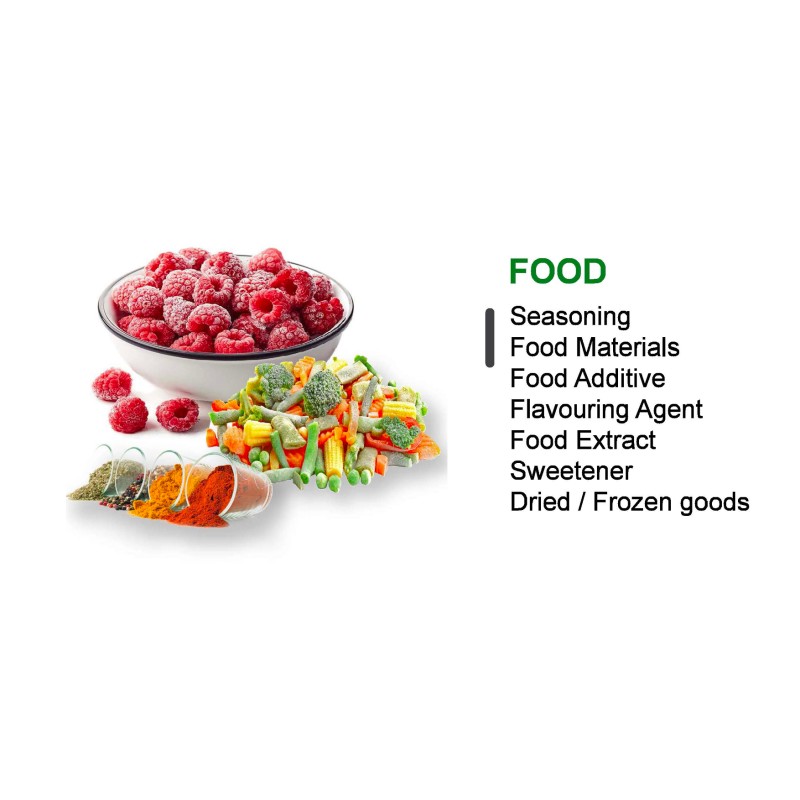
Industrial chemical products / Foods additives / Reagents
Phone Number
Homepage URL
Nabelin (Thailand) Co., Ltd. was established in 2006 and received approval from the Thailand Board of Investment (BOI) in 2007. We celebrate our 20th anniversary. We have offices across Asia, includin ...
CONTACT
Contact