_15a3e843-c865-4cb1-9c30-8a9c1ded1366.png)
Nabelin (Thailand) Co., Ltd.
KNOWLEDGE
Knowledge
Technology and Services
Asia 6-Country Network — Securing alternative chemical procurement routes through optimal sourcing from Taiwan, China, and beyond
2026-04-27
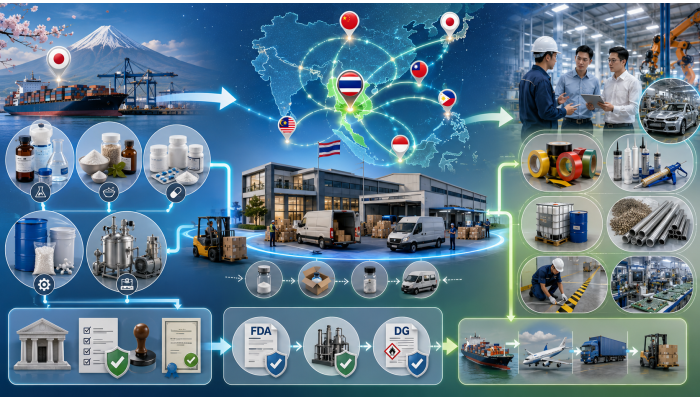
Under the influence of rising geopolitical tensions and protectionist policies, manufacturing sites in Thailand are progressing with reviews of their supply chains. Particularly in the procurement of chemicals, a supply system dependent on a specific country can lead to procurement uncertainty. It is crucial to consider how to construct procurement networks across Asean countries and ensure alternative routes that can maintain supply even in unforeseen circumstances. This article organizes the procurement systems required on-site and the concepts for selection.
Table of Contents
Why Supply Disruption Risks Restrict the Stable Procurement of Chemicals
Structure of Stagnating Supply Chains Due to Dependence on Specific Countries
Conditions for Building Alternative Routes via Asean Procurement Networks
Difference in Logistics Costs and Lead Times: Reagents from Japan vs. Asia
Import License Scopes to Check Before Selecting Industrial Chemicals
What Nabelin Thailand Can Do
FAQ
Key terms for understanding this article
■ Why Supply Disruption Risks Restrict the Stable Procurement of Chemicals
Thai manufacturing is expanding beyond the automotive industry into fields such as EVs (Electric Vehicles), semiconductors, and PCBs (Printed Circuit Boards). In these manufacturing processes, chemicals such as research reagents, detergents, and processing oils are essential, and any disruption in supply can hinder process progress. Locally, raw material costs and electricity prices continue to fluctuate, making the review of procurement efficiency an issue related to corporate profitability. Particularly with the progress of "China Plus One" (China+1), as Chinese manufacturers increasingly enter Thailand, there is a demand for diversifying supply systems utilizing procurement networks within the Asean region. On the other hand, in actual sites, barriers such as verifying technical specifications of alternative products or obtaining Thai FDA (Food and Drug Administration) licenses sometimes prevent switching from existing procurement routes. In such situations, considering alternative routes in advance leads to the diversification of procurement risks.
■ Structure of Stagnating Supply Chains Due to Dependence on Specific Countries
The background of unstable chemical supply lies in structures dependent on specific suppliers or single logistics routes. For example, in a system dependent on imports from Japan, alternative supply means are limited when shipping congestion, port troubles, or disasters occur. Attempting to respond solely with local inventory in Thailand may result in stockouts if unable to keep up with sudden production increases or demand fluctuations. Furthermore, in Thailand, Chinese manufacturers are increasingly entering the market, centered on PCB-related companies. Chinese companies tend to solidify their supply chains with companies from their own country. Meanwhile, Japanese and European companies generally follow procurement strategies that emphasize the balance between quality and cost, securing multiple procurement sources. If procurement routes are fixed, they become directly susceptible to logistics cost fluctuations, making it difficult to flexibly manage procurement costs.
■ Conditions for Building Alternative Routes via Asean Procurement Networks
To stabilize supply systems, a procurement system connecting multiple bases—not just within Thailand, but also including Japan, Taiwan, China, the Philippines, Malaysia, and Indonesia—is effective. Constructing such a network allows for securing alternative products from other bases even if logistics stagnation or export restrictions occur in a certain region. Such a system functions not merely as an increase in buyers, but as a procurement infrastructure for diversifying supply risks. When building a network, it is also important whether each base understands local laws and regulations. The import and export of reagents and industrial chemicals involve hydrocarbon-related licenses, FDA licenses, and the handling of dangerous goods (DG). It is required to build a supply system while checking regulations on both the exporting country's and the Thai side. Additionally, by establishing a system capable of procurement from multiple regions, optimal location procurement according to market prices can also be considered.
■ Difference in Logistics Costs and Lead Times: Reagents from Japan vs. Asia
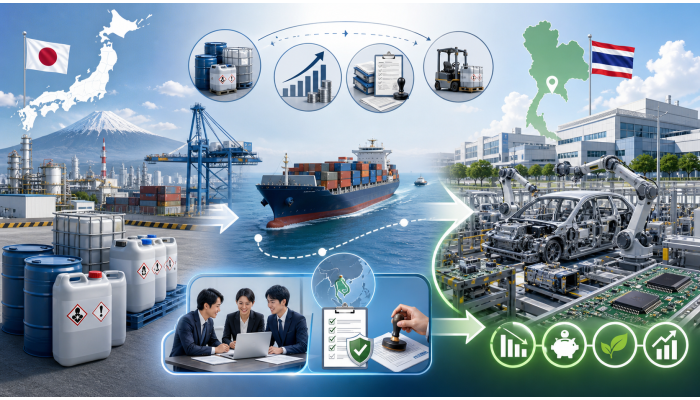
While reagents and chemicals from Japan have high reliability in terms of quality, costs and transport times can be challenges in emergency procurement. In contrast, procurement within the Asean region involves shorter transport distances, leading to shorter lead times. For transportation from Japan, utilizing monthly regular shipments enables planned supply while avoiding individual emergency freight charges. In procurement decisions, verification of quality standards, availability of local inventory, and the validity of import licenses is necessary. By combining procurement routes within the Asean region with supply from Japan, it is possible to consider different usage for normal and emergency times.
■ Comparison of characteristics by chemical procurement route
| Comparison Item | Japan-origin route (scheduled shipments) | Intra-Asia network |
| Main Features | Supply of high-quality products | Flexibility through sourcing from the most suitable location |
| Logistics System | Stable supply through monthly regular container shipments | Cross-support of inventory among six regional bases |
| License Support | Established import flow and FDA compliance support | FDA, DG, and hydro-related support at each location |
| Cost Structure | Regular shipments significantly reduce ocean freight costs | Optimized logistics through shorter transport distances and tariff benefits |
■ Import License Scopes to Check Before Selecting Industrial Chemicals
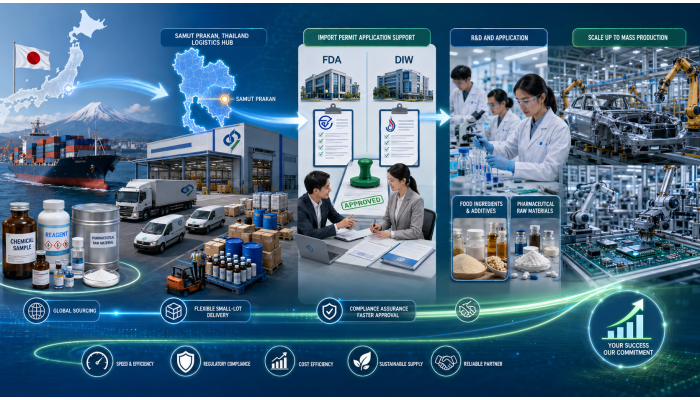
One element to check when handling chemicals in Thailand is the necessity of import licenses (Thai FDA, DIW, etc.) and the system's ability to handle those application procedures. Particularly for small-lot, high-variety reagents and small-scale industrial chemicals, the procedures and costs associated with license acquisition can become relatively large compared to the product price. Consequently, some trading companies limit their handling. Meanwhile, in R&D and quality control at manufacturing sites, even for a 50ml reagent, delays in procurement will hinder operations. During selection, it is necessary to verify whether a system capable of handling import procedures for small-lot products is in place. For example, even if a company claims to have an Asean procurement network, it may actually find it difficult to handle small-scale cases. Whether stable supply is possible, including import procedures and logistics, is an important factor in reducing downtime at manufacturing sites. Additionally, when Halal certification is required for food additives or pharmaceutical raw materials, checking for relevant permits and track records also becomes a consideration point for future business expansion.
■ What Nabelin Thailand Can Do
Nabelin Thailand, as a trading company with Nabelin Co., Ltd. as its parent organization, handles chemicals, food additives, pharmaceutical raw materials, and auxiliary materials. Utilizing the "Asean Network" connecting bases in Japan, Taiwan, China, the Philippines, Malaysia, and Indonesia, it supports securing procurement routes within the Asean region and considering alternative supply. Furthermore, it has a system to handle procedures for Thai FDA, hydrocarbon-related licenses, and dangerous goods (DG) import licenses. It also handles the supply of small-volume reagents and small-scale industrial chemicals, including import procedures and logistics. Additionally, it handles auxiliary materials such as factory floor line tapes and industrial adhesives, and can respond to consultations regarding material procurement at manufacturing sites.
※For more details, please download the PDF attached to this article or contact us via the form at the bottom of the page.
■ FAQ
Q1: When utilizing procurement networks across Asean countries, how is quality control performed?
A1: We conduct procurement while verifying manufacturers in each country through the Nabelin Group's overseas bases. We consider products from Japanese manufacturers' overseas production bases or local manufacturers with established track records as candidates, checking MSDS (Material Safety Data Sheets) and COA (Certificate of Analysis) to judge quality as necessary. We also support translation into Thai.
Q2: We need an emergency small quantity of a chemical; can you handle it?
A2: We will consider the optimal response based on the situation. For small quantities of reagents and chemicals, we consider supply methods including license verification, acquisition procedures, and delivery arrangements. In addition to local inventory in Thailand, we search for available routes while checking the inventory status of each Asean base.
Q3: How long does it take to obtain an import license?
A3: The duration varies depending on the type of commodity, the Thai FDA's review status, and the type of license required. Document preparation and application procedures require a certain amount of time. Nabelin Thailand supports the consideration of procurement schedules while organizing the progress of documents and procedures.
■ Key terms for understanding this article
Asean Procurement Network: A procurement system utilizing bases in Thailand, Japan, China, Taiwan, Malaysia, the Philippines, Indonesia, etc.
Import License: A collective term for permit systems involved in importing chemicals or food raw materials, such as Thai FDA and DG (Dangerous Goods).
Regular Shipment Import: A system for sea transport from Japan to Thailand on a fixed schedule. Used for planned procurement.
※For more details, please download the PDF attached to this article or contact us via the form at the bottom of the page.
Company Information
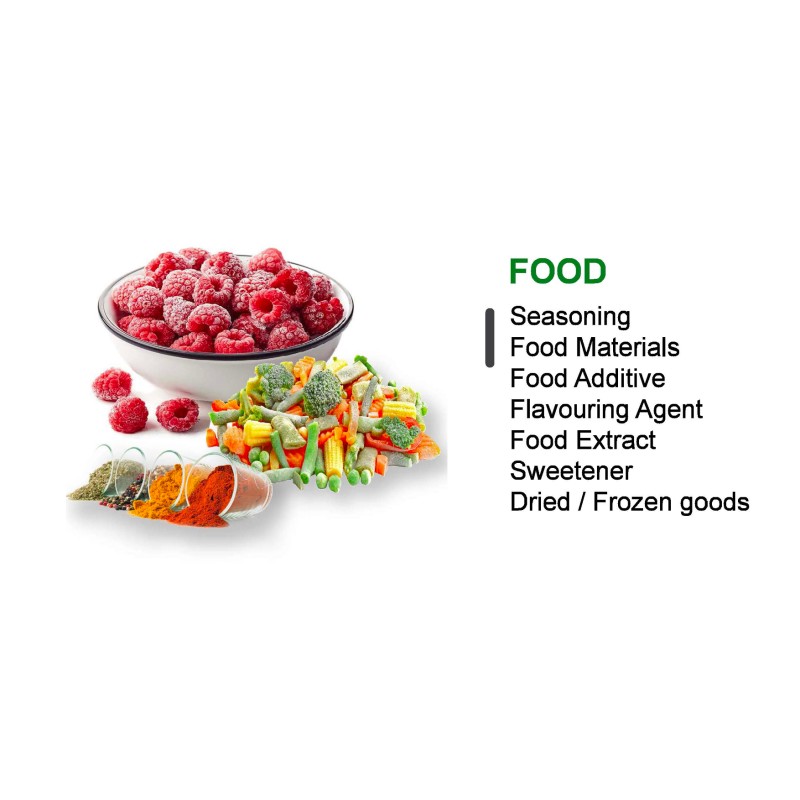
Main 3 Products
Industrial chemical products / Foods additives / Reagents
Phone Number
Homepage URL
Nabelin (Thailand) Co., Ltd. was established in 2006 and received approval from the Thailand Board of Investment (BOI) in 2007. We celebrate our 20th anniversary. We have offices across Asia, includin ...
CONTACT
Contact