_8b61f9d7-8c67-4be0-948a-f747539ca760.png)
KNOWLEDGE
Knowledge
Technology and Services
【Dimensional Accuracy of Machined Plastic Parts】Key Points for Consistently Maintaining Tight Tolerances
2026-09-29
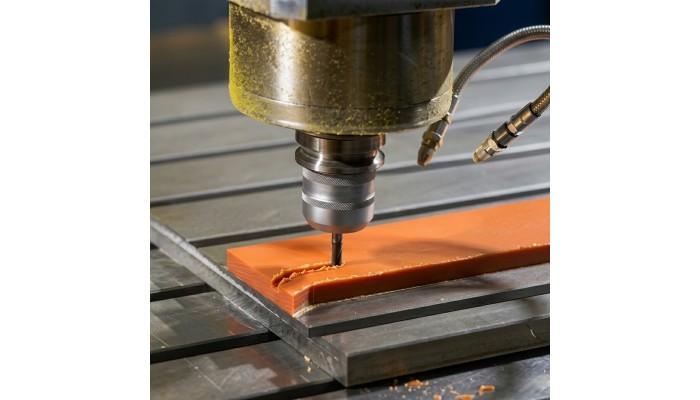
In plastic machining, even when tight dimensional tolerances are specified on a drawing, consistently maintaining the target dimensions can be difficult. A prototype may have no issues, yet dimensional variation, warpage, or distortion may become a concern during continued production.
Why, then, is dimensional accuracy difficult to maintain when machining plastics? This article explains the factors that affect the dimensional accuracy of machined plastic parts and the key points for consistently maintaining tight dimensional tolerances.
Table of Contents
- Why Dimensional Accuracy Is Difficult to Maintain in Plastic Machining
- Dimensional Changes Caused by Temperature Changes and Machining Heat
- Warpage and Distortion Caused by Internal Stress and Annealing
- Dimensional Changes Due to Moisture Absorption and Water Absorption Also Require Attention
- Deformation Caused by Clamping and Cutting Forces Also Requires Attention
- Post-Machining Measurement Is Also Important for Tight Tolerances
- Technoplast's High-Precision Plastic Machining
- Points to Confirm When Consulting Us About High-Precision Plastic Parts
- Frequently Asked Questions
■ Why Dimensional Accuracy Is Difficult to Maintain in Plastic Machining
Maintaining tight dimensional tolerances for plastic parts requires more than simply machining them with high-precision machine tools. Plastics have thermal and mechanical properties that differ from those of metals, and their dimensions may change both during and after machining.
In plastic machining, particular attention should be paid to the following factors.
Factor Affecting Dimensional Accuracy | Potential Effect in Plastic Machining |
Temperature changes | Dimensions change due to expansion and contraction |
Heat generated during machining | Cutting heat is transferred to the material and affects dimensions during or after machining |
Internal stress | Machining changes the balance of stress and may cause warpage or distortion |
Moisture and water absorption | Some materials absorb water, resulting in dimensional changes |
Clamping and cutting forces | Clamping or cutting forces may deform the material |
The following sections explain how each of these factors affects dimensional accuracy.
■ Dimensional Changes Caused by Temperature Changes and Machining Heat
Temperature is one of the factors that requires particular attention in plastic machining.
Plastics expand as temperature rises and contract as temperature falls. In general, plastics also have lower thermal conductivity than metals, which makes it easier for heat generated by cutting to remain concentrated around the machined area. A rise in temperature during machining can affect material deformation and dimensional accuracy, making temperature an important factor when determining cutting conditions.
For example, even if a part is machined to the target dimensions while the material temperature is elevated, its dimensions may change after the material cools.
Therefore, high-precision plastic machining requires attention to points such as:
- Keeping the machining environment at a stable temperature
- Avoiding excessive heat generation during cutting
- Aligning the temperature conditions during machining and measurement
- Taking into account the temperature environment in which the part will actually be used
Particularly when tight dimensional tolerances are required, it is necessary to consider not only whether the dimensions are correct immediately after machining, but also whether the required dimensions can be maintained after the temperature has stabilized.
■ Warpage and Distortion Caused by Internal Stress and Annealing
Another factor affecting the dimensional accuracy of plastics is stress remaining inside the material.
Plastic sheets and rods may contain internal stresses remaining from the material manufacturing process. When part of the material is removed by machining, the balance of these stresses changes, which may appear as warpage or distortion after machining. It has also been confirmed that residual stress in plastic materials can affect dimensional stability and that removing material can release stress and cause deformation.
In addition, the machining process itself may cause changes in shape and dimensions due to heat and forces generated between the cutting tool and the material. In precision machining, it is important to set machining conditions according to the characteristics of the material.
Particular attention is required for:
- Thin-walled geometries
- Asymmetrical geometries
- Geometries requiring substantial material removal
- Parts requiring high dimensional stability
For these types of parts, deformation after machining must also be taken into consideration.
One method of relieving internal stress is annealing. By heating and cooling the plastic under appropriate conditions, internal stress in the material is reduced with the aim of suppressing warpage and distortion after machining.
However, annealing is not required for every plastic part. The need for annealing and the appropriate processing conditions should be considered after reviewing the material type, product geometry, amount of material removal, and required dimensional accuracy.
■ Dimensional Changes Due to Moisture Absorption and Water Absorption Also Require Attention
For some materials, not only temperature but also humidity can affect dimensions.
Some plastics readily absorb moisture, and moisture or water absorption may cause dimensional changes. In particular, with polyamide-based materials, the amount of water absorbed can vary depending on ambient humidity conditions, which may affect dimensional stability.
Therefore, for parts requiring high dimensional accuracy, it is necessary to consider not only their condition during machining but also:
- The storage environment
- Humidity at the location of use
- Contact with water or steam
- Environmental changes before and after use
The important point is not simply whether the part can be machined to the required tolerance. It is also necessary to consider whether the material can maintain the required dimensions and functionality after being placed in its actual operating environment.
■ Deformation Caused by Clamping and Cutting Forces Also Requires Attention
Many plastics have lower rigidity than metals and are therefore more susceptible to deformation caused by forces applied during machining. In plastic machining, cutting forces can affect dimensional accuracy.
For example, if a part is machined while being clamped tightly, it may reach the target dimensions while clamped but change shape after the clamp is released.
Particularly for thin-walled or long, slender parts, machining must take into account deformation caused by clamping and cutting forces.
Machining conditions are also important. Conditions such as cutting speed and feed rate can result in differences in hole diameter and geometric accuracy, so machining conditions need to be set according to the type of material.
Therefore, high-precision plastic machining requires more than simply clamping the workpiece firmly. The clamping method and machining conditions should be considered based on the product geometry and material rigidity.
■ Post-Machining Measurement Is Also Important for Tight Tolerances
Managing tight dimensional tolerances requires not only machining technology but also appropriate methods for checking dimensions after machining.
Even for the same part, what needs to be checked differs depending on which point is used as the measurement reference and which location is measured.
For high-precision parts in particular, it is important to clarify:
- Which dimensions are functionally important for the part
- Which location is used as the reference position
- Which areas require focused control
- Under what temperature conditions measurements will be performed
Because plastic dimensions change with temperature, managing only the machining environment is not sufficient. If the temperature conditions during measurement differ significantly, accurate dimensional control becomes difficult.
For plastic parts requiring tight tolerances, machining and measurement should therefore not be treated separately. Dimensions should be managed as part of a continuous process from machining through inspection.
■ Technoplast's High-Precision Plastic Machining
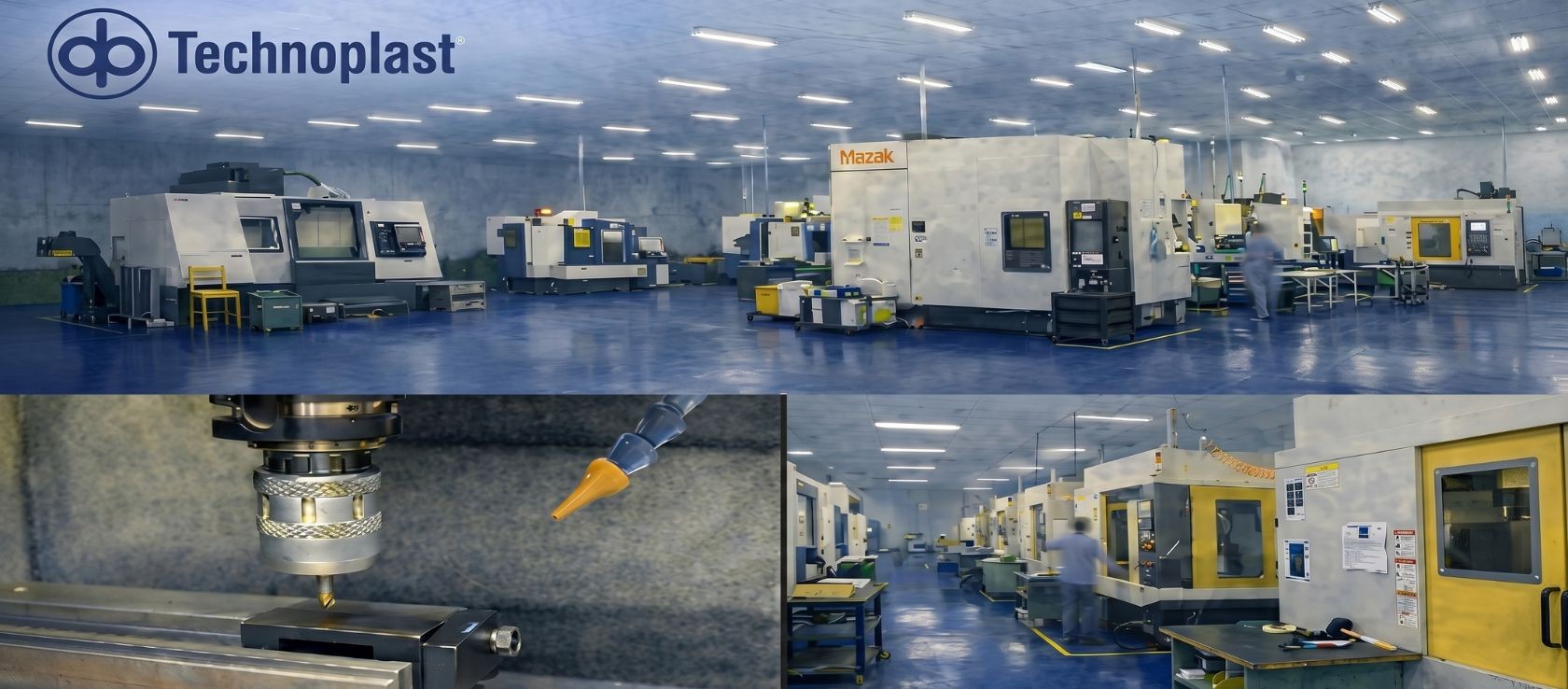
Technoplast (Thailand) Co., Ltd. performs precision machining of plastic parts at its own factory in Thailand.
Item | Capability |
Quantity | From a single prototype to continuous mass production |
Dimensional tolerance | Normally ±0.05mm |
Tighter tolerances | Up to ±0.03mm may be possible depending on product geometry and machining conditions |
Maximum size | 100×1,000×2,000mm |
Machining environment | Factory temperature controlled at 25℃±2℃ |
Measurement and inspection | Coordinate measuring machine and image measurement system |
Annealing | Chamber size of 600×600×600mm, with temperatures up to 300℃ |
To reduce the effects of temperature changes in plastics on dimensions, the factory is maintained at 25℃±2℃. After machining, dimensions are checked using a coordinate measuring machine and an image measurement system.
For products that require measures against warpage or distortion caused by internal stress, Technoplast can also provide annealing after reviewing the material, product geometry, required accuracy, and other relevant factors.
In addition, since its establishment in 2014, personnel with experience in Japanese machining operations have provided technical guidance in Thailand. Thai staff members also receive training in plastic machining and quality control at the company's headquarters in Japan, bringing machining and inspection know-how developed in Japan to manufacturing operations in Thailand.
If you are experiencing issues with the dimensional accuracy or machining conditions of plastic parts, please contact Technoplast.
■ Frequently Asked Questions
Q1: Why can dimensional control in plastic machining be more difficult than in metal machining?
A1: Plastics have greater thermal expansion than metals and tend to dissipate heat less readily. Depending on the material, dimensional changes caused by water absorption and internal stress must also be taken into consideration.
Q2: What level of dimensional tolerance can you accommodate?
A2: Technoplast normally accommodates ±0.05mm and, depending on product geometry, material, and machining conditions, may be able to accommodate tolerances as tight as ±0.03mm. Details are determined after reviewing the drawing.
Q3: Why is temperature control important?
A3: Plastics expand and contract with changes in temperature. Particularly when tight dimensional tolerances are required, it is important to maintain stable temperature conditions during both machining and measurement.
Q4: If the material is the same, can it always be machined to the same dimensional tolerance?
A4: Not necessarily. Machining difficulty varies depending on product geometry and thickness, the amount of material removed, and the locations where dimensional requirements apply, so each drawing must be reviewed individually.
※For more details, please download the materials or contact us via the inquiry form at the bottom of the page.
Company Information
Industrial machinery / Electronic parts
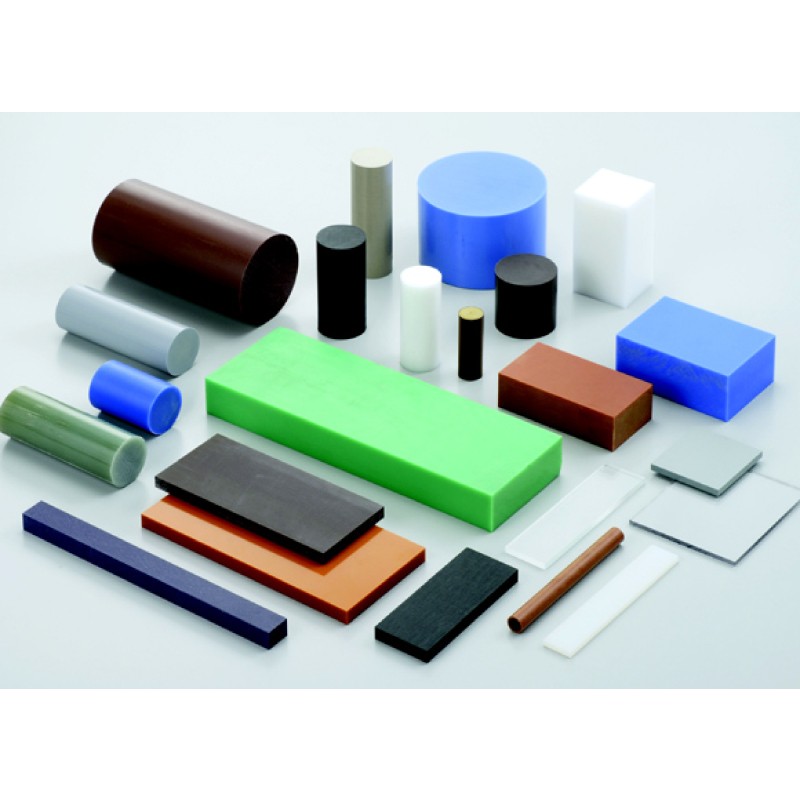
PEEK / PTFE / POM
Our company performs plastic cutting processes such as machining in our own factory, specializing in high-precision, small-lot, multi-product manufacturing. With over 50 years of history and experienc ...
PICKUP
Technology & Services
CONTACT
Contact