KNOWLEDGE
Knowledge
Technology and Services
【For Food & Pharmaceuticals】 Coating-less Powder Adhesion Prevention Treatment
2026-06-23
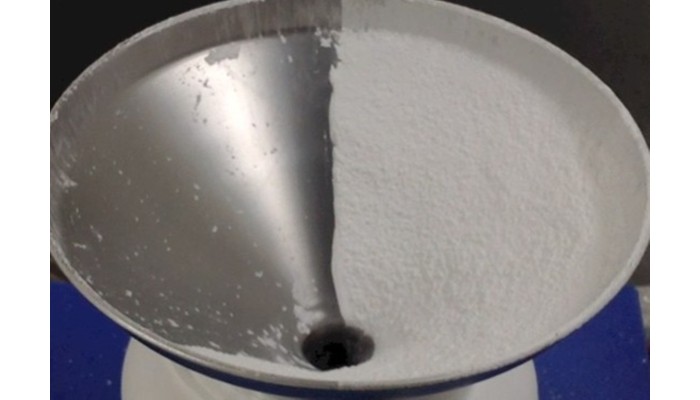
At manufacturing sites for food and pharmaceuticals, high-level management is required for hygiene control and foreign object contamination countermeasures. Above all, the problem of powder raw materials adhering to and remaining in hoppers, chutes, piping, and sieve meshes is a major challenge that leads to reduced production efficiency and an increased burden of cleaning operations.
Conventionally, fluororesin coatings and similar methods have been used to enhance slippage properties, but there are concerns about wear and peeling depending on the operating environment.
This article outlines the mechanism of "Gemini Treatment," a surface modification technology, as a countermeasure against powder adhesion and clogging issues commonly faced at food and pharmaceutical manufacturing sites. It also explains its effectiveness in improving powder fluidity and water drainage, as well as the processing capabilities available within Thailand.
Table of Contents
- Causes of powder adhesion and clogging
- Features of Gemini Treatment without relying on coatings
- Confirmed effects on wire mesh and resin mesh
- Improvement in cleanability through enhanced water drainage
- Local implementation cases in Thailand and Fuji Blastech's capabilities
- Frequently Asked Questions (FAQ)
- Key terms for understanding this article
Causes of powder adhesion and clogging
On production lines handling powder raw materials, fluidity decreases due to agglomeration between powders or adhesion to the contact surfaces, causing powder to remain and accumulate in hoppers, chutes, rotary valves, and sieve meshes.
As adhesion progresses, the flow path narrows, causing clogging and supply failures. As a result, operations must be temporarily suspended to clean the production line, or operators must manually strike the equipment from the outside with hammers to dislodge the powder.
Such actions not only lower production efficiency but also increase the workload, raw material loss, and stress on the equipment. Particularly in the food and pharmaceutical sectors, the accumulation of residual powder presents a risk to hygiene management, making countermeasures that encompass daily cleanability and maintainability essential.
Features of Gemini Treatment without relying on coatings
Generally, it is often thought that making a surface smooth will make powder slide more easily. However, on a mirror-like flat surface, the contact area with the powder actually increases, which can make it easier for adhesion to occur depending on the conditions.
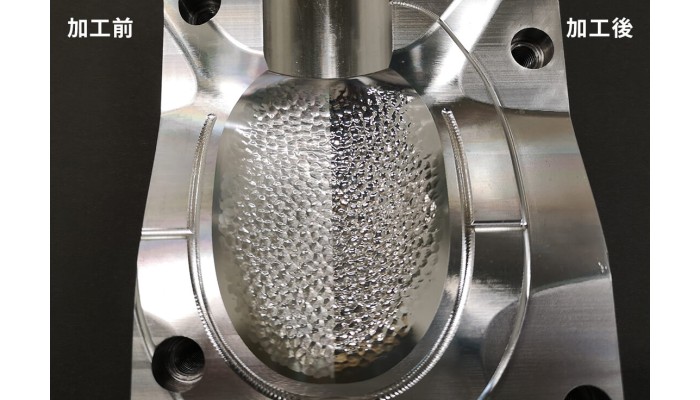
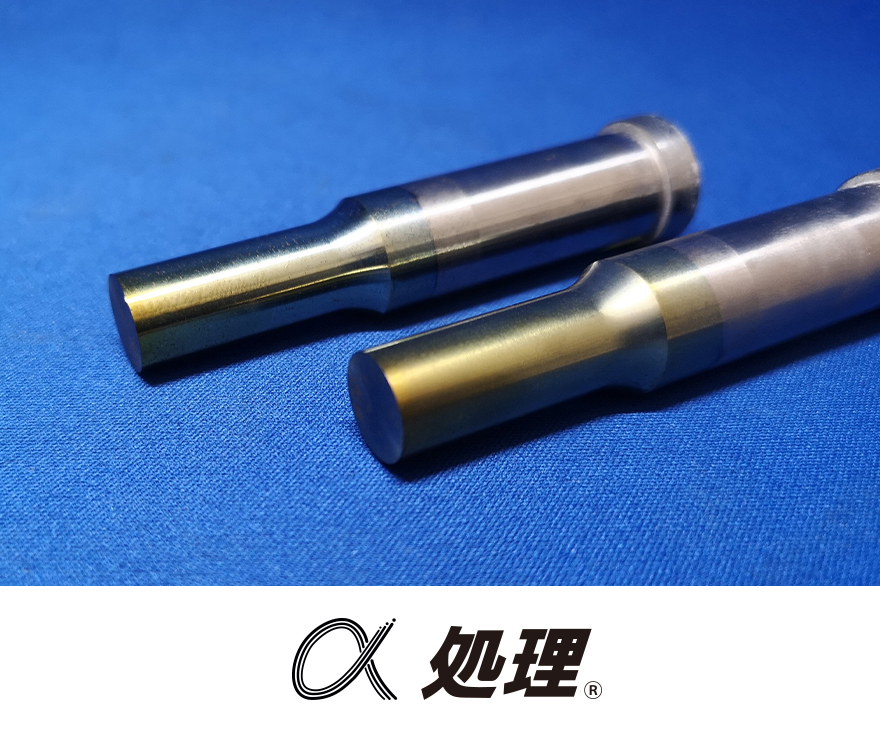
Gemini Treatment is a surface modification technology that utilizes multi-step air blast processing to form microscopic irregularities (dimples) directly on the surface of the workpiece itself. These irregularities minimize the contact area with the powder and reduce frictional resistance, creating a condition where it is difficult for powder to remain on the surface.
Furthermore, Gemini Treatment is not a treatment that forms a coating film. Because it modifies the surface state of the workpiece itself, there is no concern about film peeling like with coatings, making it a treatment highly suited for food and pharmaceutical manufacturing sites where foreign object contamination must be strictly avoided.
Confirmed effects on wire mesh and resin mesh
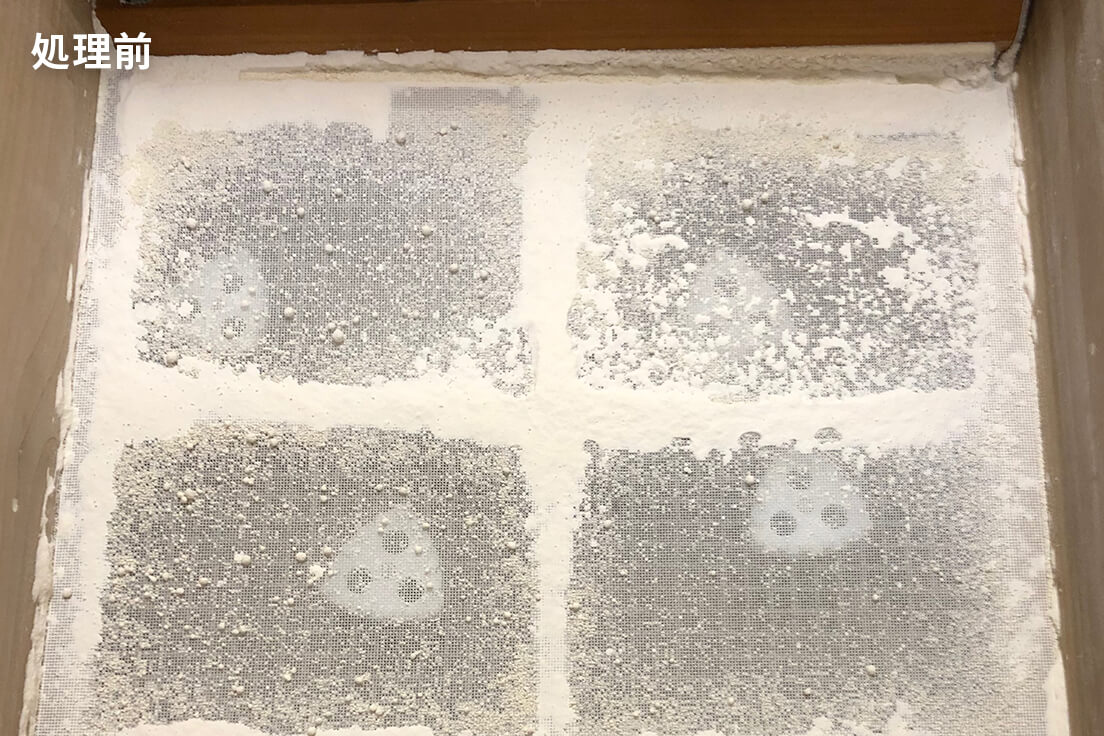
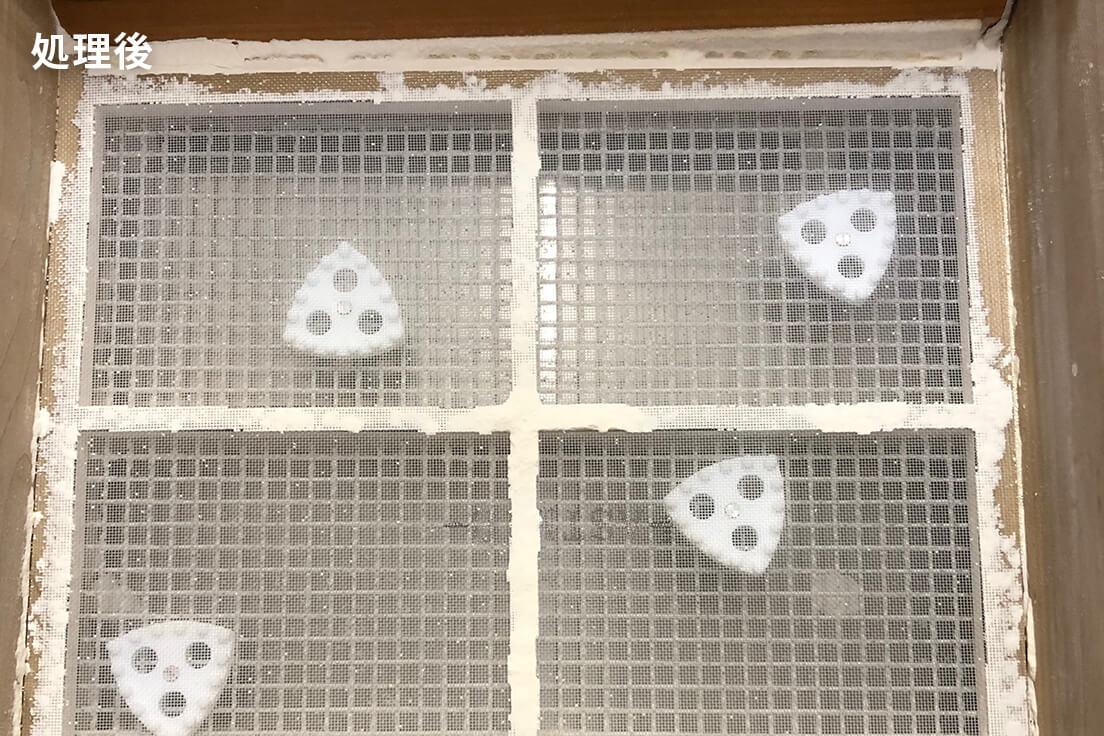
Gemini Treatment also accommodates the processing of wire mesh and resin mesh. On stainless steel wire mesh, it can be expected to mitigate adhesion and clogging against powders such as silica powder. Suppressing the clogging of sieve meshes leads to stabilized processing capacity and a reduced frequency of maintenance.
In addition, in powder adhesion experiments using resin mesh, a high-mesh test utilizing cake flour confirmed a throughput improvement of 1,615% UP for a mesh with a 200 μm opening, and an 1,133% UP improvement for a mesh with a 100 μm opening.
Even in a low-mesh test utilizing pancake mix powder, effectiveness was demonstrated with a 16% UP improvement at a 2,000 μm opening and a 14% UP improvement at a 1,000 μm opening. In this manner, Gemini Treatment suppresses powder adhesion and clogging, contributing to the stabilization of sieving and powder transport processes.
Improvement in cleanability through enhanced water drainage
Gemini Treatment is effective not only in suppressing powder adhesion but also in improving water drainage. Because it makes it difficult for water to remain on the treated surface, a reduction in wiping work and waiting times for drying after cleaning can be expected.
At food and pharmaceutical manufacturing sites, moisture remaining after cleaning can sometimes become a challenge for hygiene management. If water drainage properties are improved, it reduces the burden of daily cleaning operations and leads to shorter turnaround times before equipment can be restarted.
The ability to target both powder adhesion suppression and water drainage improvement simultaneously is a significant advantage for production lines with a high frequency of cleaning.
Local implementation cases in Thailand and Fuji Blastech's capabilities
Within Thailand, Gemini Treatment is actively utilized at manufacturing sites handling powders. Aishin Industrial (Thailand) Co., Ltd., a manufacturer of powder and bulk solids equipment, adopted Gemini Treatment for its rotary valves as a countermeasure against powder clogging inside manufacturing equipment for food processing. As a result, powder clogging was reduced by approximately 70%, leading to improvements in production efficiency.
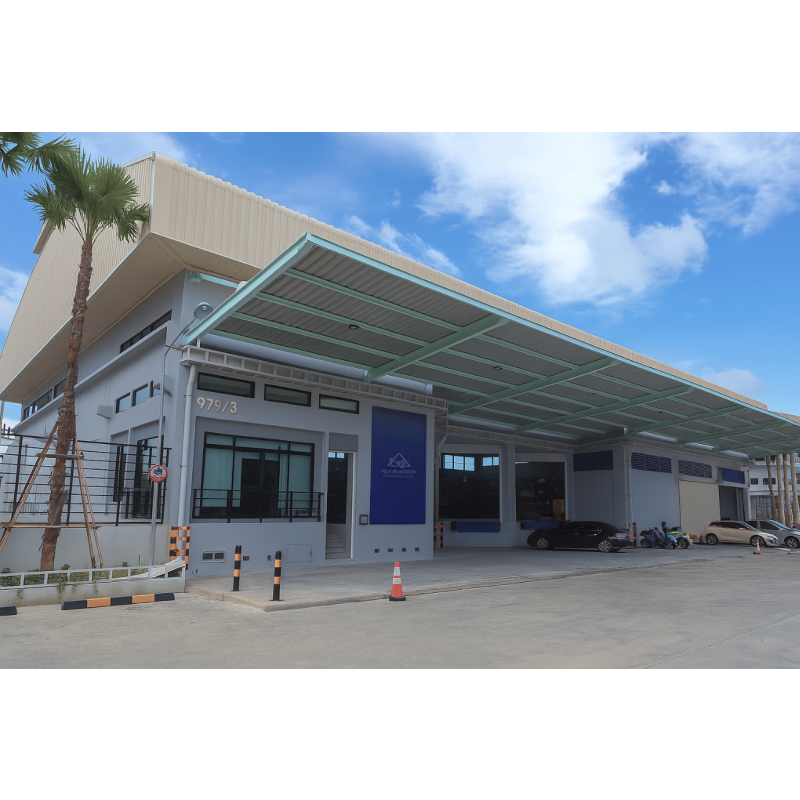
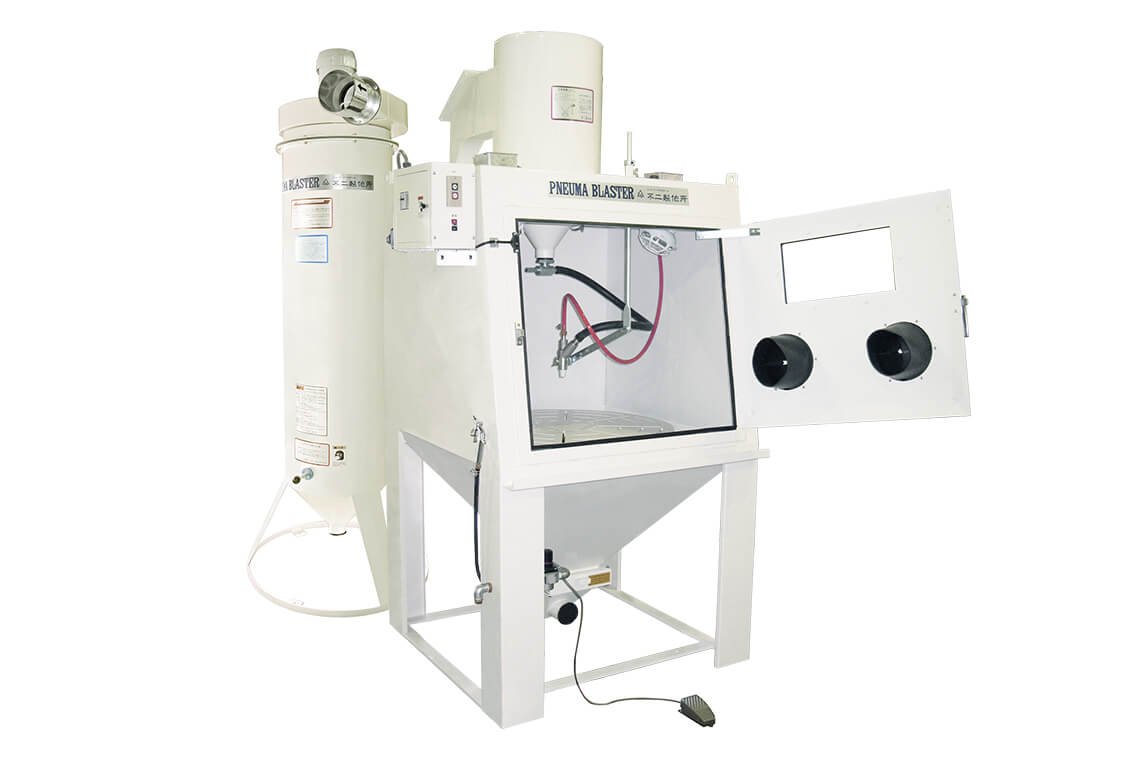
Fuji Blastech (Thailand) Co., Ltd. handles not only the sales of blast equipment but also contract processing and maintenance. Utilizing a large number of abrasives with different materials, hardnesses, particle sizes, and shapes, our strength lies in our ability to propose surface treatments tailored to the specific target object and application.
It is entirely possible to first confirm the effectiveness through test processing, and subsequently consider mass production processing or equipment introduction. For manufacturing sites suffering from powder adhesion and clogging such as food, pharmaceuticals, chemicals, and resin powders Gemini Treatment offers a new choice that does not rely on coatings.
Frequently Asked Questions (FAQ)
Q: On what types of materials can Gemini Treatment be applied?
A: It is mainly applicable to metal materials such as stainless steel. In addition, we have a track record of processing certain resin materials such as nylon mesh and polyester mesh. Actual applicability needs to be confirmed based on the material, shape, and operating environment.
Q: How does it differ from coating?
A: While coating is a treatment that forms a film on the surface, Gemini Treatment is a treatment that modifies the surface state of the workpiece itself. Therefore, its primary advantage is that it easily suppresses the risk of foreign object contamination caused by the peeling of a coating film.
Q: How does the improvement in water drainage properties relate to production efficiency?
A: Because water is less likely to remain after washing, a reduction in wiping work and drying wait times can be expected. As a result, this leads to a shorter time required to restart operations after cleaning and mitigates the daily maintenance burden.
Q: Do you use chemical agents or resin coating agents?
A: Gemini Treatment is a technology that imparts functionality to the surface of the workpiece itself through air blasting. It is not a treatment that adds a separate component to the surface, such as coating agents or lubricants.
Key terms for understanding this article
- Gemini Treatment: A surface modification technology that utilizes multi-step blast processing to form microscopic irregularities on the surface of the workpiece itself, imparting functions such as powder adhesion suppression and water drainage improvement.
- Powder Adhesion Suppression: The function of making it difficult for powder to remain or cake onto hoppers, chutes, piping, wire mesh, etc. This leads to clogging countermeasures and a reduction in the cleaning burden.
- Coating-less: A concept that changes the surface state of the material itself without forming a resin film or similar layers on the surface. Its key feature is that it easily suppresses the risk of foreign object contamination due to film peeling.
- Water Drainage Improvement: A property that makes it difficult for water droplets to remain on a surface after washing. It contributes to reducing wiping work and shortening drying times.
- Wire Mesh / Resin Mesh: Components used for the sieving and classification of powders. By suppressing clogging, stabilized processing capacity and a reduction in the maintenance burden can be expected.
※ For requests regarding product specification verifications, test processing, or applicability to existing equipment, please feel free to contact Fuji Blastech (Thailand) Co., Ltd.
Company Information
Industrial machinery
Sales Blast Machines / Consumables and Abrasives / Contract Blasting Services
At FUJI BLASTECH, our mission is to deliver products and services that continuously evolve at the forefront of the industry. Since our founding, we have operated under a robust quality control system, ...
PICKUP
Technology & Services
CONTACT
Contact