
KNOWLEDGE
Knowledge
Technology and Services
【Ultra-Thick Plate Cutting Defects】The Limits of Processing Conditions That Cannot Be Overcome by Equipment or Cutting Tips Alone
2026-09-10
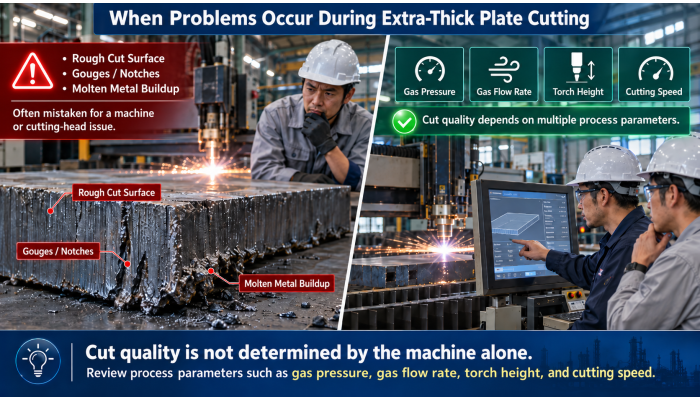
When problems such as rough cut surfaces, gouges or depressions, and adhesion of molten metal occur while cutting ultra-thick plates, it is easy to assume that the equipment or cutting tip is the cause. However, cutting quality is affected by multiple processing conditions, including gas pressure, gas supply volume, torch height, and cutting speed.
This article explains the points to check when cutting defects occur, based on a case involving the cutting of a 300 mm thick plate.
Table of Contents
- Why the cause cannot be identified from the equipment or cutting tip alone
- Case study of cutting a 300 mm thick plate
- Processing conditions to check
- How NIPPON CUTTING can provide support
- FAQ
■ Why cutting defects cannot be determined from the equipment or cutting tip alone
In gas cutting of ultra-thick plates, the following cutting defects may occur.
- Rough cut surfaces
- Gouges or depressions
- Burrs or molten metal adhering to the cut surface
If the cut surface does not have a clean finish, additional finishing work with a grinder becomes necessary, increasing the workload in subsequent processes.
When such defects occur, replacing the equipment or cutting tip does not necessarily solve the problem. This is because cutting results are affected by multiple conditions, including the material, cutting speed, gas pressure, gas supply volume, and torch height.
If the cause lies in the processing conditions, the same problem may continue even after parts are replaced. Therefore, it is necessary to organize the current operating conditions and isolate the conditions related to the defect one by one.
From here, we will look at the process of checking the processing conditions based on a 300 mm thick plate cutting case handled by NIPPON CUTTING.
■ Case study of cutting a 300 mm thick plate handled by NIPPON CUTTING
NIPPON CUTTING & WELDING EQUIPMENT CO., LTD. received an inquiry from a customer who wanted to cut a 300 mm thick plate and visited the customer’s factory.
At the site, the equipment and tools being used were checked, along with cutting-related conditions such as torch height and gas supply conditions. As a result, it was found that the torch had been set lower than the appropriate position.
The torch height was therefore adjusted, while also checking whether the required gas pressure and supply volume were being secured. Cutting ultra-thick plates requires checking not only the pressure but also whether a sufficient volume of gas is continuously supplied from the source.
After these processing conditions were adjusted, the situation improved to the point where the 300 mm thick plate could be cut.
As this case shows, even when there is no problem with the equipment or cutting tip, operating conditions may prevent the equipment from delivering its intended performance. When a cutting defect occurs, it is important to check the processing conditions at the site before considering parts replacement.
■ Processing conditions to check for ultra-thick plate cutting defects
The main items to check when cutting defects occur are as follows.
Item to check | What to check |
Material | Material type and plate thickness |
Cutting speed | Whether the speed is appropriate for the material and plate thickness |
Gas type | Whether it is appropriate for the processing application |
Gas pressure | Whether the required pressure is secured |
Gas supply volume | Whether a sufficient volume is being supplied consistently |
Torch height | Whether it is set at the appropriate position |
Equipment and tools | Whether they are appropriate for the processing application |
Even when the symptoms are the same, the causes may differ. For example, a rough cut surface may also be caused by the cutting speed, gas supply volume, or torch position.
Rather than determining the cause based on appearance alone, checking each processing condition one by one helps isolate the cause of the cutting defect.
■ How NIPPON CUTTING can provide support
NIPPON CUTTING accepts inquiries regarding the cutting of ultra-thick plates.
In addition to selling equipment, NIPPON CUTTING checks the material and plate thickness, the cutting tip being used, gas pressure, gas supply volume, torch height, and cutting speed, and also reviews the cutting conditions.
When necessary, actual machine checks and demonstrations are conducted at the customer’s factory. In the 300 mm thick plate cutting case as well, the equipment and tools being used were checked together with the torch height, gas pressure, and gas supply volume, and the conditions were adjusted until the plate could be cut.
Technologies and expertise related to cutting thick ferrous metals have been accumulated by the parent company in Japan for more than 100 years. Based on past processing cases, NIPPON CUTTING proposes points to check according to the conditions at each site.
※For more details, please download the materials or contact us via the form below.
■ FAQ
Q1.Can an ultra-thick plate in the 300 mm range be cut simply by replacing the equipment?
A1 : Replacing the equipment alone does not necessarily solve the problem. First, conditions such as torch height and gas conditions need to be checked.
Q2.If the cut surface is rough, is there a problem with the cutting tip?
A2 : The cutting tip is not necessarily the cause. Cutting speed, gas pressure, gas supply volume, and torch height also affect the result.
Q3.What information is required when requesting consultation?
A3 : Please provide information such as the material and plate thickness, equipment being used, gas conditions, cutting speed, and the condition of the defect. Photos of the cut surface can make it easier to understand the situation.
※For more details, please download the materials or contact us via the form below.
Company Information
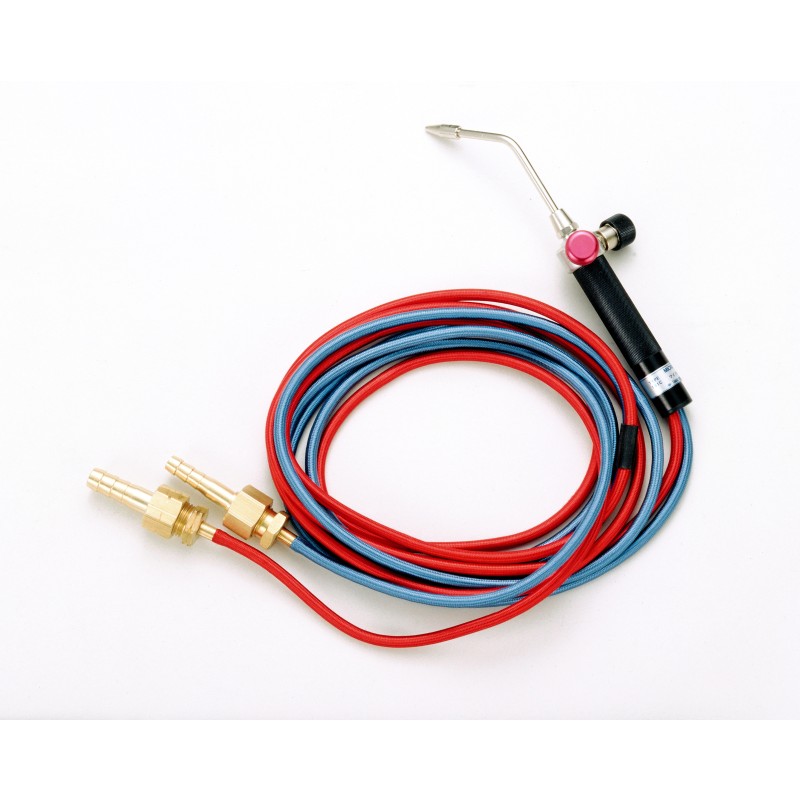
Industrial gas pressure regulator / Gas cutting equipment
With 36 years of experience in Thailand, NIPPON CUTTING & WELDING EQUIPMENT CO., LTD. has continued to manufacture related equipment based on gas cutting technology. In recent years, in addition to pl ...
PICKUP
Technology & Services
CONTACT
Contact