
SERVICES
Technology & Services
【Contract High-Frequency Induction Hardening in Thailand】Countermeasures for Quench Cracking and Distortion in Shafts, Gears, and Other Parts|From Prototypes to Mass Production
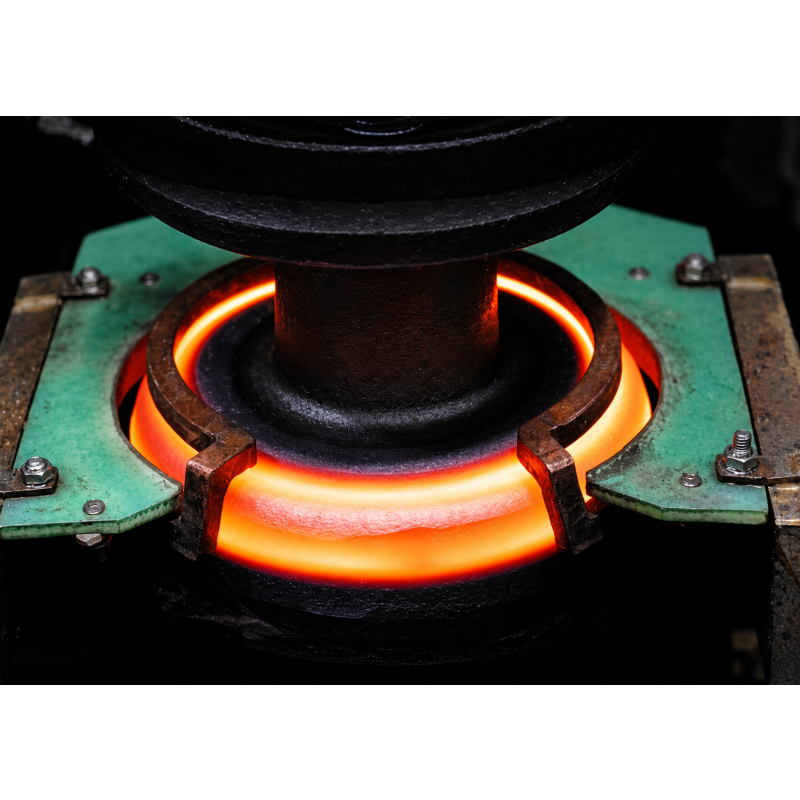
K.D. HEAT TECHNOLOGY (THAILAND) CO., LTD. provides contract high-frequency induction hardening for shafts, gears, and other parts in Thailand. Heat treatment conditions are set according to the material, shape, and required specifications of each workpiece, from a single prototype and small lots to mass production.
Contents
- Scope of Contract High-Frequency Induction Hardening for Shafts and Gears
- Setting Heating and Cooling Conditions According to Material, Shape, and Required Hardness
- Root Cause Analysis and Countermeasures for Quench Cracking, Distortion, and Hardness Variation
- Support for Difficult-to-Process Parts and Small Lots, and Quality Control System
- Frequently Asked Questions(FAQ)
■ Scope of Contract High-Frequency Induction Hardening for Shafts and Gears
For shafts, gears, sprockets, pins, and other automotive and industrial machinery parts, it is important to selectively harden areas prone to wear and fatigue while maintaining the toughness of the core. K.D. HEAT provides surface hardening through high-frequency induction hardening.
We have two locations in Thailand: the Pinthong Factory(Chonburi Province)and the 304 Factory(Prachinburi Province), with a total of more than 40 high-frequency heating units. We also design and manufacture heating coils in-house according to workpiece shapes and required specifications.
We support everything from a single prototype and small lots to mass production, and can perform the complete process from heat treatment through inspection within Thailand. Compared with cases involving overseas transportation, this helps reduce lead time and transportation burden while supporting the transition from prototyping and condition verification to the mass-production phase.
- Maximum workpiece size:Φ340×1000 mm(MAX)
- Maximum workpiece weight:300 kg(MAX)
■ Setting Heating and Cooling Conditions According to Material, Shape, and Required Hardness
The hardness and hardened layer depth obtained through high-frequency induction hardening vary depending on factors such as the carbon content and alloying elements of the steel, workpiece shape, and heating and cooling conditions.
As representative hardening hardness ranges, we support 50~58 HRC for S45C, 55~62 HRC for S50C, and 55~62 HRC for SCM440. In actual processing, conditions such as frequency, output, and heating time are set according to the material, workpiece shape, required hardness, and required hardened layer depth.
In high-frequency induction hardening, quality is affected not only by heating conditions but also by cooling conditions. We control the heating temperature, cooling-water flow rate and timing, and cooling cycle, and perform tempering after hardening when required.
Hardening under appropriate conditions makes it possible to achieve the required surface hardness and hardened layer depth while maintaining the toughness of the core.
- Available hardened layer depth:0.5 mm~7 mm(proven experience)
■ Root Cause Analysis and Countermeasures for Quench Cracking, Distortion, and Hardness Variation
Quench cracking, distortion, and hardness variation that occur in shafts and gears after hardening are not always caused solely by heat treatment conditions. Multiple factors may be involved, including the condition of the material, residual stress from previous machining processes, surface condition and residual oil, heating conditions, and cooling conditions.
K.D. HEAT identifies possible causes while checking the material and the condition of previous processes, and adjusts the heating coil shape, heating conditions, and cooling-water flow rate, timing, and cycle. Because we handle both equipment and contract processing, we examine not only heat treatment conditions but also the equipment, coils, and cooling system in order to reduce the risk of quench cracking, distortion, and hardness variation.
■ Support for Difficult-to-Process Parts and Small Lots, and Quality Control System
For complex-shaped parts, newly developed products, prototypes, and small-lot products, not only heat treatment equipment but also tempering equipment, cooling equipment, and inspection equipment are required. As a result, it may be difficult to own the complete set of equipment and perform all processes in-house.
K.D. HEAT also provides contract processing for such projects that are difficult to bring in-house and for workpieces requiring process-condition setting, starting from a single prototype.
We also support the following inspections to verify quality after high-frequency induction hardening.
Inspection Equipment・Inspection Item | Inspection Details・Purpose |
Rockwell Hardness Tester | Measurement of surface hardness(HRC) |
Micro Vickers Hardness Tester | Measurement of hardness distribution and effective hardened layer depth |
Magnetic Particle Testing | Inspection for cracks and defects on and near the surface |
Microstructure Observation | Inspection of cross-sectional metallurgical structure and heat treatment condition |
Portable Hardness Tester | Hardness measurement without cutting the workpiece |
We support a series of quality checks covering hardness measurement, hardened layer depth, metallurgical structure, and crack inspection.
Inspection report:surface hardness, hardened layer depth, hardness distribution, hardening area, hardened layer depth, microstructure photographs, magnetic particle inspection, grain size
Customers can confirm the required quality items and transfer heat-treated parts to the next process without having to own the various inspection systems themselves.
※For more details, please download the materials or contact us via the form below.
■ Frequently Asked Questions(FAQ)
Q1:Do you accept single-piece and prototype orders for shafts and gears?
A1:Yes. We support everything from a single prototype and small-lot production to continuous processing for mass-production lines.
Q2:How do you inspect for quench cracking after hardening?
A2:We support crack inspection using methods such as visual inspection and magnetic particle testing. The required inspection details can be discussed according to the product and quality requirements.
Q3:What countermeasures are available when distortion after hardening becomes an issue?
A3:After checking the material, the condition of previous processes, and the heat treatment conditions, we review the heating coil shape, heating conditions, and cooling conditions, and examine countermeasures while identifying the cause.
※For more details, please download the materials or contact us via the form below.
Company Information

Induction Heat Tretment / Induction Machine
As the Thai subsidiary of the KD Group, whose core businesses are high-frequency induction heating, high-frequency heat treatment, and FA technologies, we provide integrated services ranging from cont ...
PICKUP
Technology & Services
CONTACT
Contact