
TSUBACO KTE CO., LTD.
PRODUCT
Production Goods
Causes of Chain and Sprocket Wear|Types, Mechanisms, and Preventive Maintenance Tips
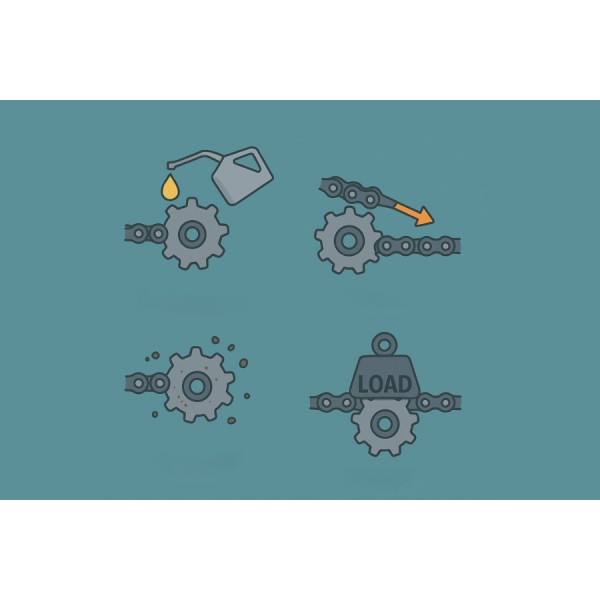
Chain and sprocket wear is unavoidable over time, but proper maintenance and a clear understanding of the causes can significantly extend the lifespan of these critical power transmission components. Learn how to prevent equipment downtime through proactive care.
Introduction: Wear Is Inevitable But Controllable
Industrial chains and sprockets are the backbone of mechanical power transmission in countless machines. However, without proper attention, they gradually degrade due to friction, misalignment, and environmental contaminants.
Uncontrolled wear leads to:
- Reduced power efficiency
- Increased noise and vibration
- Unexpected machine failure
By understanding wear types and implementing the right maintenance strategies, you can avoid costly downtime and extend system longevity.
Types of Wear and Their Mechanisms
There are three primary types of wear affecting chains and sprockets:
- Abrasive Wear: Occurs from contact between chain pins and bushings. Caused by inadequate lubrication or the presence of dust and metal fragments acting as abrasives.
- Adhesive Wear: Arises when microscopic adhesion and peeling occur between chain and sprocket surfaces under high load or speed. Often due to incorrect lubricant selection.
- Fatigue Wear (Fretting Wear): Caused by cyclic loads creating micro-cracks on surfaces, progressing into more serious wear. Found in high-frequency operations.
Main Causes of Chain Wear
Common contributors to chain wear include:
- Poor or Incorrect Lubrication: Using oil with wrong viscosity or temperature range speeds up surface degradation.
- Excessive Tension: Overloading pins and rollers reduces lifespan and increases stress.
- Shaft or Sprocket Misalignment: Leads to uneven meshing and localized wear patterns.
- Foreign Contaminants: Dust, debris, or metal shavings trapped between bushings and pins act like sandpaper.
Main Causes of Sprocket Wear
Sprockets wear due to:
- Tooth Profile Deterioration: Sharpened tips from wear result in poor chain engagement and increased damage.
- Lack of Material Hardness: If the sprocket isn’t properly hardened, it will wear quickly under frictional load.
- Incompatibility with Chain: Pitch mismatches or profile inconsistencies cause uneven load distribution.
Maintenance Tips to Prevent Wear
To control wear progression, adopt these best practices:
- Routine Lubrication & Cleaning: Use automatic oilers or lubricants formulated specifically for chains.
- Proper Chain Tension and Shaft Alignment: Avoid both overtightening and slack conditions. Measure and adjust shaft distances precisely.
- Wear Monitoring & Replacement Planning: Measure chain elongation regularly. Replace chains before exceeding manufacturer thresholds.
- Sprocket Reversal: Periodically flip sprockets to reduce one-sided wear and extend usable life.
Company Information

Main 3 Products
construction / development of the industrial field
Phone Number
Homepage URL
We should provide customer in the industrial fields with the new value through the optimized product management based on the technological forces developed for its long history as a general trading co ...
CONTACT
Contact