_15a3e843-c865-4cb1-9c30-8a9c1ded1366.png)
PRODUCT
Production Goods
[LTS50] Factory Floor Marking Tape / 1,500 Cycle Abrasion Resistance / Reducing Replacement Labor & Anti-peeling Floor Marking
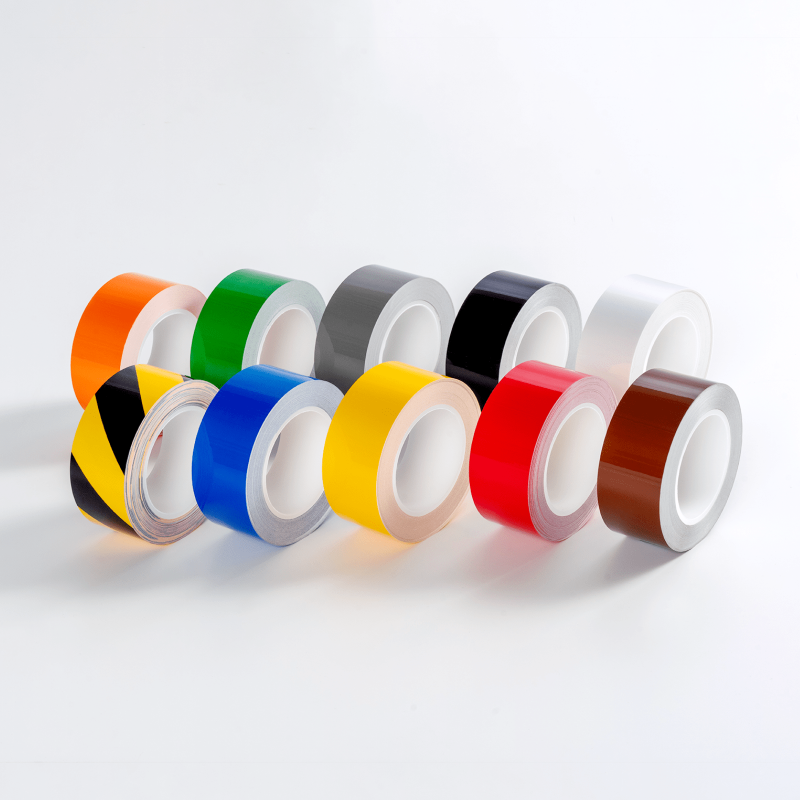
At manufacturing sites for automotive and electronic components in Thailand, forklifts and AGVs (Automated Guided Vehicles) are constantly on the move, often causing floor line tapes to peel off within a short period. Frequent replacements not only increase labor hours but also pose a risk of tape fragments contaminating products. In such environments, adopting highly durable floor line tapes like LTS50, which withstands 1,500 cycles of reciprocating friction tests, is a key consideration. For factory managers seeking operational efficiency, such numerical data serves as a vital reference for material selection.
Table of Contents
- Frequent Replacements Restrict Factory Floor Maintenance
- Structure Where General Tapes Lack Durability in Harsh Logistics Sites
- Durability of LTS50 Confirmed by 1,500 Cycles Reciprocating Friction Test
- Chemical Resistance and Surface Roughness Values to Check Before Selecting LTS50
- What Nabelin Thailand Can Do
- FAQ
- Key terms for understanding this article
■ Frequent Replacements Restrict Factory Floor Maintenance
In Thai manufacturing plants, maintaining floor line markings and aisle indicators is fundamental to safety and 5S activities. However, many sites utilize general-purpose line tapes that often peel or tear within a few weeks due to forklift maneuvers or pallet dragging. Having to halt portions of production lines for repairs or performing replacement work on holidays is a significant burden for managers. The shorter the replacement interval, the more labor and material costs accumulate, impacting core duties aimed at productivity improvement.
Particularly in the automotive parts industry with many Japanese investments or PCB (Printed Circuit Board) factories experiencing steady expansion, strict safety and quality management are required even in Tier 3 or Tier 4 processes. Leaving deteriorated tape unattended can lead to audit findings, and reduced visibility increases the risk of collision accidents. Continuously using low-durability materials is a factor that increases long-term maintenance costs and safety management burdens.
■ Structure Where General Tapes Lack Durability in Harsh Logistics Sites
Most general line tapes have a thin surface protection layer, making the base material susceptible to wear from physical friction. When heavy vehicles like forklifts pass over them, frictional heat and shear forces are applied, often causing the tape edges to curl. In these curled areas, dirt, oil, and moisture-laden dust accumulate, leading to a decrease in adhesive strength. Consequently, this often results in widespread peeling. Furthermore, in Thai manufacturing settings, floor cleaning with strong detergents is frequently conducted to remove oil stains. Tapes with low chemical resistance will deteriorate faster due to this cleaning process. In environments where physical friction and chemical influences overlap, achieving long-term use is difficult unless both surface hardness and adhesive retention are sufficient.
■ Durability of LTS50 Confirmed by 1,500 Cycles Reciprocating Friction Test
One of the key features of LTS50 is the availability of specific numerical data regarding wear resistance. It has a track record of being used for 200mm wide AGV line protection, and a 1,500-cycle reciprocating friction test—performed with concrete blocks placed on the tape—confirmed that no peeling or significant damage occurred. This durability stems from its film structure with a thickness of 306±5μm and specialized surface treatment. While general tapes may turn cloudy due to friction, LTS50 is noted for having relatively minimal changes in appearance. Line markings are available in various colors such as yellow, blue, red, green, and orange. Due to its high surface smoothness, stains like tire marks can be easily removed through cleaning. This characteristic also leads to a reduction in the cleaning burden associated with maintaining visibility.
■ Specification comparison of line marking tape for factory floors
Item | LTS50 | LTL100 |
Total Thickness (μm) | 306 ± 5 | 306 ± 5 |
Standard Size | 50mm × 20m | 100mm × 20m |
Abrasion Test Resistance | Cleared 1,500 back-and-forth cycles | Cleared 1,500 back-and-forth cycles |
Main Applications | Zone marking and positioning | Walkway marking and AGV line protection |
■ Chemical Resistance and Surface Roughness Values to Check Before Selecting LTS50
When selecting durable line tape, it is essential to confirm not only friction resistance but also chemical resistance within the actual usage environment. LTS50 possesses relatively high resistance to acids and alkalis, making it less prone to discoloration or peeling even when cleaned with detergents. Additionally, it has been confirmed that when peeling the tape for factory layout changes, there is very little glue residue. Minimal residue reduces the burden of cleaning tasks before the next application. The condition of the floor surface to be applied is also critical. Although this tape is designed to be scratch-resistant, the adhesive may not bond sufficiently if there are large steps or extremely rough surfaces. Use on painted floors or smooth concrete surfaces is recommended. When judging the feasibility of application, factors such as floor smoothness, forklift passage frequency, and the types of cleaning solutions used should be verified. Depending on site conditions, additional verification may be necessary.
■ What Nabelin Thailand Can Do
Nabelin Thailand is the Thai subsidiary of Nabelin Co., Ltd., a Japanese trading company. While focusing on chemicals, food ingredients, and pharmaceutical raw materials, the company also supplies factory auxiliary materials and consumables. At manufacturing sites, the replacement and maintenance of floor line tapes can be a recurring burden. Durable materials like LTS50 are a strong option when considering solutions to these issues. The company provides products imported from Japan via regular shipments and also handles local procurement within Thailand. Furthermore, they support the acquisition of import licenses (such as FDA) and accept consultations even for small-lot cases, such as reagents or consumables. They supply materials for the Thai manufacturing industry from their logistics hub in Samut Prakan.
※For more details, please download the PDF attached to this article or contact us via the form at the bottom of the page.
■ FAQ
Q1: How much will the replacement frequency change with LTS50 compared to general line tapes?
A1: LTS50 is designed to pass a 1,500-cycle reciprocating friction test, and there are cases where it has been used for long periods even in harsh aisle environments. Although the service life depends on traffic volume and the frequency of heavy vehicle passage, an extension of the replacement cycle is expected depending on site conditions.
Q2: Will peeling the tape leave glue residue that makes floor cleaning difficult?
A2: This product features high adhesive strength while leaving relatively little glue residue upon removal. Even after long-term application, the adhesive tends not to remain on the floor, reducing the cleaning burden before the next application.
Q3: Are there stocks available in Thailand, and is it possible to order in small lots?
A3: We do not keep this item in stock, but if you can provide us with a forecast, we can plan and manage it according to an appropriate schedule. We can also assist with consultations on order units. Specific delivery lead times and lot sizes will be advised based on stock availability.
■ Key terms for understanding this article
- Reciprocating Friction Test : A testing method to evaluate durability by repeatedly rubbing the product surface under a constant load.
- Glue Residue : A phenomenon where adhesive remains on the substrate after the tape is peeled off, leading to increased cleaning labor.
- 306±5μm : A numerical value indicating the total thickness of LTS50. Its thickness provides high resistance to wear and impact.
※For more details, please download the PDF attached to this article or contact us via the form at the bottom of the page.
Company Information
Industrial chemical products / Foods additives / Reagents
Nabelin (Thailand) Co., Ltd. was established in 2006 and received approval from the Thailand Board of Investment (BOI) in 2007. We celebrate our 20th anniversary. We have offices across Asia, includin ...
CATALOG
Related Catalogs
CONTACT
Contact