_e71de7f1-7c67-471d-a7ad-830b07cdbc72.png)
KNOWLEDGE
Knowledge
Producer goods
Principles for Selecting Cleaning Agents for Electronic Components and Precision Parts
2026-10-26

In electronics, semiconductor, and precision-parts manufacturing, cleaning affects more than the removal of contamination. The selected cleaning agent must leave minimal residue, avoid damage to component materials, and remain compatible with processes that follow cleaning.
These requirements are especially important in the Final Rinse stage, where low surface tension, fast evaporation, and material compatibility are key properties. For this reason, cleaning-agent selection should focus on suitability for the application rather than cleaning strength alone.
Table of Contents
- Why Final Rinse Requires Careful Cleaning-Agent Selection
- Properties Required for Precision Cleaning
- Why Stronger Cleaning Power Is Not Always Better
- Equipment Compatibility and Process Considerations
- What KANEKO CHEMICAL (THAILAND) CO., LTD. Can Provide
- FAQ
- Keywords
■ Why Final Rinse Requires Careful Cleaning-Agent Selection
Final Rinse is the last cleaning step before assembly or use. Residue or material damage remaining after this stage can affect subsequent processing and product reliability.
Cleaning-agent selection should therefore be based on physical and chemical properties rather than brand name alone. The main points to compare are penetration into small gaps, evaporation behavior, residue, and compatibility with the materials used in the component.
For PCBs, SMD components, IC leads, and other small or complex structures, the selected agent must be suitable for both the contaminant and the geometry of the part.
■ Properties Required for Precision Cleaning
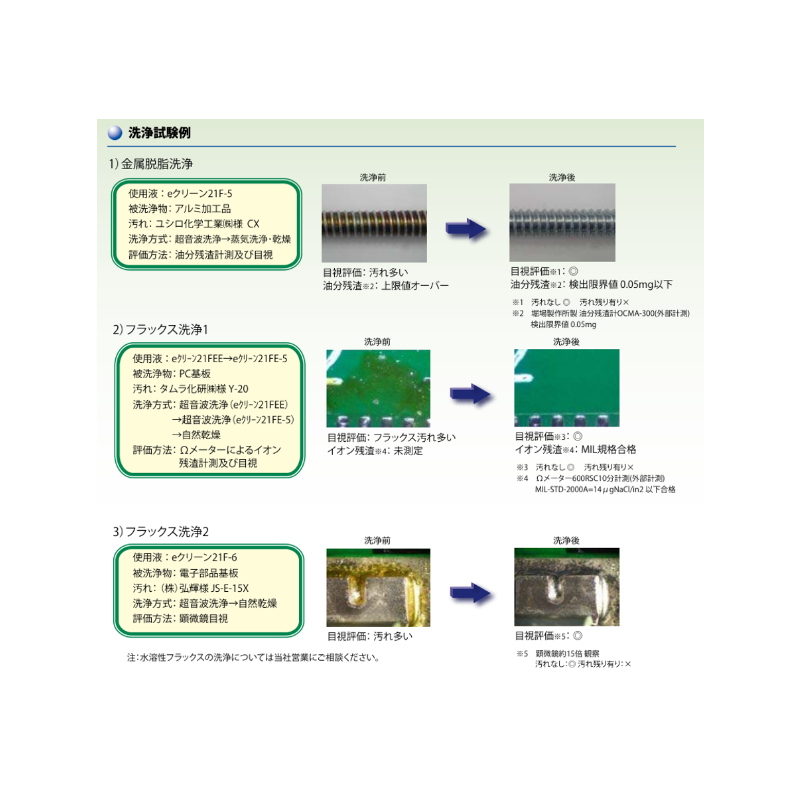
Low surface tension helps a cleaning agent penetrate beneath SMD components, around IC leads, and into narrow spaces within complex structures. This property is relevant to PCBs and micro-components where contamination may remain in small gaps.
Fast and uniform evaporation can reduce residue and limit the need for additional drying steps. Material compatibility is also required so that the cleaning process does not corrode metals or cause swelling, cracking, or embrittlement of plastics, boards, or rubber seals.
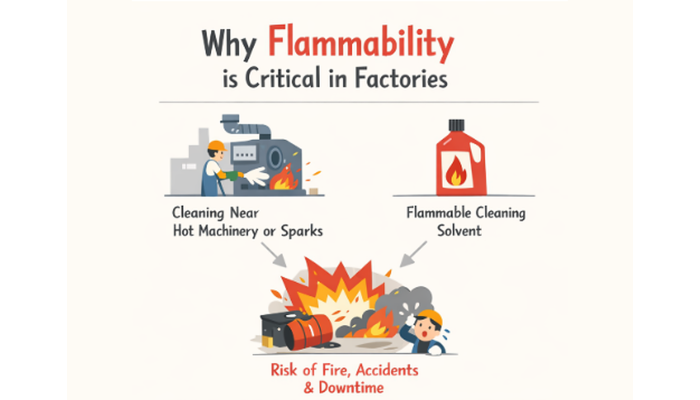
Non-flammable properties can reduce operational safety concerns associated with flammable cleaning agents.
■ Why Stronger Cleaning Power Is Not Always Better
A common assumption is that stronger cleaning power produces better results. However, an overly aggressive cleaning agent may damage surfaces, leave residue, or affect component materials.
In precision applications, the better criterion is whether the cleaning agent is suitable for the specific contaminant, material, and process stage.
For Final Rinse in particular, low residue, controlled evaporation, and material compatibility are more relevant than cleaning strength alone.
■ Equipment Compatibility and Process Considerations
Cleaning-agent compatibility with existing equipment is another selection factor. Agents that can be used with existing vapor-cleaning or immersion systems may reduce the need for equipment modification.
When comparing cleaning agents, it is useful to consider the existing cleaning method together with the physical properties of the fluid and the materials used in the product.
■ What KANEKO CHEMICAL (THAILAND) CO., LTD. Can Provide
KANEKO CHEMICAL (THAILAND) CO., LTD. handles HFE-7000 Series alternative fluids for applications related to the 3M Novec Series in the Thailand market.
Selection can be considered by comparing the contaminant, component material, cleaning method, evaporation behavior, and residue requirements of the process.
※For more details, please download the attached materials or contact us via the form below.
■ FAQ
Q1: Can general-purpose cleaners be used for electronic components?
A1 : General-purpose cleaners may not be suitable when residue control and compatibility with sensitive component materials are required. The cleaning agent should be selected according to the material and process requirements.
Q2: Why are specialized cleaning agents used for Final Rinse?
A2 : Final Rinse is the last cleaning stage before assembly or use. Residue, slow evaporation, or material incompatibility at this stage can remain as a process or product-quality concern.
Q3: Is equipment replacement required when changing cleaning agents?
A3 : Some cleaning agents can be used with existing vapor-cleaning or immersion systems. Whether equipment modification is required depends on the fluid and equipment conditions.
■ Keywords
- Final Rinse : The final cleaning stage before assembly or use, where residue and material compatibility are important.
- Low Surface Tension : A fluid property that helps a cleaning agent penetrate narrow gaps and complex structures.
- Residue : Material remaining on a component surface after the cleaning process.
- Material Compatibility : The suitability of a cleaning agent for metals, plastics, boards, seals, and other component materials.
※For more details, please download the attached materials or contact us via the form below.
Company Information
Industrial chemicals / cleaning agent / cleaning machine
We manufacture and sell chemical industrial products, cleaning agents, and cleaning machines. If you have any problems with cleaning, please feel free to contact us.


CONTACT
Contact