
TAPYRUS (THAILAND) CO., LTD.
PRODUCT
Production Goods
Meltblown Nonwoven Fabric | From Filtration Challenges to Metrics and Spec Selection
_thumb_09b04c90-bb1c-41da-b20a-58d55e62e171.png)
Key Takeaways
• Melt-blown nonwoven performance must be evaluated using PFE/BFE together with Pressure Drop, not thickness or GSM alone.
• Fiber diameters below 1–30 µm directly influence the capture of 0.3 µm NaCl test particles.
• Binderless structures with uniform fiber dispersion provide stable filtration and reduce health risks.
• Selecting an inappropriate grade can result in good filtration but excessive pressure drop beyond system limits.
ーーーーーーーーーーーーーーーーーーーーーーーーーーーーーーー
Melt-blown nonwoven fabrics are widely used in medical applications, HVAC systems, and industrial filtration. The key challenge is not simply whether filtration is possible, but whether required standards can be met without increasing pressure drop, while maintaining stable performance throughout the service life. Filter media must also be safe, binder-free (no residual adhesives), and must not impose unnecessary load on the overall system. An unsuitable melt-blown specification can reduce filtration efficiency, increase energy consumption, and shorten filter lifetime.
Filtration performance is governed by three main factors. First is fiber diameter: fibers below 1–30 µm create fine porous structures that improve capture of small particles, such as 0.3 µm NaCl aerosols commonly used in air-filter testing. Second is fiber dispersion: non-uniform dispersion causes channeling, where airflow bypasses parts of the media, leading to unstable efficiency. High-quality melt-blown therefore requires an isotropic structure. Third is a binderless, self-bonded structure, which reduces chemical contamination risk and supports medical and food-related uses.
When designing or selecting melt-blown media, key parameters must match real operating conditions: basis weight (typically 7–400 g/m², depending on function), fiber diameter (selected within below 1–30 µm based on target particle size), pressure drop (Pa) (must align with system airflow rate), and filtration efficiency (e.g., PFE, BFE, or HEPA class). Tests using 0.3 µm NaCl show melt-blown can cover performance from MERV ranges up to HEPA H14, when the appropriate grade is chosen.
In real applications, filtration always involves trade-offs between efficiency and airflow. Coarser fibers deliver lower pressure drop and longer service life, but lower efficiency. Very fine fibers increase efficiency but raise pressure drop and require careful system-level design. The key insight is that the finest fiber is not always the best choice; selection should be balanced against overall system KPIs.
Industry benchmarks illustrate these relationships. Mask applications typically target ~99% PFE/BFE (e.g., N95–N100 or FFP classes). HVAC systems commonly aim for MERV12–MERV16 or ISO E11–H levels. Liquid filtration considers mean pore size ranges of roughly 0.9–230 µm, achieved through direct control of fiber diameter and structure.
A practical industrial air-filtration case shows that switching from a single-grade melt-blown layer to a multi-layer design using different fiber diameters can reduce pressure drop, extend filter life, and lower total system cost.
Melt-blown nonwoven is therefore not a commodity material, but an engineering material. Proper selection should follow a structured approach: filtration problem → particle characteristics → airflow rate → system KPIs → melt-blown grade selection.
Summary
Industrial-grade melt-blown nonwovens must be evaluated at the system level, not solely by maximum filtration efficiency. Understanding filtration mechanisms and performance indicators helps reduce risk, improve efficiency, and control total cost.
ーーーーーーーーーーーーーーーーーーーーーーーーーーーーーーー
❓ FAQ
Q: Why is pressure drop as important as filtration efficiency?
A: Because high pressure drop increases energy consumption and reduces system continuity.
Q: Does melt-blown nonwoven require chemical binders?
A: No. High-quality melt-blown nonwovens are self-bonding, which reduces contamination risk and is safer for medical use.
📚 Glossary
• Melt-blown Nonwoven: A fine-fiber nonwoven material produced using the melt-blown process.
• Fiber Diameter: Fiber size, typically below 1–30 µm, which directly affects filtration performance.
• Pressure Drop: The pressure loss generated as air or fluid flows through a filter.
• Filtration Efficiency (PFE/BFE): Metrics representing particle or bacterial filtration efficiency.
• Binderless Structure: A structure in which fibers bond to each other without added chemical binders.
Company Information
Main 3 Products
Manufacture of Melt-Blown Non-Woven / Sale of Melt-Blown Non-Woven
Phone Number
Homepage URL
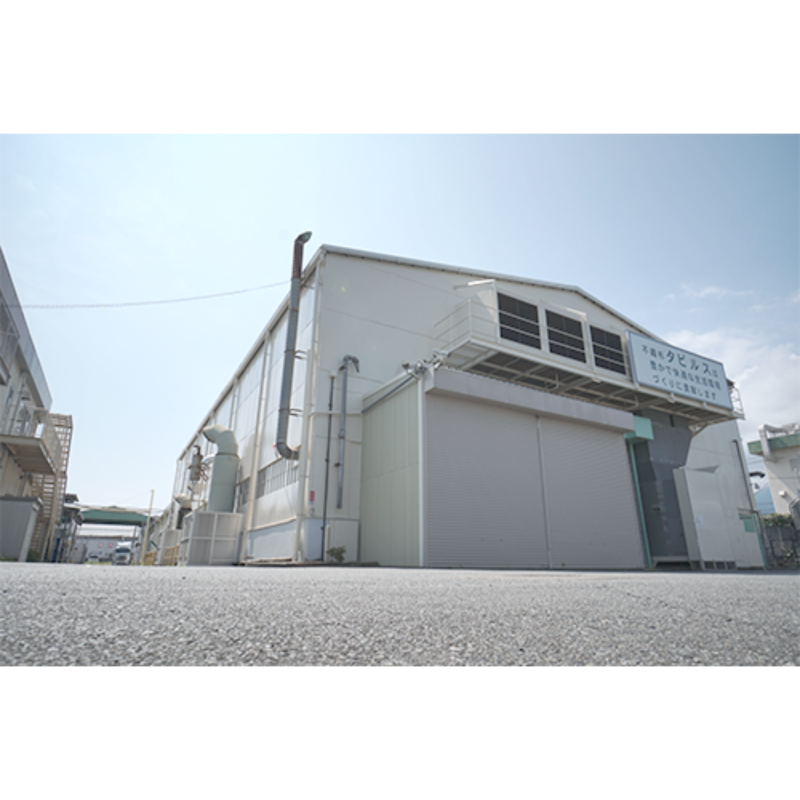
Since our founding in 1987 as a specialized manufacturer of melt-blown nonwoven fabrics, we at Tapyrus have consistently provided our customers with high-quality products using our unique technology.
CONTACT
Contact