
TAPYRUS (THAILAND) CO., LTD.
PRODUCT
Production Goods
Ensuring Quality Consistency in Melt-Blown Nonwoven Fabric|Challenges & Solutions
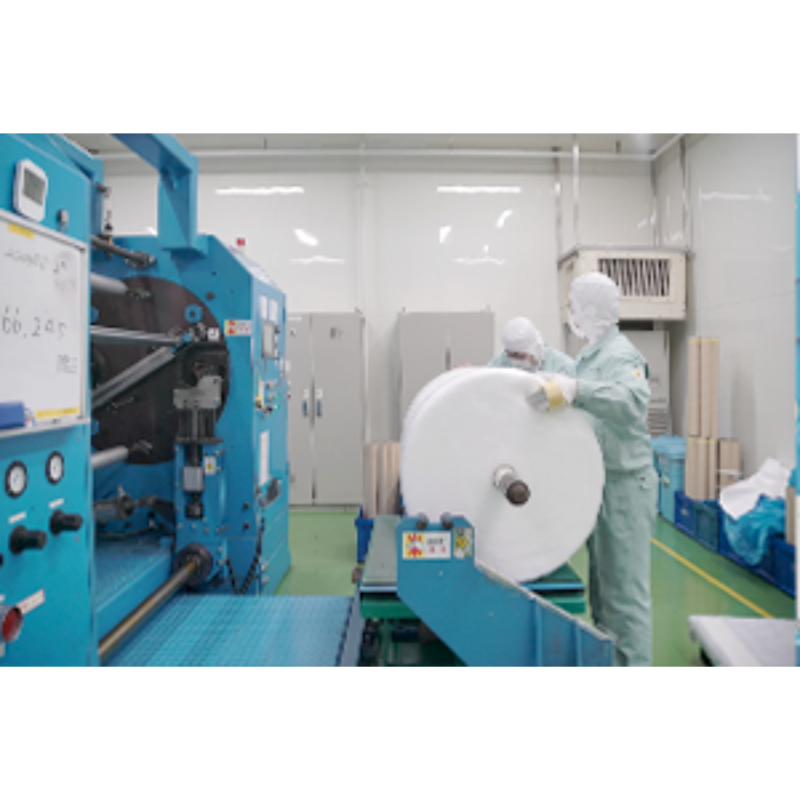
What Is Melt-Blown Nonwoven Fabric?
Melt-blown fabric is produced by melting thermoplastic resin (commonly polypropylene) and extruding it through fine nozzles with high-speed hot air. The process creates ultra-fine fibers (1–5 µm in diameter) that form a dense, breathable fabric with excellent filtration efficiency and low pressure drop. The material is widely used in mask filters, HVAC systems, liquid filtration, and oil absorbents but achieving consistent quality is a major technical obstacle.
Production Challenges
- Inconsistent fiber diameter and texture due to temperature or airspeed fluctuations
- Irregular web structure and uneven thickness across production rolls
- Variability in electrostatic charge (electret effect), which impacts filtration efficiency
- Performance balance issues: trying to reduce pressure drop often reduces filtration rate
- Raw material variability: changes in melt flow rate (MFR) or batch-resin composition affect outcomes
These inconsistencies directly influence performance measurements like filtration efficiency, durability, and breathability critical in medical and high-end industrial use cases.
Root Causes of Quality Fluctuations
Process-related variables:
- Minor shifts in nozzle, resin, or air temperatures
- Unstable air velocity or flow during fiber formation
- Variations in die-to-collector distance
- Inconsistent conveyor speeds and cooling profiles
Material-related factors:
- Differences in resin MFR or additive packages
- Changes in stabilizer levels
- Batch-to-batch inconsistencies in polym er properties
These interrelated factors make it difficult to replicate quality without advanced process control.
Technical Strategies for Stabilization
Automation & Digital Control:
- Real-time monitoring and feedback to maintain precise air/resin temperature and flow rates
- Digital twin models to predict fiber deposition patterns
- AI-driven detection systems that flag defects early and prompt adjustments
Material Standardization:
- Tight MFR control and CA tracking for resin batches
- Proper resin drying and storage to prevent moisture variation
Electret Charge Optimization:
- Use of high-performing electret additives
- Controlled corona treatment with visual inspection tools to ensure consistent surface charge
Enhanced Quality Inspection:
- Inline sensors and laser-based width/thickness monitors
- Image-processing systems for detecting defects like missing filaments or fiber clumps in real time
Impact of Stabilization Measures:
By integrating automated control, material consistency, electret optimization, and inline quality inspection, manufacturers can significantly improve output yield and ensure consistent quality key for applications requiring ASTM-level filtration or medical-grade performance.
ーーーーーーーーーーーーーーーーーーーーーーーーーーーーーーーーーーーーーーーーーーー
❓ FAQ
Q: How fine are meltblown fibers, and how does this affect filtration?
A: They are typically 1–5 micrometers in diameter, enabling high-efficiency filtration while maintaining low airflow resistance.
Q: Why is meltblown quality so prone to variation?
A: Because it is sensitive to process parameters temperature, airflow, and die-to-collector distance as well as material factors such as MFR and moisture.
Q: How do AI and Digital Twin technologies improve production stability?
A: They detect anomalies early, reduce variation, and simulate the impact of parameter changes before real-world adjustments are made.
📚 Glossary
MFR (Melt Flow Rate): The flow index of a polymer, which directly influences fiber formation.
Digital Twin: A virtual model used to simulate and analyze the production process.
Corona Treatment: A surface-modification process that applies electrostatic charge to fibers.
Online Inspection: A real-time system for monitoring and ensuring product quality.
Company Information
Main 3 Products
Manufacture of Melt-Blown Non-Woven / Sale of Melt-Blown Non-Woven
Phone Number
Homepage URL
Since our founding in 1987 as a specialized manufacturer of melt-blown nonwoven fabrics, we at Tapyrus have consistently provided our customers with high-quality products using our unique technology.
CONTACT
Contact