
KNOWLEDGE
Knowledge
Technology and Services
KYOUJIN Hex Bolts, Breaking Load 17,000N | Weight Reduction from Metal Screws with High-Level Tensile Strength Thermoplastic Resin
2026-02-17
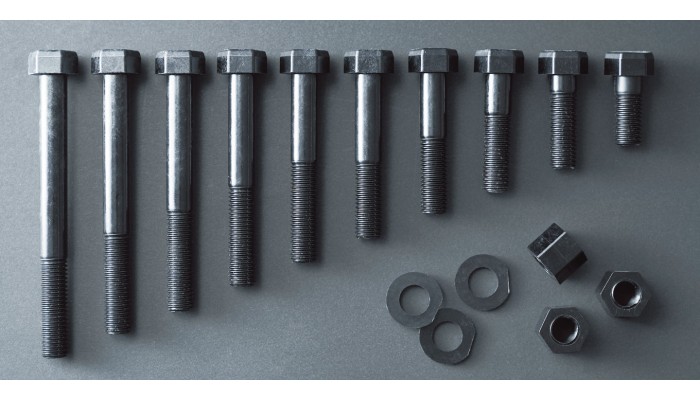
In Thailand's manufacturing sites, more companies are considering a switch to plastic screws to reduce equipment weight and address corrosion from salt damage and chemicals. However, concerns over insufficient strength often force continued use of metal bolts, and the risk of weight increase or insulation gaps becoming a bottleneck cannot be overlooked. This article summarizes the properties of "KYOUJIN" — a high-strength plastic bolt with a published breaking load exceeding 17,000N — and the decision criteria for metal replacement.
Table of Contents
- The Limits of Metal Bolts | The Weight-Insulation Trade-off in Design and On-Site Use
- Supporting a Breaking Load of 17,000N | The Structure of the High-Strength Plastic Bolt "KYOUJIN"
- Directions for Metal Replacement | Balancing Weight Reduction with Functional Integration
- Stability in Harsh Environments | Evaluation Points for Chemical and Corrosion Resistance
- What Nippon Chemical Screw Can Solve
The Limits of Metal Bolts | The Weight-Insulation Trade-off in Design and On-Site Use
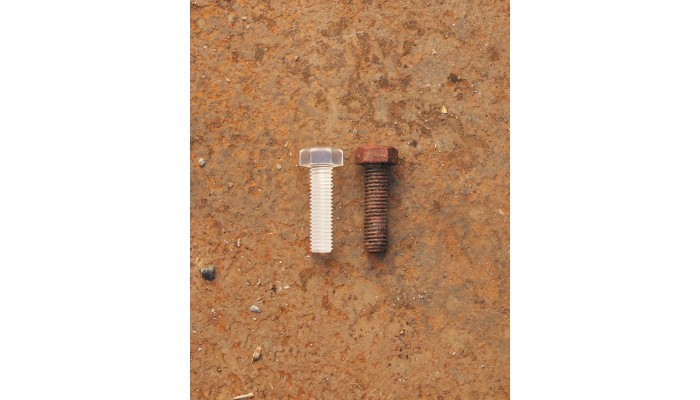
In Thailand's growth industries — EV-related equipment, semiconductor manufacturing, and chemical plants — bolt selection is a factor that affects equipment performance. High-load points have traditionally assumed the use of metal bolts. However, metal bolts come with drawbacks: they are electrically conductive and require additional insulation, they add weight, and they corrode in certain chemical or salt-damage environments.
Where insulation is required, metal bolts need to be paired with insulating bushings or washers, increasing part count and assembly steps. In Thailand's hot, humid climate, the cost of managing rust prevention for metal parts is also a factor that cannot be ignored. Switching to plastic screws can address these issues, but conventional general-purpose plastic screws have not been able to match metal in tensile strength and breaking load.
Design and development teams are often faced with a choice: prioritize strength and accept the weight/insulation drawbacks, or sacrifice strength to move to resin. Resolving this trade-off requires an option that retains resin's material properties while achieving physical strength closer to metal.
Supporting a Breaking Load of 17,000N | The Structure of the High-Strength Plastic Bolt "KYOUJIN"
"KYOUJIN," developed by Nippon Chemical Screw, has strength properties that rewrite the conventional concept of plastic bolts. In its M12 hex bolt size, it achieves a breaking load of 17,406N — a figure made possible by combining over half a century of manufacturing know-how with the latest fiber-reinforced thermoplastic resin and mold-structure expertise for achieving high strength.
General plastic screws often show strength variation caused by uneven resin flow during injection molding or misaligned fiber orientation. KYOUJIN, by contrast, uses a glass-fiber-reinforced crystalline thermoplastic engineering plastic, which offers excellent mechanical strength, heat resistance, and dimensional stability — making it a suitable choice as a metal-replacement material for parts requiring strength and rigidity. It is also designed to reduce stress concentration from the bolt head through to the thread, lowering the risk of failure at points where load concentrates. Strength exceeding 17,000N is a level that plastic alone has historically struggled to reach, opening room to reconsider the assumption of "choosing metal for strength" in favor of "choosing KYOUJIN for functionality," depending on conditions.
Directions for Metal Replacement | Balancing Weight Reduction with Functional Integration
The most direct benefit of replacing metal bolts with KYOUJIN is weight reduction. Since resin has a lower specific gravity than metal (steel or stainless steel), it reduces the weight per bolt — an effective option for designs that reduce moment of inertia and motor load in drones, mobile robots, or moving parts of large equipment.
There is also a benefit in terms of functional integration. Where metal bolts require separate insulating parts, KYOUJIN can provide insulation through the bolt itself, simplifying the overall part configuration. This can contribute to smaller equipment and easier maintenance.
Selection should not simply substitute the metal bolt diameter with resin directly — it is important to organize the actual operating load conditions. While KYOUJIN is high-strength, its Young's modulus and coefficient of linear expansion differ from metal. Aligning load, temperature, and usage time conditions, then judging suitability within the specification range, is key to successful metal replacement. Refer to the technical documentation for further details.
Stability in Harsh Environments | Evaluation Points for Chemical and Corrosion Resistance
A factor that cannot be overlooked in Thailand's manufacturing sites is exposure to chemicals such as acids, alkalis, and organic solvents, as well as the risk of salt damage. Even stainless steel bolts struggle to consistently prevent stress corrosion cracking or rusting in certain chemical or chlorine environments. The thermoplastic resin used in KYOUJIN, by contrast, is resistant to many acids, bases, and organic solvents.
For example, plastic bolts are sometimes chosen for chemical resistance in piping fixtures at chemical plants or chemical cleaning processes in semiconductor manufacturing equipment. Since KYOUJIN combines both strength and chemical resistance, it can be considered for high-load applications that previously ruled out a switch to resin.
That said, a resin's chemical resistance varies with temperature, concentration, and immersion time. The information needed for a decision includes the operating temperature, the type of chemical, and the contact duration. If these conditions are not yet clear, real-environment testing or a detailed specification check is recommended — please inquire for further details.
What Nippon Chemical Screw Can Solve
Nippon Chemical Screw has continuously built up injection molding technology and mold expertise for half a century, since the origins of plastic screws. What the company offers goes beyond simply supplying products — it provides concrete options for the challenge designers and developers face: wanting to maintain strength without giving up on weight reduction or insulation.
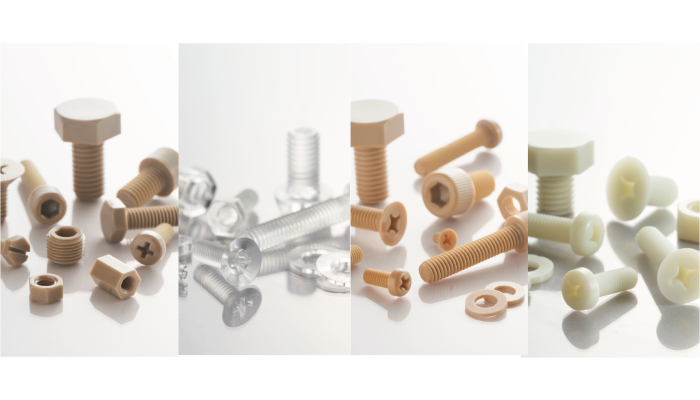
The "KYOUJIN" series centers on M10 and M12 hex bolts, with nuts and washers also included in the lineup. Stock exceeds 3,000 items, and small-lot needs can be handled through the group company network. Custom orders are supported from as little as one piece, allowing flexible verification during the prototyping stage.
Judging the suitability of a plastic bolt at the early design stage requires not just physical figures but also evidence grounded in molding technology. The information needed for a decision includes tightening torque, operating temperature, expected load, and the presence of chemicals. Please inquire for further details if these conditions are not yet clear.
*For further details, please download the PDF document attached to this article, or contact us via the form at the bottom of the page.
FAQ
Q1: What is the biggest difference between KYOUJIN and conventional plastic screws?
A1: The biggest difference is the breaking load, achieved through a special fiber-reinforced resin and the company's proprietary molding know-how. The figure of 17,406N in the M12 size is a level that conventional thermoplastic resin bolts have historically struggled to reach, designed to make it possible to consider replacing metal bolts where strength was previously the bottleneck.
Q2: Do you support sourcing and delivery within Thailand?
A2: The company exhibits at the "METALEX" trade show in Thailand and operates through local trading companies. Supply terms, delivery times, and stock status need to be confirmed on a case-by-case basis — please inquire for further details. The company can consider the optimal supply route according to the customer's location.
Q3: Is production of custom sizes or small-quantity orders possible?
A3: Yes. The company highlights support for custom orders from as little as one piece, with expertise covering everything from injection mold production. While over 3,000 standard items are kept in stock, please inquire for further details if non-standard dimensions or special material selection are needed.
Key Terms for Understanding This Article
- Thermoplastic Resin: A plastic that softens when heated and hardens when cooled. KYOUJIN uses a high-strength, glass-fiber-reinforced type.
- Breaking Load: The maximum load a bolt withstands before failing when pulled in the direction of extraction. The KYOUJIN M12 recorded a value exceeding 17,000N.
- Metal Replacement: Replacing metal parts with resin or other materials, typically aimed at weight reduction and improved insulation. High-strength materials like KYOUJIN are considered as options for this purpose.
*For further details, please download the PDF document attached to this article, or contact us via the form at the bottom of the page.
Company Information
Measuring machinery / Industrial machinery / Medical equipment
Plastic Screw / Resin Screw / Plastic Spring / Resin Spring / Resin Molded Product
Nippon Chemical Screw Co., Ltd. specializes in the development and production of plastic fasteners made from high-performance resins. Our products are designed for environments that demand insulation, ...
PICKUP
Technology & Services
CONTACT
Contact