
KNOWLEDGE
Knowledge
Technology and Services
[Avoiding Metal Contamination in Semiconductor Cleaning Processes] Resin Screw Selection and CHEMIS's Strengths
2026-08-04
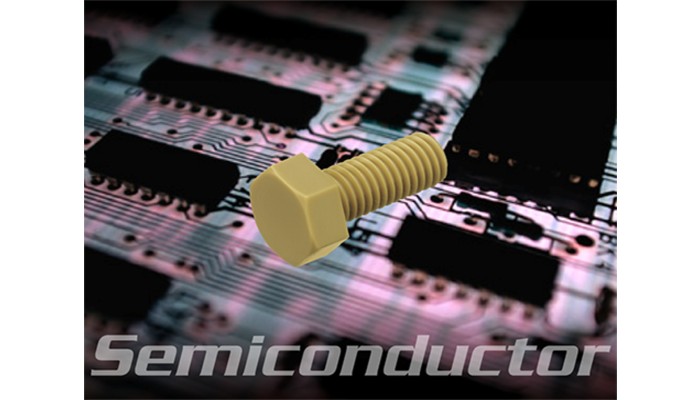
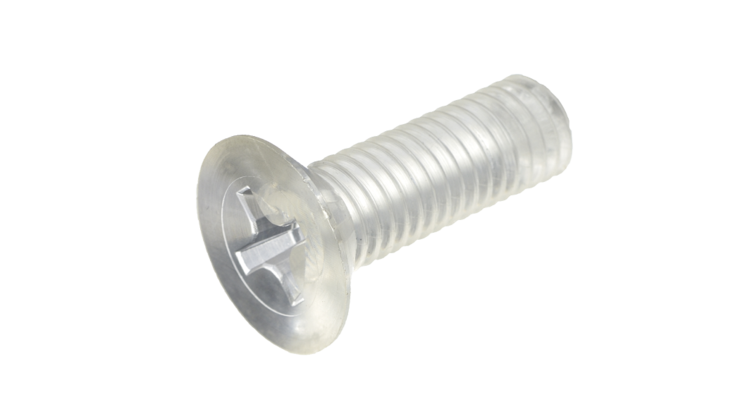
Semiconductor manufacturing involves chemical cleaning at many stages — slicing, polishing, film deposition, resist coating, and etching of silicon wafers. The chemicals used are wide-ranging, including hydrofluoric acid, hydrochloric acid, sulfuric acid, potassium hydroxide, and ammonia solution, requiring equipment components with both high chemical resistance and low contamination. Using metal screws in areas directly exposed to these chemicals can lead to metal ion contamination from corrosion or the generation of particles.
This article explains why resin screws are used in the semiconductor industry, the main locations where they're applied, and key points for material selection.
Table of Contents
- Why Resin Screws Are Used in Semiconductor Manufacturing
- Key Equipment Using Resin Screws and Their Features
- Selecting Resin Materials for the Operating Environment
- What Nippon Chemical Screw Can Do
Why Resin Screws Are Used in Semiconductor Manufacturing
In semiconductor manufacturing, even trace metal contamination or particles can affect product quality and yield, so components in manufacturing equipment are subject to strict contamination control. This is especially true in wet processes such as wafer cleaning, where various chemicals are used, making material selection for chemical-contact components critical.
If metal screws corrode in such an environment, the resulting metal ions or corrosion byproducts can become a new source of contamination. For this reason, resin screws are adopted, depending on the application, in locations where metal contamination should be avoided or where chemicals come into direct contact.
Resin screws not only avoid metal ion contamination originating from the screw itself, but with the right material, can also withstand chemical environments.
Key Equipment Using Resin Screws and Their Features
Semiconductor manufacturing equipment incorporates many components, including pumps that transport chemicals, flow meters that control and monitor flow rate, and systems that circulate and filter chemicals.
Resin screws are mainly used to secure the following equipment and parts:
- Wafer cleaning equipment: Direct chemical contact means metal corrosion needs to be avoided.
- Bellows pumps / chemical pumps: Chemical resistance is essential at chemical transport points.
- Flow meters: Metal should be avoided around sensors that contact chemicals.
- Chemical circulation/filtration systems: Reducing particle sources around filters is a priority.
- Spray nozzles / chemical piping: Chemical splashing makes resin materials a good fit.
- Sensor mounting points: Some applications require insulating, non-metallic materials.
Beyond chemical resistance, resin screws offer benefits such as light weight and electrical insulation. In semiconductor manufacturing equipment particularly, they're adopted in locations with direct chemical contact or where metal is undesirable.
In areas with direct chemical contact, materials such as PVDF, PFA, and PVC are commonly used, with a strong track record of adoption in semiconductor cleaning processes in Japan.
Selecting Resin Materials for the Operating Environment
Chemical resistance, heat resistance, and mechanical strength vary by resin material, so simply choosing "a resin screw" isn't enough — the material must be selected based on the type and concentration of chemical used, temperature, and load.
For example, PVDF and PFA are commonly used in semiconductor cleaning processes and areas with direct chemical contact, while PTFE or PEEK may be candidates where higher heat resistance or strength is required.
Since the appropriate material varies by application, it's important to make a comprehensive judgment that considers not only chemical resistance but also operating temperature and load.
What Nippon Chemical Screw Can Do
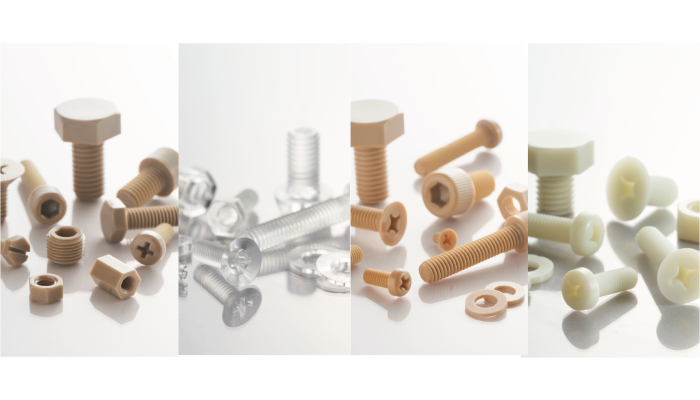
Nippon Chemical Screw manufactures resin screws for a wide range of chemical-handling applications, including semiconductor manufacturing equipment, with a strong track record of adoption.
The company works with multiple resin materials — PTFE, PVDF, PFA, and PEEK — and proposes the material best suited to the application based on chemical type, operating temperature, and load.
Semiconductor manufacturing equipment requires balancing multiple factors at once, including chemical resistance, metal contamination, particles, and mechanical strength.
Please feel free to reach out for guidance on selecting the right resin screw for your operating environment.
※ The figures in this article are reference values, not guaranteed values. ※ For more details, please refer to the PDF document attached to this article, or contact us via the inquiry form at the bottom of the page.
Company Information
Measuring machinery / Industrial machinery / Medical equipment
Plastic Screw / Resin Screw / Plastic Spring / Resin Spring / Resin Molded Product
Nippon Chemical Screw Co., Ltd. specializes in the development and production of plastic fasteners made from high-performance resins. Our products are designed for environments that demand insulation, ...
PICKUP
Technology & Services
CONTACT
Contact