
KNOWLEDGE
Knowledge
Technology and Services
【Camera Parts】Key Checkpoints for Mold Production and Maintenance Systems When Selecting a New Supplier
2026-09-28
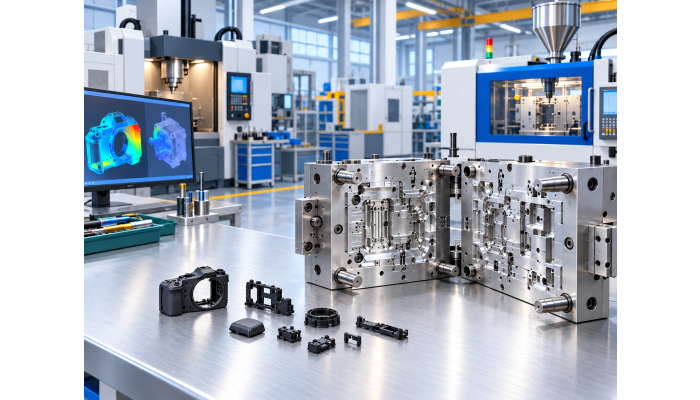
When selecting a new supplier for camera parts, price alone isn't enough — you should also consider who's responsible for mold design and manufacturing, mass production, and mold repair/refinement after production starts. Parts like brackets and small covers vary widely in material and shape; when mold-making and injection molding contacts are split across companies, the number of parties needed to diagnose a problem only grows.
If your project also requires design or quality consultation in Japanese, whether that contact channel exists should be an early comparison point too. This article summarizes what to check when comparing mold production and maintenance systems.
Table of Contents
- Why Separating Mold Makers from Molders Adds More Parties to Problem-Solving
- How Camera Part Materials and Shapes Affect Mold Design
- Using Flow Analysis to Reduce Mold Revisions and Trial Runs
- Machine Models to Check Before Assigning Mold Maintenance
- What HAKKAI PRECISION (THAILAND) CO., LTD. Can Offer
- FAQ
- Glossary
Why Separating Mold Makers from Molders Adds More Parties to Problem-Solving
The first thing to check when comparing new suppliers: are the mold maker and molder separate companies, and can they jointly diagnose problems on-site?
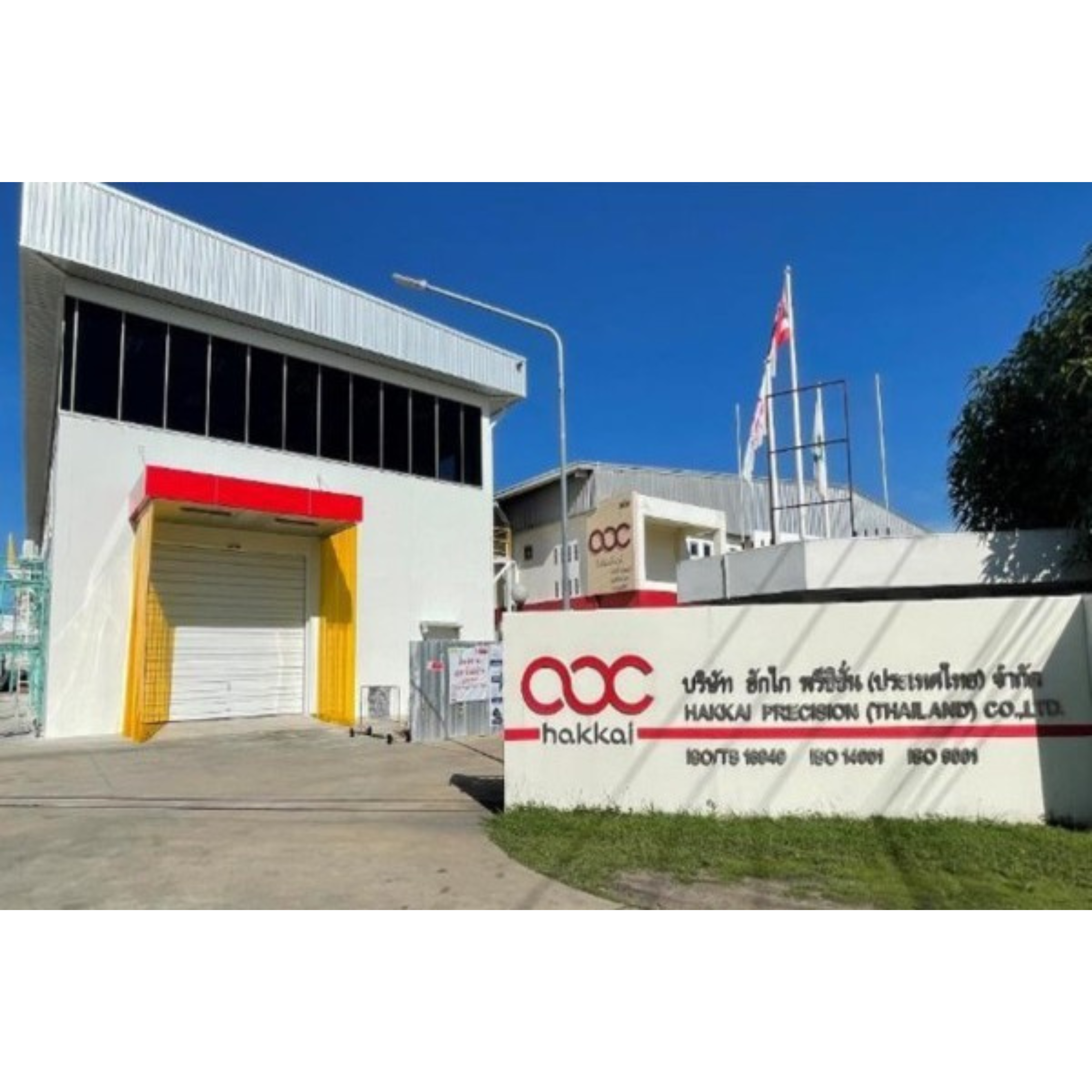
HAKKAI PRECISION (THAILAND) CO., LTD. (HPT) has mold design, mold manufacturing, and injection molding all under one roof in Ayutthaya. Technicians can repair and refine molds directly on the production line — no need to send molds out for external repair.
Handling both mold and molding issues within one company avoids finger-pointing between vendors and consolidates the point of contact for diagnosis and resolution. When selecting a supplier, compare how much of the process — from design through repair after mass production — one organization can cover.
How Camera Part Materials and Shapes Affect Mold Design
HPT's camera parts include brackets — mounting bases for internal components in DSLR and mirrorless cameras — typically in polycarbonate, sometimes POM. For external parts, HPT produces small screw-hole covers in elastomer with Shibo texture finishing. Mechanical parts with complex shapes and small external parts differ significantly in material, form, and surface requirements.
Another key check: does the supplier have relevant material and application experience close to your target part, and can they cover mold design through molding under one scope? Comparing at the broad "camera parts" industry level isn't enough — break it down to Bracket, Cover, PC, POM, and Elastomer specifically.
Using Flow Analysis to Reduce Mold Revisions and Trial Runs
HPT uses MOLDEX3D 2024 alongside 3D CAD/CAM systems like CIMATRON E16 and Siemens NX to analyze resin flow — checking for air traps/pockets before mold production and determining gate and vent positions.
The goal is successful molding from the first trial, reducing mold revision cycles. Since resin flow can be evaluated before actual molding, both the mold designer and molder can review the same analysis results together.
Key data needed: 3D data, materials used, and gate/vent design scope. Incomplete data reduces the accuracy of both quotes and trial-run conditions.
Machine Models to Check Before Assigning Mold Maintenance
For mold maintenance, check whether technicians can repair and refine molds directly within the mass production line, and whether cleaning and reworking machinery is on-site.
HPT has a SOMAX CPS-115-TKP25 mold cleaning machine, plus Wire Cut EDM, EDM, Small Hole Drilling EDM, Machining, and Surface Grinding equipment.
Function | Manufacturer & Model |
Wire Cut EDM | Sodick AG400L |
EDM | Sodick AG40L |
Small Hole Drilling EDM | Sodick K1C, K1BL |
Machining | Sodick HS430L, UH430L |
Surface Grinding | Okamoto ACC65DX, Mitsui H-tech MSG-205M |
Mold Cleaning | SOMAX CPS-115-TKP25 |
This equipment list helps determine whether molds need to go out for repair after mass production starts, and what rework can be done in-house. Don't just check machine names — compare mold shapes and repair details against each machine's actual purpose.
What HAKKAI PRECISION (THAILAND) CO., LTD. Can Offer
HPT covers precision plastic mold design and manufacturing through injection molding under one roof, and can repair/refine molds within mass production lines. For camera parts, HPT has designed and manufactured new molds for new production programs now in mass production.
On the molding side, HPT operates 62 machines total (15–100 tons), uses flow analysis during mold design, and supports applications like PC brackets and elastomer covers.
For projects wanting mold design, manufacturing, mass production, and post-launch repair all under one roof, part shape, material, and volume are good starting points for evaluation:
Good fit:
- Precision plastic parts moldable on 15–100 ton machines
- Mechanical and external parts using PC, POM, or Elastomer
- Projects wanting mold design, manufacturing, molding, and repair all in one location
- Projects that can share 3D data, material specs, and gate/vent conditions for flow analysis
Not a good fit:
- Large molded parts requiring machines over 100 tons
- Projects that can't share design or molding data needed for flow analysis
- Projects comparing price alone, without defined inspection standards, lot sizes, or volumes
Additional questions to ask:
- Part shape — is 2D or 3D data available?
- Material and grade — customer-supplied or manufacturer-sourced?
- Volume, units per lot, and desired start date
- Appearance criteria, Shibo texture, gate marks, vent position limits
- 100% inspection or sampling?
- COA format, inspection reports, and traceability system
- Is Japanese-language consultation available for design, quality issues, and production start-up?
※ For more details, please download the PDF attached to this article, or contact us via the form below.
FAQ
Q1: What should we compare about mold systems when selecting a new camera parts supplier?
A. Whether the supplier can handle mold design, manufacturing, molding, and post-launch repair all in one location. At HPT, technicians repair and refine molds directly on the production line — no external repair needed.
Q2: What materials and applications do you support for camera parts?
A. Mainly PC brackets for mechanical parts (sometimes POM), and elastomer screw-hole covers with Shibo texture for external parts.
Q3: What information indicates a new supplier's business continuity?
A. HPT was founded in July 2004, and since late October 2023 has been a wholly owned subsidiary of Otsuka Chemical. This founding history and capital relationship can be compared alongside the scope of mold and mass-production equipment.
Glossary
- Mold manufacturing: Design and processing of molds matching a camera part's shape and material, in preparation for mass production.
- Mold maintenance: Repair, refinement, and cleaning of molds used in mass production to ensure continued usability.
- Flow analysis: A method for analyzing resin flow to determine air trap, gate, and vent positions.
- Precision plastic injection molding: The molding process for mechanical and external parts using materials such as PC, POM, and Elastomer.
※ For more details, please download the PDF attached to this article, or contact us via the form below.
Company Information

Industrial machinery / Home electrical appliances / Electronic parts
Auto parts / Camera parts
We are a specialized manufacturer of small precision plastic products. It is to stick to a mold making, and has excels at technology to produce on the scale of microns. Also our feature is a integrate ...
CATALOG
Related Catalogs
PICKUP
Technology & Services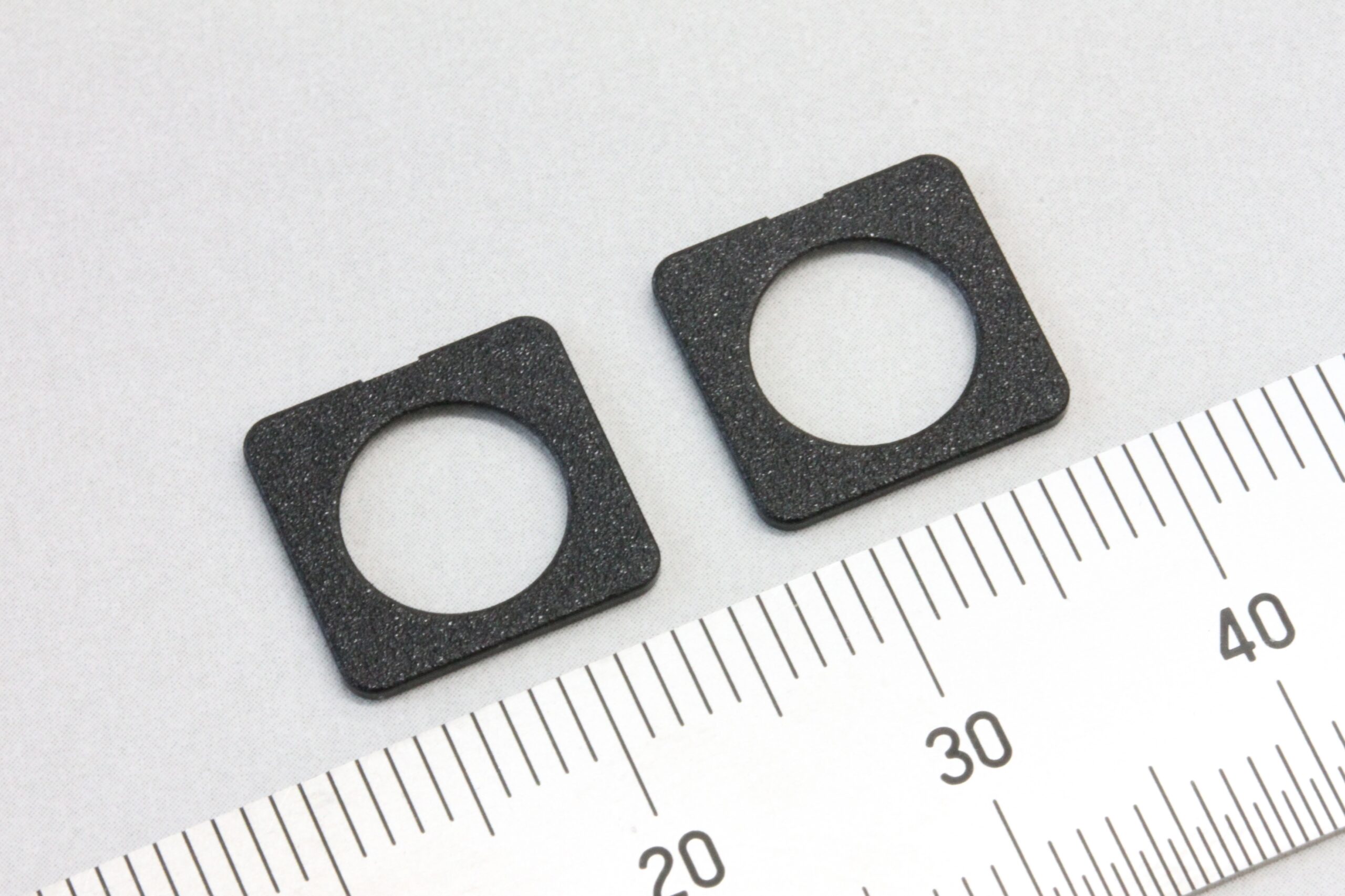
CONTACT
Contact