
TSUBACO KTE CO., LTD.
PRODUCT
Production Goods
Conveyor Maintenance Basics to Prevent Production Line Trouble|Daily Checks and Pro Tips
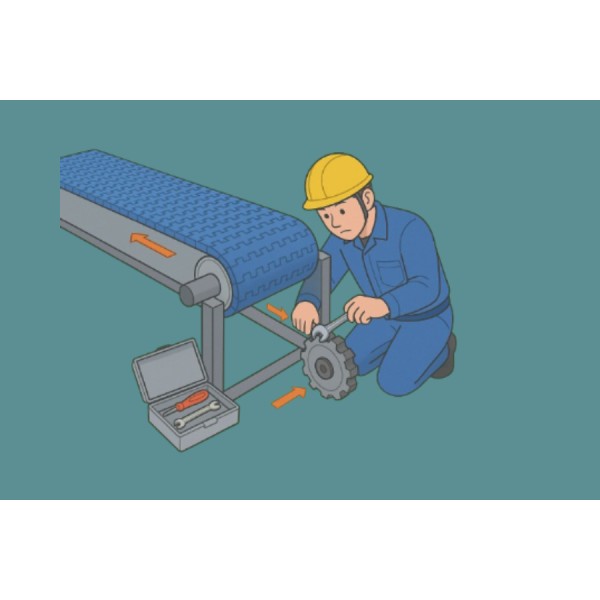
Preventing sudden line stoppages starts with smart conveyor maintenance. This article provides practical daily checkpoints and scheduled maintenance guidelines to ensure smooth factory operations and minimize costly downtime.
Why Conveyor Maintenance Matters
Conveyor systems are the backbone of many production lines, automating material and product handling to support efficiency. However, constant operation leads to gradual wear, and if early signs of malfunction are ignored, the consequences can include unexpected breakdowns, equipment damage, shipment delays, and product defects.
That’s why a combination of routine daily inspections and structured periodic maintenance is crucial. This guide outlines the key knowledge and practices every factory should apply to detect issues early and maintain stable operations.
Common Conveyor Problems and Early Warning Signs
1. Belt misalignment → Belt shifts off-center and rubs against frames or rollers, leading to wear or tears
2. Belt wear or breakage → Premature deterioration caused by harsh materials or operating conditions
3. Unusual noise or vibration → Often a symptom of worn-out bearings, rollers, or gears
4. Blockages or material leakage → Residual debris or product spills can affect cleaning and discharge efficiency
Watch for signs like abnormal sounds, localized heat, or uneven belt tracking to catch problems early.
Daily Inspection Checklist
- Belt centering:Is the belt running straight without deviation?
- Noise and vibration:Listen for unusual sounds or excessive shaking during operation
- Residue:Check for leftover material on the belt or below the conveyor
- Drive component heat/noise:Monitor pulleys and motors for unusual heat or sound
- Loose covers/fasteners:Ensure safety guards and bolts are secure
Incorporate these checks into your start-up routine each shift.
Scheduled Maintenance Guidelines
- Clean rollers and pulleys / check bearings:Once per month
- Adjust belt tension:Every 3 months
- Lubricate or replace drive chains/gears:Every 6 to 12 months
- Check control sensors and devices:Once per month
- Inspect frame alignment or deformation:Annually
Adjust frequency based on environmental conditions (dust, moisture, chemicals, etc.)
In-house vs. Outsourced Maintenance
In-house Maintenance
- Requires trained technicians
- Needs accurate inspection records and tracking
- Spare parts and tools must be readily available
Outsourced Maintenance
- Ideal when production cannot be halted
- Offers expert diagnostics and predictive maintenance
- Recommended for plants with diverse equipment types
Company Information

Main 3 Products
construction / development of the industrial field
Phone Number
Homepage URL
We should provide customer in the industrial fields with the new value through the optimized product management based on the technological forces developed for its long history as a general trading co ...
CONTACT
Contact