_15a3e843-c865-4cb1-9c30-8a9c1ded1366.png)
PRODUCT
Production Goods
Hydrocarbon & Water-based Cleaning Agents — Eliminating cleaning defects through material-specific selection for electronic and automotive components
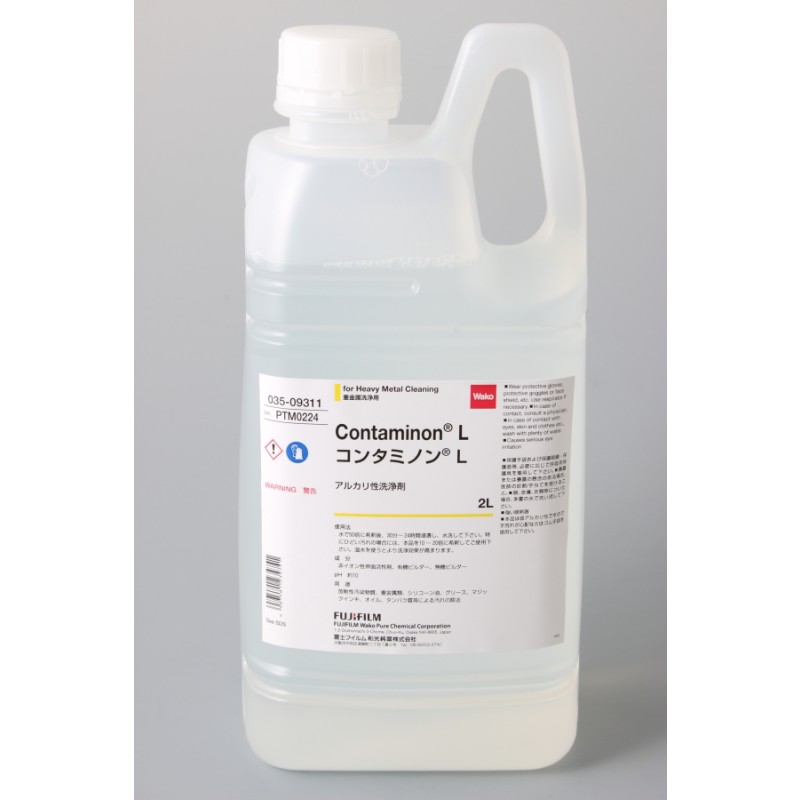
Driven by the progress of the "China Plus One" (China+1) strategy against the backdrop of US-China trade friction, investments in Printed Circuit Boards (PCB) and next-generation vehicles (EV) are expanding in Thailand. As the country's role as a production base for electronic components and automotive fields grows, the levels of precision and quality management required in manufacturing processes have been further elevated. Within this context, the importance of the cleaning process—one of the key manufacturing steps—is being re-evaluated. Particularly in high-density boards, contamination at levels invisible to the naked eye can affect long-term reliability and electrical characteristics, leading to quality issues. For EV components and precision electronic devices, selecting the wrong cleaning agent can lead to material degradation or insulation failure. Designing cleaning conditions based on local material characteristics and climatic conditions is the key to ensuring quality. This article organizes specific numerical data and the technical background that serve as decision-making materials for cleaning agent selection.
Table of Contents
- Why Thai PCB Industry Clustering Induces Cleaning Defects
- Structure Where Residues Adhere Due to Mismatch Between Material and Cleaning Agent
- Difference in Cost and Safety Between Hydrocarbon and Water-based Cleaning Agents
- Material Resistance Values to Check Before Building an Optimal Cleaning Environment
- What Nabelin Thailand Can Do
- FAQ
- Key terms for understanding this article
■ Why Thai PCB Industry Clustering Induces Cleaning Defects
In Thailand, investments in Printed Circuit Boards (PCB) and semiconductor post-processing are increasing due to the shift of production aimed at exports to the United States. The Thai government's digital economy promotion policy has also provided a tailwind for factory upgrades. However, at some manufacturing sites, operations based on conventional standards remain, creating a gap with modern manufacturing processes. This difference is the cause of cleaning defects that are difficult to grasp from appearance. On boards with high-density implementation, flux and processing oils remain under components or in microscopic gaps. In Thailand's unique high-temperature and high-humidity environment, such residual components react with moisture in the air, causing ion migration (a short-circuit phenomenon between electrodes). Failures in automotive Electronic Control Units (ECUs) and other devices directly lead to accidents. Therefore, for quality management departments, it is important to grasp the state of the cleaning process and maintain appropriate management levels.
■ Structure Where Residues Adhere Due to Mismatch Between Material and Cleaning Agent
Many cleaning defects stem from not holistically considering the soil components (organic/inorganic), the chemical properties of the cleaning agent, and the physical resistance of the workpiece material. For example, at manufacturing sites in Thailand, there are cases where "whitening" or "cracks" occur on resin materials after cleaning. This phenomenon occurs when the cleaning solution penetrates the material, releasing internal stress. Additionally, residue adhesion occurs when the surface tension of the cleaning solution is too high for the workpiece shape. The liquid cannot penetrate microscopic gaps and fails to sufficiently lift the soil. Conversely, if the permeability is too high, the liquid cannot be fully removed in the drying process, leading to stains or stickiness. Furthermore, there are confirmed cases where minerals in the water supplied within Thailand react with water-based cleaning agents, depositing on boards as insoluble compounds. Based on these conditions, it is critical to design processes suitable for the local environment.
■ Difference in Cost and Safety Between Hydrocarbon and Water-based Cleaning Agents
In selecting industrial cleaning agents, the comparison between hydrocarbon and water-based agents is a key consideration point. Hydrocarbon cleaning agents have high solvency for oil stains, and by introducing a distillation recovery unit, the cleaning solution can be recycled. This leads to long-term reduction in running costs. On the other hand, since they have a flash point, safety measures based on Thai fire laws and warehouse management regulations are essential. In contrast, water-based cleaning agents are non-flammable and easy to handle in terms of ensuring workplace safety. However, the introduction of wastewater treatment facilities and power consumption in the drying process after cleaning are new cost factors. Based on these differences, selection according to the cleaning target and process conditions is required.
■ Comparison of technical and economic characteristics by cleaning agent type
Comparison items | Hydrocarbon-based cleaning agent | Water-based cleaning agent |
Cleaning target | Mineral oil, cutting oil, grease | Water-soluble machining fluid, flux, inorganic dust |
Safety regulations (within Thailand) | Classified as a hazardous material under the Fire Service Act (license required) | Non-hazardous (priority on compliance with wastewater regulations) |
Environmental impact | Low (VOC control measures are necessary, but no wastewater is generated) | Medium (treatment process for oil-containing wastewater is essential) |
Reusability | Long-term circulation is possible through distillation-based regeneration | Limited (partial recovery possible, e.g., via membrane processing) |
Drying characteristics | High self-drying property, with a short drying time | Low; use of air knives or vacuum dryers is recommended |
■ Material Resistance Values to Check Before Building an Optimal Cleaning Environment
When introducing or changing a cleaning agent, one of the indicators to verify from a quality assurance perspective is the SP value (Solubility Parameter). This numerical value indicates the solubility of a substance; the closer the SP values of the cleaning agent and the material, the easier it dissolves. To avoid defects, the basic rule is to select a cleaning agent that is close to the SP value of the soil (such as oil) and appropriately distant from the SP value of the workpiece material (such as plastic). Furthermore, in areas with much micro-processing like Thai production sites, the surface tension of the liquid is also an important indicator. Generally, hydrocarbon solvents with a low surface tension of around 20 to 30 mN/m have high permeability into narrow gaps, suitable for internal cleaning of precision parts. On the other hand, water-based cleaning agents adjust surface tension by adding surfactants, but the management of their concentration determines the variance in cleaning quality.
■ What Nabelin Thailand Can Do
Nabelin Thailand, as a comprehensive trading company with three main pillars—chemicals, food, and pharmaceutical raw materials—responds to the diverse needs of the Thai manufacturing industry. In the selection of cleaning agents and solvents, we do not stop at simple product sales; we have a system that provides integrated support from verification to acquisition for Thai Food and Drug Administration (FDA) import licenses and hydrocarbon licenses. Additionally, we secure a supply system including license acquisition for small-volume reagents of around 50ml (such as FUJIFILM Wako Pure Chemical products), which are difficult for other companies to handle. Even in the Thai market where import procedures for reagents and chemicals are complex, we lead to stable supply while organizing necessary procedures. In terms of logistics, we have established a warehouse base in Samut Prakan and built our own logistics network. By operating monthly regular shipments from Japan, we achieve supply stabilization and cost leveling. Imports via regular shipments are operated without incurring freight charges, delivering products to manufacturers in various industrial estates, including Thailand's Eastern Economic Corridor (EEC). We support local production activities while making proposals based on knowledge in the chemical field for industrial sectors expanding in Thailand, such as PCB, automotive, and semiconductors.
※For more details, please download the PDF attached to this article or contact us via the form at the bottom of the page.
■ FAQ
Q1: I am troubled by cracks occurring in my materials with the cleaning agent I currently use.
A1: It is important to check the difference in SP values (Solubility Parameter) between the material and the cleaning agent. Nabelin Thailand supports the selection of alternative low-aggression cleaning agents based on the balance between material resistance data and cleaning power.
Q2: How much time and labor does it take to obtain an import license?
A2: The procedure period varies depending on the type of chemical and the Thai FDA classification. Nabelin Thailand has accumulated practical know-how regarding license acquisition and works to shorten the period until the start of supply while managing the progress of application procedures.
Q3: Is there a risk of stockouts when using regular shipments?
A3: In addition to monthly regular imports, we secure a certain amount of inventory at our Samut Prakan warehouse. By creating delivery plans according to the customer's monthly usage, we maintain a stable supply system.
■ Key terms for understanding this article
- Hydrocarbon Cleaning Agent: A solvent refined from petroleum-derived components. An industrial cleaning agent with high solvency for oil stains that can be reused through distillation recovery.
- Water-based Cleaning Agent: A cleaning agent based on water with surfactants blended in. A non-flammable type that is easy to handle and suitable for cleaning flux and inorganic stains.
- Import License: Permits for chemical imports overseen by the Thai FDA, the Ministry of Energy, etc. Acquisition requires procedures such as classification verification and preparation of application documents.
※For more details, please download the PDF attached to this article or contact us via the form at the bottom of the page.
Company Information
Industrial chemical products / Foods additives / Reagents
Nabelin (Thailand) Co., Ltd. was established in 2006 and received approval from the Thailand Board of Investment (BOI) in 2007. We celebrate our 20th anniversary. We have offices across Asia, includin ...
CATALOG
Related Catalogs
CONTACT
Contact