
PRODUCT
Production Goods
Oji’s Paper ERV Core | Air Energy Recovery Solution for Buildings and Offices from Japan
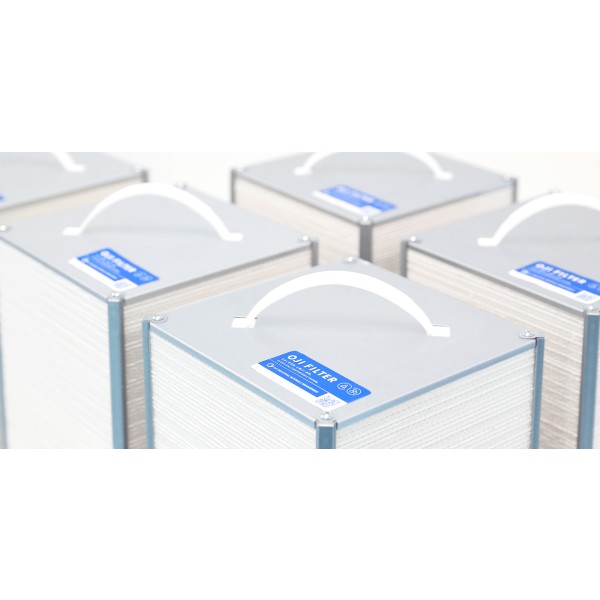
In commercial buildings and industrial facilities across Thailand, high energy consumption from air-conditioning and ventilation systems is a common challenge, especially in environments that require fresh and controlled air quality, such as hospitals, food processing plants, cleanrooms, and large offices.
Conventional ventilation systems discharge cool indoor air directly to the outside without recovering its thermal energy, forcing air conditioners to work harder and resulting in long-term energy loss and higher electricity bills.
Key Features of Oji’s Paper ERV Core
- Recovers cooling energy and humidity from exhausted air.
- Made with high-humidity-resistant specialty paper from Japan (non-swelling).
- Prevents cross-contamination of odor and gas between intake and exhaust air.
- Lightweight honeycomb structure for compact design and easy installation.
- Supports ZEB / ZEH (Zero Energy Building / Home) initiatives.
- Developed by Oji Industrial Materials Management Co., Ltd. (OIMM) – a member of the Oji Group, Japan.
Pain Points in Building and Industrial Ventilation
Most buildings in Thailand rely heavily on HVAC systems to maintain air temperature and quality.
In standard ventilation setups, indoor air is expelled directly, while fresh air from outside is introduced without any energy exchange.
The result:
- Repetitive energy loss from cooled air being exhausted.
- Increased air-conditioning load and compressor wear.
- Rising electricity costs over time.
Technical Cause
Even the exhausted air from an air-conditioned building still retains substantial thermal energy and moisture.
However, conventional ventilation systems cannot recover or reuse this latent energy.
This leads to continuous and unnecessary energy loss during every HVAC operation cycle, especially in large buildings with constant air exchange.
Technical Solution
Oji’s Paper ERV Core is an Energy Recovery Ventilator (ERV) Core designed to exchange heat and humidity between indoor and outdoor airflows without direct air contact.
The specialized paper material, developed by Oji Group (Japan), is treated with a proprietary moisture-resistant coating, making it ideal for hot and humid climates like Thailand.
How it works:
When cool indoor air passes through the ERV core and is exhausted, its cooling energy and humidity are transferred to the incoming fresh air.
This process recovers energy from exhausted air, reducing the load on the air-conditioning system and improving overall HVAC efficiency.
Recommended Use Environment
Oji’s Paper ERV Core is ideal for buildings and offices seeking to reduce HVAC energy consumption while maintaining stable indoor temperature and humidity.
Recommended applications include:
- Office buildings, hotels, hospitals, and educational facilities.
- Food, electronics, and cleanroom manufacturing plants.
- Buildings aiming for energy-efficient ventilation systems.
- Projects aligned with Green Factory, Carbon Neutral, ZEB, and ZEH standards.
The ERV Core can be integrated with existing ventilation or HVAC systems without requiring major structural modifications.
Performance Benefits
- Reduces ventilation energy loss by up to 30%.
- Maintains consistent indoor temperature and humidity.
- Decreases air-conditioning load and extends equipment lifespan.
- Enables compliance with Green Building, ZEB, and ZEH standards.
- Supports Net Zero Carbon building operations.
Partnership Between Murakami and Oji
Murakami (Thailand) Co., Ltd. is the official distributor of Oji’s Paper ERV Core in Thailand, in collaboration with Oji Industrial Materials Management Co., Ltd. (OIMM), Japan — a specialist in advanced paper materials and air filtration technology.
Murakami provides technical consultation, system design, and field application support to help Thai customers enhance air quality and energy efficiency in real-world building operations.
FAQ
Q1: How is Oji’s Paper ERV Core different from regular air filters?
A: Unlike standard filters, ERV Core exchanges heat and humidity energy between intake and exhaust air — it is not a dust filter.
Q2: Can it be used with existing ventilation systems?
A: Yes, it can be installed as a replacement or integrated with existing ERV units without modifying the main structure.
Q3: Does it require frequent maintenance?
A: No. The paper material is moisture-resistant, non-absorbent, easy to clean, and offers a long service life.
Q4: What types of buildings are suitable?
A: Offices, hotels, hospitals, factories, and commercial buildings that seek to reduce air-conditioning energy consumption.
Glossary
- ERV (Energy Recovery Ventilator): A ventilation system that recovers thermal energy from exhausted indoor air.
- ZEB / ZEH: Japan’s Zero Energy Building / Zero Energy Home concepts for ultra-efficient energy management.
- Air Circulation Core: The key component in an ERV system that transfers energy between incoming and outgoing air streams.
#OJIPaper #ERVCore #AirEnergyRecovery #GreenBuilding #ZEB #EnergySaving #MurakamiThailand #SustainableHVAC
Updated: November 4, 2025
Company Information

Industrial chemicals / Agricultural materials / Various equipment and others
🏢 About Murakami (Thailand) Co., Ltd. Murakami (Thailand) Co., Ltd. is committed to being a trusted partner for Thailand’s industrial sector, offering high-quality products and Japanese solutions that ...
CATALOG
Related Catalogs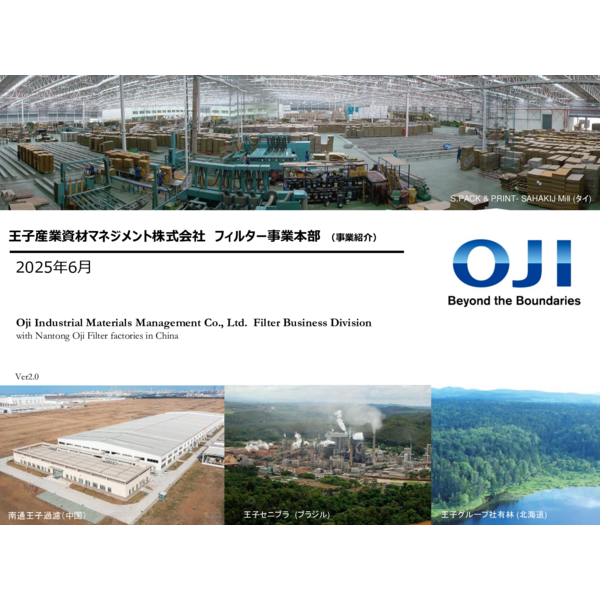
CONTACT
Contact