
KNOWLEDGE
Knowledge
Technology and Services
【Every Die Change Stops the Production Line】The Total Cost Break-Even Point That Cannot Be Seen from Initial Cost Alone
2026-08-07
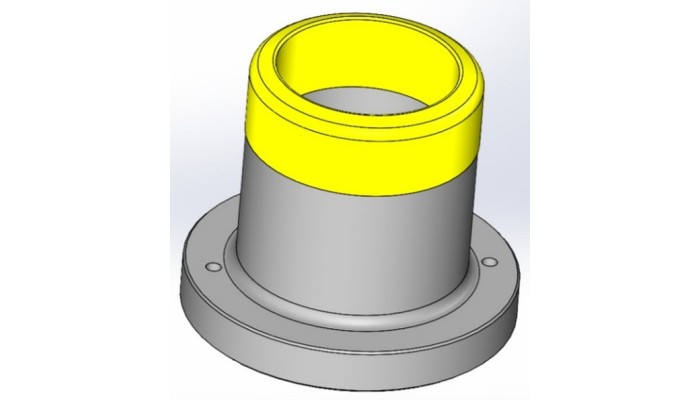
Steel dies have the advantage of being relatively easy to keep initial costs low. However, as mass production continues, wear and deformation gradually progress, making repairs, die remanufacturing, or die replacement necessary. In addition, every die change requires setup work and a production line shutdown. Therefore, the actual cost cannot be evaluated based on the purchase price alone.
If die life can be extended and the number of die changes reduced, there is potential to reduce not only repair costs but also labor time and losses caused by production stoppages. This article explains the less visible costs associated with steel dies, examples of switching to cemented carbide, and the conditions under which the total cost reaches a break-even point.
Table of Contents
- Why die wear and deformation increase total cost
- Actual examples of reducing the number of die changes by switching to cemented carbide
- Conditions under which the total cost of carbide dies and steel dies reaches a break-even point
- Material selection and technical support by FUJILLOY
- FAQ
- Terms used in this article
■ Why Die Wear and Deformation Increase Total Cost
Steel dies are generally easier to keep initial costs lower than carbide dies. Therefore, when looking only at the quoted purchase price, they may appear to be less expensive.
However, during continuous mass production, dimensional changes caused by wear or deformation caused by loads during forming can make the dimensional accuracy of products unstable. In addition, if galling or scratches occur on the product surface, the dies may need to be reground, repaired, or replaced.
When dies are repaired or replaced, setup work is required, including removing and installing the dies, adjusting their position, and performing trial runs. During this time, the production line must be stopped.
Therefore, when comparing the total cost of dies, it is necessary to consider not only the purchase cost but also the following costs:
- Costs for die regrinding, repair, and remanufacturing
- Labor costs for die changes and setup work
- Lost production opportunities caused by production line stoppages
- Costs for scrapping or reworking products due to dimensional defects or scratches
The faster the dies wear or deform, the more frequently these costs are incurred. Therefore, even if steel dies have a lower initial cost, their total cost may become higher once production volume exceeds a certain level.
One way to reduce die change frequency and production line downtime is to switch to cemented carbide, which has high wear resistance and is less susceptible to deformation under load. The following examples show how much difference this can make.
■ Actual Examples of Reducing the Number of Die Changes by Switching to Cemented Carbide
The effect of switching to cemented carbide varies depending on the die application and the problems being experienced. The following examples involve issues related to wear, product scratches, and galling.
Caulking Punch Life Increased Fourfold
For a punch used to caulk stainless steel sheets, early wear of the SKD11 die was a problem.
After changing the material to D60 cemented carbide, die life increased from 120,000 shots to 480,000 shots. To produce the same 480,000 shots, four sets of steel dies would be required, while one set of carbide dies would be sufficient based on this calculation.
Deep Drawing Die Life Increased Fifteenfold
For a deep drawing die used to manufacture motor cases, scratches were occurring on the product surface.
After changing from SKD11 to D40 cemented carbide, die life increased from 100,000 shots to 1,500,000 shots. At the same production volume, the number of die sets required can be reduced to one-fifteenth based on a simple calculation.
Maintenance Interval Extended from 3 Days to 3 Months
For dies used to manufacture oil filter housing, galling occurred, requiring maintenance every three days.
After changing from SKD11 to D60 cemented carbide, the dies could be used continuously for three months. Reducing the frequency not only of die changes but also of cleaning and adjustment can also reduce production line downtime.
As these examples show, extending die life or maintenance intervals reduces not only the number of replacement dies required but also the number of setup operations and production line stoppages. When evaluating the effect of carbide dies, it is important to consider not only the increase in die life but also the time and costs that can be reduced across the entire production process.
■ Conditions Under Which the Total Cost of Carbide Dies and Steel Dies Reaches a Break-Even Point
In general, carbide dies often have a higher initial cost than steel dies. However, as the costs of repairs, remanufacturing, and die changes accumulate, carbide dies may become less expensive over the entire period of use in some cases.
The total cost of dies can be considered as follows:
Total Cost=Die Purchase Cost+Maintenance Cost+Die Change and Setup Cost+Losses Due to Production Line Stoppages+Costs Associated with Quality Problems
For example, in the case described earlier, producing 480,000 shots would require four sets of steel dies with a life of 120,000 shots, while only one set of carbide dies with a life of 480,000 shots would be required.
In this case, if the total savings from the following items exceed the difference in the initial cost of the carbide die, the carbide die can result in a lower total cost.
- Manufacturing cost of three additional sets of steel dies
- Savings from reduced die changes and setup work
- Savings from reduced production line downtime
- Savings from reduced repairs and regrinding
- Savings from reduced costs associated with quality problems
Total cost is more likely to reach a break-even point when dies need to be changed frequently, when replacement or adjustment takes a long time, when losses from production line stoppages are large, or when mass production continues over a long period.
On the other hand, when production volume is low or the downtime associated with die replacement is short, steel dies with a lower initial cost may be more suitable in some cases.
When considering a switch to carbide dies, the following information should be prepared, using the same production volume as the basis for comparison:
- Price per die set
- Number of shots before die replacement
- Frequency of repairs or maintenance
- Time required for each die change and setup
- Value of production lost due to production line stoppages
Comparing the total cost required to reach the target production volume, rather than considering only the price of each die, helps support an appropriate decision.
■ Material Selection and Technical Support by FUJILLOY
Switching to cemented carbide does not mean that every die will produce the same results. If too much emphasis is placed on hardness, wear may be reduced, but chipping or cracking may occur due to the loads applied during processing.
FUJILLOY(THAILAND) CO., LTD. offers approximately 60 grades of cemented carbide with different properties in terms of hardness, wear resistance, toughness, heat resistance, and corrosion resistance. The company selects a grade suited to the condition of die damage, applied load, operating temperature, and material being processed. In Thailand, the company provides support from die design and processing through technical support, and considers suitable material grades and operating conditions through on-site inspections by technical personnel and sample testing.
The objective is not simply to replace steel dies with carbide dies. It is to reduce the number of die changes and production line downtime, thereby reducing total cost. Even if information such as the material of the currently used die or the number of shots is not yet complete, consultation can begin with the information available.
■ FAQ
Q1: Will switching to carbide dies always reduce costs compared with steel dies?
A1: Costs cannot necessarily be reduced in every case. The comparison must be made using the same production volume and should include die life, the number of die changes, labor costs for setup work, and production line downtime.
Q2: Why does production line downtime need to be included in the cost?
A2: During a die change, the machine must be stopped so that the die can be removed and installed, adjusted, and reset. Losses caused by production line downtime are not included in the die purchase price, but they occur every time the die is changed. Therefore, they are an important factor when calculating total cost.
Q3: What information is required when considering a switch to carbide dies?
A3: Required information includes the material of the die currently in use, the number of shots per die set, the condition of wear or damage, the time required for die changes and setup, and the target die life or number of die changes.
■ Terms Used in This Article
- Life Cycle Cost
The total cost incurred from the purchase of a die until the end of its service life. - Shot Count
The number of production cycles that can be completed before the die must be replaced or maintained. - Setup
The work involved in installing, adjusting, and preparing machines or dies in order to start or restart production. - Cemented Carbide
A material with high hardness and wear resistance, used for wear-resistant tools, dies, and other applications.
※For more details, please download the attached materials or contact us via the form below.
Company Information
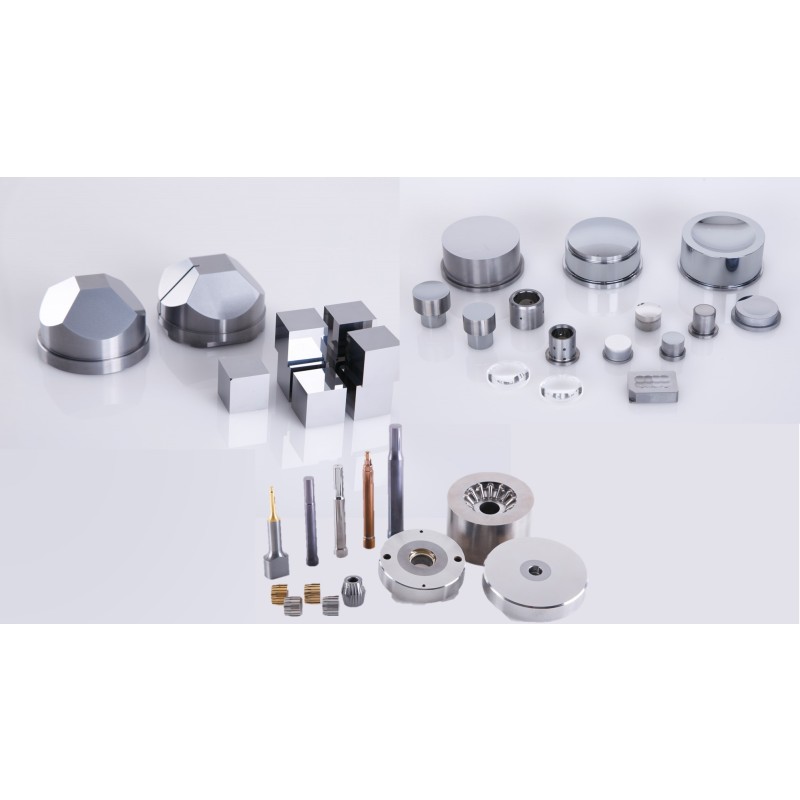
Home electrical appliances / Electronic parts / Transportation equipment
TOOLS FOR AUTO PARTS / Electronic / Special parts Tools materials
FUJILLOY (THAILAND) is the Thailand office of Fuji Dice Co., Ltd. Features of FUJILLOY (THAILAND) ・ Technological Renovations ・ Cost Efficiency ・ Immediate Delivery
PICKUP
Technology & Services
CONTACT
Contact